

The True Cost of Reactive vs. Preventative Pump Maintenance
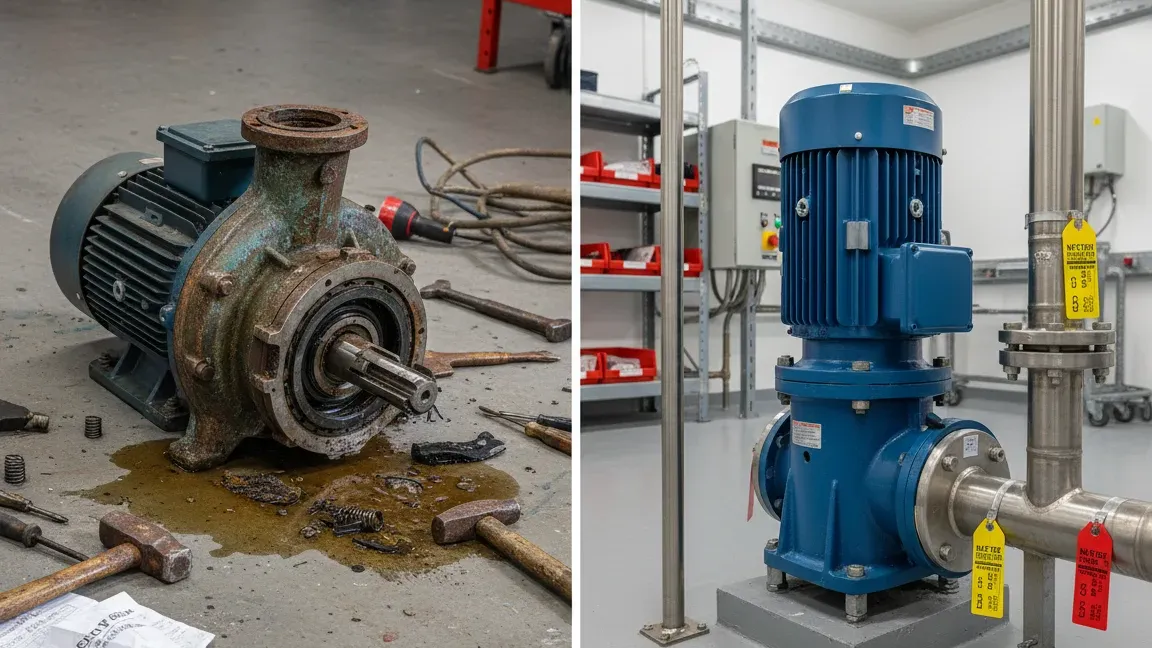
When heating and pumping systems fail unexpectedly, the immediate repair bill represents just a fraction of the true financial impact. Reactive maintenance - the approach of fixing equipment only after it breaks - may appear cost-effective on paper, but the hidden expenses often dwarf the visible ones. For commercial properties, a single pump failure during winter can cascade into thousands of pounds in emergency repairs, business disruption, and secondary damage.
The alternative approach, preventative pump maintenance, requires upfront investment but delivers measurable returns through extended equipment life, improved efficiency, and predictable operational costs. Understanding the complete financial picture helps property managers, facilities teams, and business owners make informed decisions about their heating system maintenance strategy.
Understanding Reactive Maintenance Approaches
The Run-to-Failure Model
Reactive maintenance operates on a simple premise: run equipment until it fails, then repair or replace it. This approach appeals to organisations seeking to minimise immediate expenditure, particularly when capital budgets face pressure. The logic appears straightforward - why spend money maintaining equipment that still functions?
In heating and pumping applications, this strategy manifests in several ways. Central heating pumps operate continuously throughout winter months without inspection. Circulator pumps showing early warning signs like unusual noise or reduced flow continue running until complete failure. Expansion vessels, valves, and associated components receive attention only when they stop working entirely.
The appeal of reactive maintenance lies in its apparent simplicity. No maintenance schedules to manage, no service contracts to negotiate, no planned downtime to coordinate. Budgets remain flexible, with spending occurring only when absolutely necessary.
However, the run-to-failure model carries substantial hidden costs. Emergency failures rarely occur at convenient times - heating pumps typically fail during peak winter demand when systems work hardest. A Grundfos circulator that stops working at 3am on a Sunday in January triggers premium emergency callout fees. The same repair performed during a scheduled weekday visit costs significantly less.
Beyond timing, reactive failures often cause secondary damage. When a circulator pump seizes, the heating system loses pressure. Boilers may lock out, requiring additional diagnostic work. In commercial buildings, frozen pipes can result from heating loss, creating far more expensive problems than the original pump failure.
Hidden Costs of Emergency Repairs
Emergency repair pricing reflects the genuine costs service providers face for out-of-hours response. Engineers sacrifice personal time, travel during unsociable hours, and carry additional insurance for emergency work. These costs transfer directly to customers, with callout fees often reaching £200-£400 before any actual repair work begins.
Parts availability compounds the problem. During a scheduled maintenance visit, engineers carry common replacement components and can source specialist parts with next-day delivery. Emergency failures require immediate solutions - if the exact replacement part is not available, temporary fixes or premium same-day courier services add further costs.
Commercial properties face particularly severe consequences from emergency repairs. A failed heating system in an office building during winter creates immediate health and safety concerns. Employees cannot work in temperatures below legal minimums, forcing business closure until repairs complete. A single day of lost productivity for a 50-person office easily exceeds £5,000 in value, dwarfing the repair cost itself.
Manufacturing and industrial facilities experience even greater downtime costs. Temperature-sensitive processes may require shutdown. Production lines stop. Contractual delivery commitments face jeopardy. The financial consequences of reactive maintenance in these environments can reach tens of thousands of pounds for a single pump failure.
Residential properties are not immune to cascading costs. Landlords face tenant compensation claims when heating fails during winter. Properties with emergency repair patterns signal poor management, affecting both letting success and property values.
The Preventative Maintenance Framework
Scheduled Inspection and Servicing
Preventative maintenance follows a structured approach based on manufacturer recommendations, system usage patterns, and operational requirements. For heating systems, this typically involves annual inspections before winter demand peaks, with additional checks for critical or high-use equipment.
A comprehensive pump maintenance visit examines multiple factors. Engineers assess physical condition, checking for leaks, corrosion, or mounting issues. They measure electrical parameters, confirming voltage, current draw, and insulation resistance remain within specifications. Performance testing verifies flow rates and pressure generation match design parameters.
Wilo pumps and other modern circulators include diagnostic features that simplify maintenance. Many models display operational hours, power consumption, and fault codes. Engineers use this data to assess remaining service life and predict potential issues before they cause failures.
Beyond the pumps themselves, preventative maintenance addresses supporting components. Expansion vessels require pressure checks and diaphragm inspection. System water quality affects pump bearing life - engineers test for correct inhibitor concentration and pH levels. Valve operation, pipe insulation, and control system function all receive attention during comprehensive visits.
Documentation forms a crucial element of effective preventative maintenance. Detailed service records track equipment condition over time, revealing degradation trends before they cause failures. This historical data proves invaluable for warranty claims, compliance demonstrations, and capital planning.
Cost-Benefit Analysis of Prevention
Quantifying preventative maintenance benefits requires examining both direct savings and avoided costs. A typical annual service visit for a commercial heating system costs £300-£600 depending on system complexity. This upfront investment delivers multiple financial returns.
First, preventative maintenance extends equipment lifespan significantly. A well-maintained circulator pump typically operates for 12-15 years. The same pump under reactive maintenance might last 6-8 years before requiring replacement. For a £800 pump, proper maintenance saves approximately £100 annually in avoided premature replacement costs.
Energy efficiency provides another measurable benefit. Pumps degrade gradually - bearings wear, impellers corrode, and efficiency drops. A circulator pump operating at 70% efficiency due to wear consumes 43% more electricity than a properly maintained unit running at full efficiency. For a pump drawing 200 watts and operating 4,000 hours annually, this efficiency loss costs approximately £100 per year at typical commercial electricity rates.
National Pumps and Boilers identifies and corrects these efficiency losses before they accumulate through systematic maintenance programmes. The energy savings alone often justify the maintenance cost, making the reliability statistics benefits essentially free.
System availability represents perhaps the most significant financial advantage. Emergency failures cause downtime - the period when heating systems cannot provide their intended service. For commercial properties, this downtime directly impacts business operations. Preventative maintenance reduces unplanned downtime by 70-80% compared to reactive maintenance approaches.
Quantifying the Financial Impact
Direct Cost Comparisons
Examining real-world cost data reveals the financial reality of different maintenance approaches. Consider a commercial building with five Grundfos heating pumps serving different zones. Under preventative maintenance, annual servicing costs approximately £500, covering all five pumps in a single visit.
Over five years, this preventative approach costs £2,500 in scheduled maintenance. During this period, well-maintained pumps typically require minimal repairs - perhaps one bearing replacement costing £200 including labour. Total five-year cost: £2,700.
The same system under reactive maintenance tells a different story. With no scheduled servicing, pumps operate until failure. Industry data suggests 60-70% of unmaintained pumps fail within five years. Assuming four of the five pumps fail during this period, each requiring emergency repair:
- Emergency callout fees: 4 failures × £300 average = £1,200
- Repair labour: 4 repairs × £250 average = £1,000
- Replacement parts: 4 pumps × £400 average = £1,600
- Total five-year cost: £3,800
This £1,100 difference represents direct, measurable savings from preventative maintenance - a 41% cost reduction. The calculation excludes secondary costs like business disruption, which would increase the gap substantially.
Parts costs under reactive maintenance often exceed preventative scenarios. Emergency failures frequently cause collateral damage - seized bearings damage motor windings, requiring complete pump replacement rather than simple bearing renewal. Preventative maintenance catches bearing wear early when simple, inexpensive intervention prevents expensive secondary damage.
Indirect Costs and Business Impact
Direct repair costs represent only the visible portion of reactive maintenance expenses. The submerged costs often exceed the visible ones by substantial margins.
Business downtime creates the largest hidden cost. A commercial office building losing heating during winter must cease operations if temperatures drop below legal workplace minimums. For a 50-person office with average salary costs of £35,000 annually, each closure day costs approximately £6,700 in lost productivity. If heating restoration takes 24 hours, a single pump failure costs more in downtime than five years of preventative maintenance.
Retail environments face additional revenue loss. Customers avoid cold shops, directly impacting sales. Restaurants cannot operate without adequate heating - both customer comfort and food safety regulations require specific temperature ranges. A failed heating system forces closure, with revenue losses potentially reaching thousands of pounds daily during peak seasons.
Healthcare and education sectors face operational imperatives beyond financial considerations. Hospitals cannot evacuate patients due to heating failures - emergency backup systems and expedited repairs become mandatory regardless of cost. Schools must close if heating fails, disrupting education and creating community-wide impacts.
Tenant relationships suffer under reactive maintenance approaches. Commercial tenants expect reliable building services - heating failures breach service level agreements and damage landlord reputations. Residential tenants facing repeated heating problems exercise legal rights to rent reductions or compensation.
Property values reflect maintenance quality. During due diligence for property sales, buyers examine maintenance records closely. Properties with documented preventative maintenance programmes command premium prices, whilst those with emergency repair histories face value discounts.
Industry Data and Real-World Evidence
Reliability Statistics
Comprehensive industry data demonstrates the reliability advantages of preventative maintenance. Properly maintained heating systems experience 75% fewer unplanned failures than unmaintained equivalents. This reliability difference translates directly to cost savings and operational continuity.
Pump manufacturers provide mean time between failures (MTBF) data based on maintenance regimes. Lowara commercial circulators under recommended maintenance schedules achieve MTBF figures of 80,000-100,000 operating hours. The same pumps without maintenance show MTBF reductions of 40-50%, with failures occurring at 40,000-60,000 hours.
For a pump operating 4,000 hours annually (typical for UK heating systems), proper maintenance extends reliable operation from 10-15 years to 20-25 years. This longevity dramatically reduces lifecycle costs and capital replacement frequency.
Seasonal failure patterns reveal another dimension of reactive maintenance costs. Unmaintained pumps fail predominantly during peak demand periods - approximately 68% of heating pump failures occur during November-February when systems work hardest. These winter failures trigger maximum disruption and premium emergency repair costs.
Energy consumption data reinforces the efficiency case for maintenance. Degraded pumps consume 15-30% more energy than properly maintained equivalents. For commercial buildings, this efficiency loss translates to hundreds of pounds annually per pump.
UK Market Examples
Real-world case studies demonstrate the financial impact of maintenance strategies across different sectors. A Manchester office complex with 15 commercial heating pumps switched from reactive to preventative maintenance. The first year required additional investment to address deferred maintenance issues - £3,200 versus typical reactive maintenance costs of £2,400.
However, years two through five showed dramatic cost reductions. Annual maintenance costs stabilised at £1,800, with only one emergency repair needed across the four-year period. Total five-year costs under preventative maintenance reached £10,200 compared to projected reactive maintenance costs of £15,600 - a 35% saving.
More significantly, the building experienced zero heating-related business disruptions during this period, compared to four unplanned closures in the previous five years. The avoided downtime costs exceeded £25,000, dwarfing the direct maintenance savings.
A Birmingham hospital facilities team documented similar results. Implementing comprehensive preventative maintenance for their heating and hot water systems reduced emergency callouts by 82% over three years. Energy consumption for pumping systems decreased by 18% as engineers optimised settings and replaced inefficient components during scheduled visits.
Residential property data shows comparable patterns. A property management company maintaining 200 rental flats compared maintenance costs between properties with annual servicing versus those receiving attention only when problems arose. Properties with preventative maintenance averaged £180 annually in heating system costs. Reactive properties averaged £420 annually, with high variance.
Implementing an Effective Maintenance Strategy
Assessment and Planning
Transitioning from reactive maintenance to preventative approaches requires systematic planning. The first step involves comprehensive system assessment - documenting all pumps, DHW pumps, circulators, and supporting equipment. Record model numbers, installation dates, and current condition to establish maintenance baselines.
Prioritise equipment based on criticality. Systems whose failure would cause immediate operational disruption deserve the most rigorous maintenance schedules. Secondary or redundant equipment can receive less frequent attention without significantly increasing risk.
Develop maintenance schedules aligned with manufacturer recommendations and operational patterns. Most heating system components benefit from annual comprehensive servicing with quarterly visual inspections. High-use equipment or critical systems may justify more frequent professional attention.
Select qualified service providers with relevant experience and certifications. Gas Safe registration is mandatory for boiler work. Electrical qualifications apply to motor and control system maintenance. Commercial circulators may require manufacturer-specific training for optimal service.
Making the Business Case for Prevention
Presenting the cost-benefit analysis to decision-makers requires clear financial data. Gather historical repair costs, downtime incidents, and energy consumption data to establish the true cost of current reactive practices. Compare these figures against projected preventative maintenance costs to demonstrate potential savings.
Address common objections directly. The perception that preventative maintenance wastes money on equipment that "isn't broken" ignores the hidden costs of reactive approaches. The data consistently shows that planned maintenance costs less than emergency repairs whilst delivering superior reliability.
Align maintenance strategy with broader organisational objectives. Energy efficiency targets, sustainability commitments, and occupant satisfaction goals all benefit from well-maintained heating systems. Frame maintenance investment as supporting these priorities rather than representing pure cost.
Build support through pilot programmes. Implementing preventative maintenance on a subset of equipment demonstrates value before full-scale rollout. Documented cost savings and reliability improvements from pilot projects provide compelling evidence for expanding the programme.
For guidance on developing cost-effective maintenance strategies or transitioning from reactive to preventative approaches, Contact Us to discuss specific requirements with experienced heating specialists.