

The True Cost of Running Oversized Pumps: A Financial Analysis
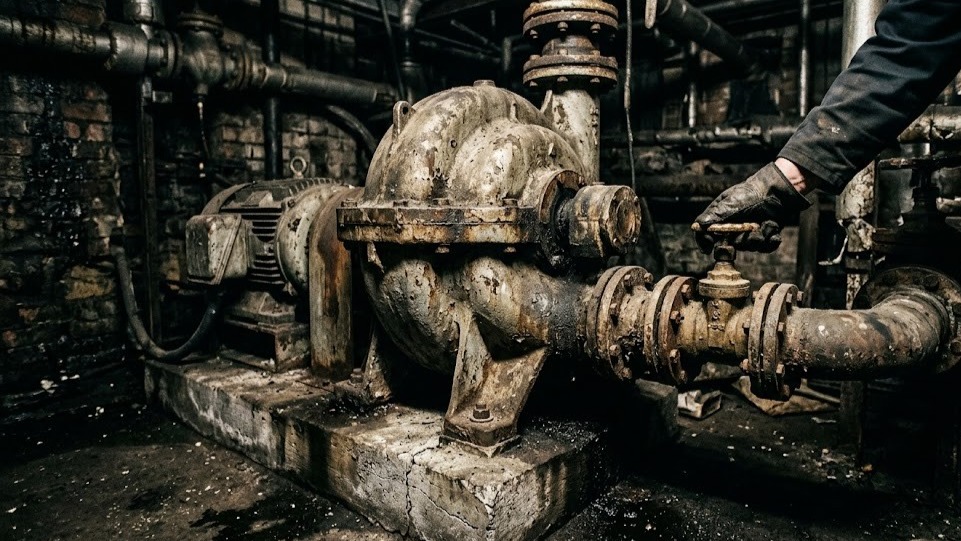
Heating engineers across the UK routinely encounter commercial buildings bleeding thousands in unnecessary operating costs - not from equipment failure, but from pumps running at capacities far exceeding system requirements. A 2023 Carbon Trust study found that 40% of commercial circulators operate at least 25% oversized, creating a cascade of financial penalties that compound year after year.
The oversized pump financial impact extends far beyond elevated electricity bills. Excessive flow rates accelerate component wear, trigger premature seal failures, and create hydraulic noise that masks genuine system faults. For facility managers operating on tight maintenance budgets, understanding pump oversizing consequences transforms pump selection from a procurement decision into a strategic financial choice.
Why Pumps Get Oversized in the First Place
Mechanical contractors typically add safety margins during system design - a 10-15% buffer accounts for calculation uncertainties and future expansion. Problems arise when multiple safety factors stack: the consultant adds 15%, the contractor adds another 10%, and the equipment supplier rounds up to the next standard pump size. A system requiring 8 litres per second suddenly receives a 12 l/s pump - 50% oversized before commissioning begins.
Legacy System Complications
Legacy systems compound this issue. Building refurbishments rarely include complete hydraulic recalculation. The original 1980s boiler plant served 15 floors, but half the building now uses local heat pumps. The central heating equipment remains sized for the old load, circulating excessive flow through a reduced system.
Procurement Pressures
Procurement practices prioritise availability over precision. When a 6 l/s pump shows eight-week lead time but a 10 l/s model ships next day, project pressure drives oversizing decisions. National Pumps and Boilers encounters this scenario regularly - contractors requesting larger pumps purely for delivery speed, despite the long-term oversized pump financial impact implications.
Direct Energy Cost Penalties
Pump power consumption follows the affinity laws: power increases with the cube of speed. A pump running 20% faster than necessary consumes 73% more electricity. For a commercial building operating pumps 5,000 hours annually, this mathematics creates substantial waste.
Consider a typical office building requiring 40 metres head at 10 l/s - approximately 1.8 kW motor power at 70% efficiency. Installing a pump sized for 12 l/s at 50 metres delivers 3.2 kW continuous draw. At £0.28 per kWh commercial rates, the oversized pump costs an additional £1,960 annually in electricity alone.
Variable Speed Drive Limitations
Variable speed drives mitigate but don't eliminate this penalty. Even with VSD control, oversized pumps operate at higher speeds to overcome excessive head. The motor efficiency curve degrades at partial loads, and the VSD itself introduces 3-5% conversion losses. A correctly sized fixed-speed pump often outperforms an oversized pump with VSD control.
Annual Energy Waste by Oversizing Percentage:
- 10% oversized: 15-20% energy penalty
- 25% oversized: 40-50% energy penalty
- 50% oversized: 90-110% energy penalty
These percentages apply to direct pump energy only. Secondary pump oversizing consequences on system performance add further costs.
Mechanical Wear and Component Lifespan
Excessive flow rates accelerate wear across every system component. Radiator valves designed for 0.3 l/s experience erosion at 0.5 l/s, reducing service life from 15 years to 8-10 years. Heat exchanger plates suffer increased fouling from turbulent flow, requiring descaling twice as frequently.
Seal and Bearing Failures
Pump mechanical seals represent the most vulnerable component. Manufacturers specify seal life at design duty point - typically 20,000-30,000 hours for Grundfos pumps in commercial applications. Operating 30% above duty point halves this expectancy. Seal replacement costs £350-600 including labour and downtime, creating a recurring expense that overshadows initial equipment savings.
Bearing failures follow similar patterns. Radial thrust increases with flow rate, loading bearings beyond design parameters. A pump rated for 50,000-hour bearing life at duty point might require replacement at 25,000 hours when oversized. For continuously operating systems, this transforms a 6-year maintenance interval into 3-year cycles.
Cavitation Damage
Cavitation damage emerges when excessive flow creates low-pressure zones at the impeller inlet. The characteristic grinding noise indicates vapour bubble formation and collapse - a process that erodes impeller surfaces and destroys mechanical seals. Repairing cavitation damage costs £800-1,500 per pump, with additional expense from system downtime and emergency callouts.
System Balance and Control Issues
Oversized pumps disrupt hydraulic balance across entire systems. Excessive differential pressure forces balancing valves toward closed positions, creating high velocity flow through restricted orifices. This generates hydraulic noise - the whistling and rushing sounds that plague modern buildings - and makes accurate balancing nearly impossible.
Control Valve Performance Problems
Control valves operate poorly under excessive differential pressure. A modulating valve designed for 20 kPa pressure drop receives 45 kPa from the oversized pump, forcing it to operate in the bottom 30% of its stroke. Control becomes erratic, with hunting behaviour that swings space temperatures ±2°C around setpoint. Occupant comfort complaints trigger thermostat adjustments that further destabilise the system.
Zone Isolation Challenges
Zone isolation becomes problematic. Automatic balancing valves and differential pressure regulators have limited authority - typically 50-60 kPa maximum. When the circulator generates 80 kPa, these devices cannot maintain design flow rates. Some zones receive excessive flow while others starve, creating simultaneous overheating and underheating complaints.
Heat emitter performance suffers paradoxically. Despite higher flow rates, excessive velocity through radiators and fan coils reduces dwell time, decreasing heat transfer effectiveness. A radiator receiving 0.4 l/s instead of design 0.25 l/s might deliver 5% less heat output due to reduced log mean temperature difference.
Hidden Costs in Commercial Buildings
Building Management System complexity increases substantially with oversized pumps. BMS contractors spend additional commissioning hours attempting to tune control loops that cannot achieve stability. The typical £3,500 commissioning budget expands to £5,000-6,000 as technicians struggle with inherent hydraulic problems masquerading as control issues.
Noise and Energy Rating Impacts
Noise complaints trigger acoustic investigations costing £1,200-2,000, identifying pipe velocities exceeding 1.5 m/s - the threshold where flow noise becomes audible through walls. Remediation requires either pump replacement or extensive pipework modification, neither covered under maintenance budgets.
Energy Performance Certificate ratings suffer. Display Energy Certificates for public buildings penalise excessive auxiliary energy consumption. A building that should achieve 'B' rating drops to 'C' purely from circulation pump waste, affecting property values and tenant appeal.
Maintenance Efficiency Losses
Maintenance contractor efficiency decreases. Technicians spend time investigating false alarms - pressure fluctuations, temperature instability, and zone complaints - that stem from fundamental oversizing rather than genuine faults. This diverts attention from productive maintenance, allowing real issues to develop undetected.
Calculating the True Lifetime Cost
A comprehensive financial analysis must account for all cost categories over the pump's expected service life - typically 15 years for commercial installations. The calculation reveals that initial equipment cost represents only 15-20% of total cost of ownership, making the oversized pump financial impact far more significant than purchase price alone.
15-Year Cost Breakdown Analysis
Cost breakdown for a 3 kW oversized pump versus correctly sized 1.8 kW unit (15-year analysis):
Energy Consumption:
- Oversized pump: 3 kW × 5,000 hours × £0.28/kWh × 15 years = £63,000
- Correct pump: 1.8 kW × 5,000 hours × £0.28/kWh × 15 years = £37,800
- Penalty: £25,200
Maintenance:
- Oversized pump: 5 seal replacements × £500 + 2 bearing sets × £800 = £4,100
- Correct pump: 2 seal replacements × £500 + 1 bearing set × £800 = £1,800
- Penalty: £2,300
System Issues:
- Control valve premature replacement: £1,200
- Additional BMS commissioning: £1,500
- Acoustic investigation and mitigation: £2,000
- Total secondary penalties: £4,700
Total 15-year penalty: £32,200
This analysis excludes productivity losses from system downtime, tenant complaints, and reduced equipment reliability - factors difficult to quantify but substantial in practice. Understanding these pump oversizing consequences helps facility managers make informed equipment decisions.
Right-Sizing Strategies for Existing Systems
Facilities operating oversized pumps have several retrofit options. Impeller trimming reduces pump capacity by machining the impeller diameter - typically achieving 10-20% flow reduction at modest cost (£300-500 including labour). This maintains the existing motor and frame while improving efficiency.
Replacement Options
Wilo pumps and similar manufacturers offer replacement impeller kits sized for actual system requirements. Swapping a standard impeller for a reduced-diameter version takes 2-3 hours and costs £200-400 in parts. The pump curve shifts downward, aligning with system needs without complete replacement.
Variable speed drives retrofit to existing fixed-speed installations, though cost-effectiveness requires careful analysis. A quality VSD costs £800-1,500 installed, with 3-5 year payback periods for significantly oversized pumps. Marginal oversizing (10-15%) rarely justifies VSD expense on energy savings alone.
Complete Pump Replacement Benefits
Complete pump replacement makes financial sense when existing units exceed 50% oversizing or approach end of service life. Modern DHW pumps incorporate permanent magnet motors achieving 85-90% efficiency - substantially better than older induction designs. The combined benefits of correct sizing and improved motor technology deliver 2-4 year payback periods.
Specification Best Practices for New Installations
Accurate system calculations prevent oversizing from project inception. Hydraulic modelling software calculates precise flow rates and pressure drops, eliminating guesswork. Reputable consultants use tools like Pipe Flow Expert or Bentley OpenFlows, producing detailed pump duty point specifications.
Single Safety Factor Approach
Single safety factors replace stacked margins. A well-calculated system requires only 5-10% contingency - sufficient for minor calculation uncertainties without significant oversizing. Specifications should explicitly state: "Pump shall deliver [flow rate] at [head] with maximum 10% safety margin. Contractor shall not upsize without engineer approval."
Efficiency-Focused Selection
Pump selection should prioritise duty point efficiency over maximum capacity. Manufacturers publish efficiency curves showing performance across the operating range. The selected pump should achieve peak efficiency at design duty point, not at 60% of maximum capacity.
Commissioning Verification
Commissioning procedures must include flow measurement verification. Ultrasonic flow meters or calibrated balancing valves confirm actual flow rates match calculations. This data validates pump selection and provides baseline documentation for future troubleshooting.
National Pumps and Boilers provides technical support during specification development, reviewing system calculations and recommending appropriately sized equipment. This consultative approach prevents oversizing while ensuring adequate capacity for genuine system requirements.
When Oversizing Is Appropriate
Certain applications legitimately require capacity beyond steady-state calculations. Variable load systems with significant future expansion plans justify 15-20% oversizing - provided the additional capacity serves documented requirements rather than vague "possible future needs."
Specific Justified Scenarios
Dual-purpose pumps serving both heating and cooling duties require sizing for the larger load, potentially creating oversizing during single-mode operation. Variable speed control becomes essential in these applications, modulating output to match instantaneous demand.
Standby pump configurations in critical facilities install matched pumps for redundancy. If system calculations indicate 8 l/s requirement, installing two 8 l/s pumps (one duty, one standby) provides appropriate backup without oversizing the operating unit.
Seasonal systems serving holiday properties or educational facilities operate at partial load for extended periods. A pump sized for peak winter demand runs oversized during spring and autumn. This scenario justifies VSD investment, reducing energy waste during low-load periods while maintaining peak capacity.
Conclusion
The oversized pump financial impact accumulates relentlessly - every hour of operation adds to energy waste, every start cycle advances mechanical wear, and every control adjustment fights against excessive hydraulic capacity. A commercial building operating pumps just 25% oversized throws away £2,000-3,000 annually in direct costs, with total lifetime penalties exceeding £30,000 per pump.
Facility managers reviewing mechanical systems should prioritise pump sizing audits. Simple flow measurement during normal operation reveals whether installed capacity matches actual requirements. Where significant oversizing exists, impeller trimming, VSD retrofits, or complete replacement deliver compelling financial returns alongside improved system performance and reliability.
For new installations, rigorous specification discipline prevents oversizing from the outset. Detailed hydraulic calculations, explicit safety margin limits, and commissioning verification ensure pumps operate at design efficiency throughout their service life.
Heating engineers and mechanical contractors carry responsibility for honest capacity assessment. The short-term convenience of oversizing - accommodating uncertainty, ensuring adequate capacity, simplifying procurement - imposes long-term financial burdens on building operators. Professional practice demands precision over caution, matching equipment capacity to genuine system requirements.
Contact us to discuss pump sizing verification, system efficiency audits, or equipment replacement strategies that eliminate oversizing penalties while ensuring reliable performance.