

Thermal Storage and Renewable Energy Integration in Commercial Heating Systems
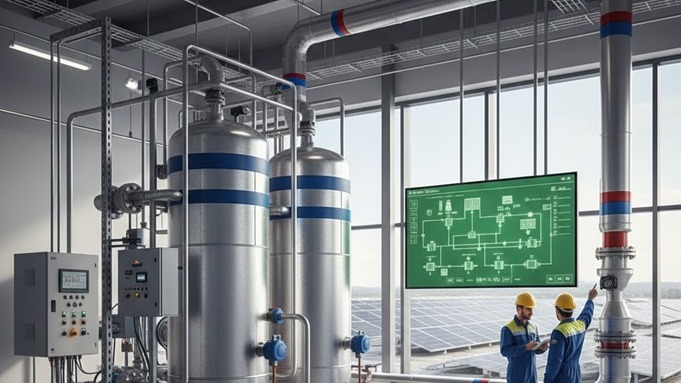
Commercial buildings across the UK face mounting pressure to reduce carbon emissions whilst controlling energy costs. Thermal renewable energy systems combined with sophisticated storage technology offer proven pathways to sustainability without compromising comfort or reliability. This guide explores how organisations successfully integrate renewable heating sources with thermal storage to achieve impressive environmental and economic results.
Understanding Thermal Renewable Energy Systems
Thermal renewable energy encompasses heating technologies that harness replenishing resources, including solar radiation, ambient air and ground heat, and sustainable biomass naturally. Unlike fossil fuel systems, which burn finite resources, renewable heating captures environmental energy and converts it into usable thermal output for commercial buildings.
What is Thermal Renewable Energy
The concept centres on sustainable heat generation, producing minimal carbon emissions whilst operating indefinitely without depleting natural resources. Solar thermal collectors absorb sunlight and convert it to heat. Heat pumps extract thermal energy from air, ground, or water sources and concentrate it to useful temperatures. Biomass systems combust sustainable organic material,s including wood pellets or chips.
Primary renewable heating technologies each offer distinct advantages. Solar thermal systems excel in applications with significant hot water demand, nd such as hotels, leisure centres, and healthcare facilities. Heat pumps provide efficient space heating for offices, retail spaces, and educational buildings. Biomass boilers suit rural locations with reliable fuel supply and large baseload heating requirements.
Storage plays an essential role in thermal renewable energy systems by bridging inherent mismatches between renewable generation patterns and building heating demand. Solar energy peaks during summer and midday when heating requirements typically fall. Heat pumps operate most efficiently during moderate weather. Biomass boilers run optimally at consistent output levels. Thermal storage tanks decouple generation from consumption, capturing renewable energy when available and releasing it precisely when buildings require heat.
Key Benefits of Integration
Energy independence represents compelling advantages of thermal renewable energy systems. Commercial buildings reduce vulnerability to volatile fossil fuel prices and supply disruptions by generating heat from freely available renewable sources. Some installations achieve 60-80% renewable heat fractions, substantially insulating organisations from energy market uncertainties.
Carbon reduction targets become achievable through renewable heating integration. A solar-powered TES system can eliminate 30-50 tonnes of annual CO2 emissions for medium-sized commercial buildings. Heat pump installations reduce carbon footprints by 50-70% compared to natural gas boilers, with emissions approaching zero as electricity grids incorporate more renewable generation.
Cost savings compound over system lifetimes spanning 20-25 years. Whilst initial capital investment exceeds conventional boiler costs, operating expenses drop dramatically. Solar thermal systems virtually eliminate fuel costs for hot water production. Heat pumps typically cost 40-60% less to operate than oil or LPG heating. Government Renewable Heat Incentive payments further improve project economics, often reducing payback periods to 4-7 years.
Grid flexibility and demand response capabilities position renewable thermal systems as valuable assets in dynamic energy markets. Buildings with thermal storage shift electricity consumption to off-peak periods, reducing costs and supporting grid stability. Some organisations participate in demand response programmes, receiving payments for adjusting energy consumption during peak periods.
Solar Powered TES System Design
Solar Thermal Technology for Commercial Use
Solar-powered TES system installations begin with appropriate collector selection and sizing. Evacuated tube collectors deliver superior performance in UK climates, maintaining efficiency during overcast conditions and achieving temperatures up to 80-90°C suitable for domestic hot water and space heating. Flat plate collectors cost less and suit applications with lower temperature requirements.
Sizing considerations require a detailed analysis of hot water consumption patterns, available roof area, and target renewable fraction. Hotels and leisure facilities with substantial daily hot water demand can justify large collector arrays of 50-200 square metres. Office buildings with modest requirements typically install 15-40 square metres. Professional solar thermal designers use simulation software to optimise collector area against storage volume and auxiliary heating capacity.
Storage configuration for solar-powered TES system applications demands carefully designed tanks maintaining distinct temperature layers. Solar circuits typically connect at multiple heights, charging upper zones to high temperatures whilst preserving cooler water in lower sections for efficient collector operation. Poor stratification reduces system efficiency by 15-25% compared to well-designed installations.
Multi-tank arrangements suit larger commercial installations requiring substantial capacity. Two or three tanks connected in series enable progressive charging where solar energy first heats the primary tank to maximum temperature before overflow charges secondary vessels. This configuration maximises usable stored energy and provides flexibility for integrating multiple heat sources, including auxiliary boilers or heat pumps.
Control and Optimisation
Collector pump controls form the foundation of solar-powered TES system operation. Differential temperature controllers monitor collector outlet and storage tank temperatures, activating circulation when collectors run 5-8°C hotter than storage. This ensures pumps only operate when useful solar energy can be collected, preventing heat loss during marginal conditions.
Auxiliary heating integration ensures reliable provision when solar energy proves insufficient. Backup systems, including gas boilers, Wilo pumps with immersion heaters, or heat pumps, automatically supplement solar output during periods of high demand or poor weather. Smart controls minimise auxiliary energy consumption by prioritising solar storage depletion before engaging backup heating.
Weather compensation adjusts system operation based on forecast conditions. Advanced controllers connect to online weather services, modifying charging strategies and temperature setpoints based on anticipated solar radiation. Sunny weather forecasts trigger aggressive storage charging to capture maximum available energy, whilst prolonged overcast periods shift towards auxiliary heating reliance.
Heat Pump and Thermal Storage Integration
Heat Pump Efficiency with Storage
Thermal renewable energy from heat pumps harnesses ambient heat and concentrates it to useful temperatures for building heating. Air source heat pumps extract heat from outdoor air, operating effectively down to -20°C with modern refrigerants. Ground source heat pumps access stable ground temperatures through buried pipe loops, delivering consistent performance year-round.
Reducing cycling frequency through thermal storage integration dramatically improves heat pump performance and longevity. Buffer tanks sized at 15-25 litres per kW of heat pump capacity enable compressors to run extended periods, reducing wear on electrical and mechanical components. Reduced cycling particularly benefits air source heat pumps that otherwise respond to rapid fluctuations in building demand.
Enabling off-peak operation transforms heat pump economics by shifting electricity consumption to low-cost periods. Storage tanks charged overnight on Economy 7 or similar tariffs provide heat throughout the day, reducing operating costs by 40-60% compared to continuous operation. Time-of-use optimisation becomes increasingly valuable as electricity markets introduce sophisticated tariff structures.
Improving seasonal efficiency through strategic storage use extends heat pump capabilities during extreme conditions. Pre-charging storage during moderate weather creates thermal reserves for cold snaps when heat pump capacity may prove insufficient. Many systems achieve coefficients of performance (COP) of 3.5-4.5, meaning each kilowatt-hour of electricity generates 3.5-4.5 kWh of heat output.
Design Considerations
Storage sizing for heat pumps balances capital investment against performance benefits. Undersized storage limits renewable energy utilisation and forces auxiliary heating operation. Oversized storage increases capital costs without proportional benefit. Simulation modelling identifies optimal storage volumes that maximise net present value, considering capital costs, energy savings, and incentive payments.
Temperature requirements influence system design and component selection. Low-temperature heat pumps work well with underfloor heating or oversized radiators but may struggle serving conventional radiator systems designed for 70-80°C flows. Thermal renewable energy systems increasingly employ low-temperature distribution through underfloor heating, enabling heat pump operation at maximum efficiency.
System control strategies coordinate multiple heat sources and storage charging-discharging cycles. Controls operate heat pumps as primary heat sources whenever outdoor conditions permit efficient operation, typically above -5°C for air source units. When temperatures drop further or demand exceeds heat pump capacity, boilers supplement output automatically. This hybrid approach achieves 60-80% renewable heat fractions in typical UK commercial applications.
Biomass and Other Renewable Sources
Biomass with Thermal Storage
Thermal renewable energy from biomass combustion offers unique advantages for commercial buildings with substantial heating requirements and available fuel storage space. Modern biomass boilers achieve combustion efficiencies exceeding 90%, comparable to natural gas boilers, rs whilst utilising carbon-neutral wood pellets, chips, or logs.
Biomass boilers operate most efficiently and cleanly at rated output, typically between 70-100% capacity. Part-load operation reduces combustion efficiency, increases emissions, and shortens component life. Thermal storage enables boilers to run at optimal output whilst buffering variations in building heating demand. Storage volumes of 50-100 litres per kW of boiler capacity typically prove sufficient for daily heating cycles.
Improving combustion efficiency through optimal boiler operation generates significant fuel savings. Biomass boilers running consistently at rated output achieve 5-10% better efficiency compared to modulating operation responding directly to building loads. Storage integration enables once or twice daily boiler firing rather than continuous operation, substantially reducing maintenance requirements and improving long-term reliability.
System configuration for biomass applications requires careful attention to safety and operational requirements. Properly sized expansion vessels prevent over-pressure conditions during charging cycles. High-limit thermostats and thermal dump zones protect equipment if controls malfunction. Regular safety inspections ensure protective devices remain functional throughout the system's life.
Emerging Technologies
Waste heat recovery from commercial processes provides free thermal energy for building heating. Manufacturing facilities, data centres, and commercial kitchens generate substantial waste heat that can charge thermal storage tanks. Heat recovery reduces both heating costs and cooling loads, delivering double benefits whilst improving sustainability credentials.
District heating integration enables buildings to access centralised renewable heating sources. Connections to district networks eliminate on-site combustion equipment, reducing maintenance costs and freeing valuable plant room space. Thermal storage on building sides of heat exchangers enables load shifting, potentially reducing consumption charges during peak tariff periods.
Hybrid renewable systems combine multiple technologies,s maximising overall renewable fraction. Solar thermal provides summer hot water whilst heat pumps handle space heating. Biomass boilers supply baseload heating with solar thermal supplementation. These sophisticated configurations require expert design but achieve impressive performance across varying conditions and seasons.
Economic Analysis and Incentives
Investment Considerations
Capital costs for thermal renewable energy installations vary considerably based on technology choice and system size. Solar thermal systems typically cost £800-1,500 per square metre of collector area, each including storage and controls. Heat pump installations range from £ to £ 00-1,800 per kW of heating capacity. Biomass systems cost £750-1,400 per kW, depending on fuel type and automation level.
Operating cost savings represent the most significant economic benefit. Solar thermal eliminates fuel costs for hot water production during collection periods, saving £ 3,000-15,000 annually,y depending on facility size. Heat pumps reduce heating costs by 40-70% compared to oil or LPG, with savings of £8,000-40,000 per year for commercial buildings. Biomass fuel typically costs 30-50% less than fossil fuel equivalents.
Available grants and incentives significantly improve project economics. The Renewable Heat Incentive (RHI) provides quarterly payments for eligible renewable heat generation over 20 years. Commercial RHI rates vary by technology, with current tariffs ranging from to 2-10 pence per kWh of renewable heat. A medium-sized installation might receive £5,000-20,000 annually, substantially accelerating payback periods.
Long-Term Value
Energy independence benefits extend beyond simple cost savings. Organisations reduce vulnerability to fossil fuel price volatility and supply disruptions. Some commercial buildings achieve 70-85% renewable heat fractions, dramatically reducing exposure to energy market uncertainties whilst demonstrating environmental leadership.
Carbon reduction value increasingly influences investment decisions as organisations pursue net-zero commitments. Thermal renewable energy systems deliver measurable emissions reductions, supporting corporate sustainability targets and regulatory compliance. Many organisations value avoided carbon emissions at £50-150 per tonne, substantially improving renewable heating project business cases.
Future-proofing advantages position early renewable heating adopters favourably as carbon regulations tighten. Buildings with efficient renewable heating systems achieve better Energy Performance Certificate ratings, supporting higher valuations and rental income. Investment in quality solar-powered TES system installations and other renewable technologies pays dividends through improved asset performance throughout ownership periods.
Implementation Best Practices
System Design and Sizing
Load profiling methodology establishes accurate heating and hot water demand patterns essential for appropriate thermal renewable energy system sizing. Professional designers analyse historical energy consumption data, occupancy schedules, weather correlations, and planned facility changes. Detailed load profiles reveal peak demand magnitudes, duration curves, and seasonal variations informing equipment selection and storage sizing.
Storage capacity optimisation requires sophisticated analysis, weighing storage costs against performance benefits. Simulation modelling identifies optimal storage volumes maximising net present value,e considering capital costs, energy savings, and incentive payments over system lifetime. Properly sized storage captures renewable energy effectively without wastefuloversizingi, ng increasing capital costs unnecessarily.
Integration planning coordinates renewable heating with existing building systems and infrastructure. Retrofit considerations determine whether renewable thermal systems can integrate successfully with existing heating infrastructure. Low-temperature heat pumps work well with underfloor heating or oversized radiators. Solar thermal integrates readily with existing storage tanks and controls. Early planning identifies constraints and optimisation opportunities.
Installation and Commissioning
Professional installation requirements ensure thermal renewable energy systems operate reliably and efficiently throughout design lifetimes. National Pumps and Boilers specialists understand renewable heating complexities and proper integration techniques. Qualified installers certified under the Microgeneration Certification Scheme (MCS) ensure Renewable Heat Incentive eligibility compliance.
Testing and verification confirm systems meet design specifications and contractual requirements. Temperature measurements throughout distribution networks verify proper heat delivery. Flow rate testing ensures adequate circulation. Control sequence verification confirms proper automatic operation. Pressure testing validates piping integrity before insulation and concealment.
Performance optimisation during commissioning establishes baseline operational parameters and identifies improvement opportunities. Processes include system flushing, water treatment, control calibration, and performance verification under various load conditions. Comprehensive commissioning identifies issues before they impact building operations and establishes documentation for ongoing optimisation.
Maintenance and Performance
Ongoing System Management
Preventive maintenance schedules ensure long-term reliability and performance of thermal renewable energy installations. Solar thermal requires minimal maintenance beyond periodic collector cleaning and antifreeze checks. Heat pumps need annual servicing similar to conventional boilers. Biomass systems involve more maintenance, including ash removal and flue cleaning, but deliver substantial fuel cost savings, justifying additional attention.
Performance monitoring tracks system effectiveness and identifies optimisation opportunities. Key performance indicators include renewable heat fraction, system coefficient of performance, energy cost per kWh delivered, and carbon emissions avoided. Monitoring platforms present these metrics through intuitive dashboards accessible to facility managers and sustainability teams.
Optimisation opportunities emerge through systematic performance reviews. Monthly energy consumption analysis, cost tracking, and carbon reporting demonstrate system benefits and identify improvement potential. Many building management teams achieve 10-15% additional savings through control refinements, maintenance attention, and operational adjustments based on actual performance data.
Troubleshooting Common Issues
System imbalances manifest as uneven heating, unexpected auxiliary heating operation, or disappointing renewable fractions. Investigation typically reveals incorrect pump speeds, stuck valves, air locks, or control sensor failures. Systematic testing of temperatures, pressures, and flows throughout systems identifies root causes, enabling effective remediation.
Efficiency degradation over time may result from scale accumulation in heat exchangers, failing sensors, or control drift. Regular water quality testing and treatment protect against corrosion and scale formation. Sensor calibration checks maintain control accuracy. Component replacement before failures prevents emergency situations and maintains optimal performance.
Component problems require prompt attention, restoring renewable heating and preventing auxiliary equipment overwork. Lowara pump failures, collector stagnation, or heat pump compressor issues necessitate a rapid response to maintain system performance. Maintaining relationships with qualified service providers ensures rapid response when issues arise, minimising disruption and preserving renewable heating benefits.
Conclusion
Thermal renewable energy systems integrated with sophisticated storage capabilities enable commercial organisations to achieve ambitious sustainability targets whilst maintaining comfortable building environments and controlling operating costs. Whether harnessing solar radiation through evacuated tube collectors, extracting ambient heat via advanced heat pumps, or combusting sustainable biomass, modern renewable heating technologies deliver compelling economic and environmental performance.
Successful implementation demands careful system design, appropriate technology selection, expert installation, and ongoing performance optimisation. The heating specialists at National Pumps and Boilers possess comprehensive experience designing and installing thermal renewable energy systems across diverse commercial applications. From initial feasibility assessment through detailed engineering, installation, commissioning, and aftercare, professional support ensures renewable heating investments deliver maximum value.
The transition towards renewable heating accelerates as organisations recognise the financial and sustainability benefits of reducing fossil fuel dependence. Early adopters gain a competitive advantage through lower operating costs, enhanced corporate responsibility credentials, and insulation from energy price volatility. Begin exploring renewable heating opportunities for your facilities today - contact us to discuss how thermal renewable energy integration can transform your heating infrastructure whilst advancing sustainability objectives.