
 -
- Troubleshooting Common Problems in Air-to-Water Heat Pumps
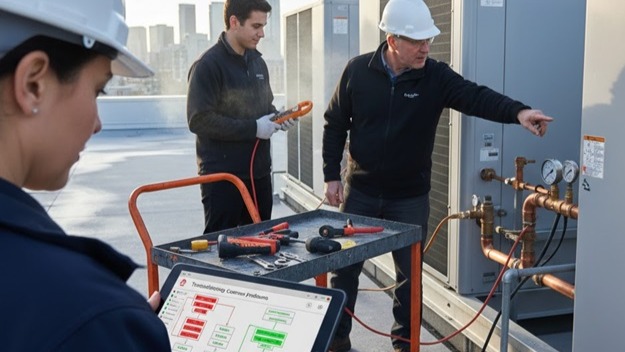
Air-to-water heat pump systems deliver reliable heating when properly maintained, but occasional problems inevitably arise during years of operation. Facility managers and building operators benefit from understanding common issues, diagnostic procedures, and resolution strategies that minimise downtime and repair costs. This comprehensive heat pump troubleshooting guide addresses frequently encountered problems, explains systematic diagnostic approaches, and clarifies when situations require professional heat pump repairs versus issues facility staff can address directly.
Understanding Heat Pump Operating Principles
Effective troubleshooting requires understanding normal heat pump operation. Temperature differentials between flow and return pipes typically range 5-10°C depending on system design and load conditions. Refrigerant pressures vary with outdoor temperature - colder conditions produce lower suction pressures and higher discharge pressures. Familiarise yourself with normal operating parameters for your specific equipment to recognise abnormal conditions indicating problems.
Modern heat pumps operate quietly with minimal vibration when properly installed. Unusual noises often signal developing problems requiring attention before complete failures occur. Refrigerant flow produces soft hissing sounds during normal operation, whilst compressors emit low-frequency hums. Fans generate gentle air movement sounds. Rattling, grinding, squealing, or loud banging noises indicate problems requiring investigation.
Performance deterioration develops gradually, making problems less obvious than sudden failures. Monitor energy consumption trends comparing month-to-month and year-to-year. Consumption increasing beyond expected weather variations suggests efficiency degradation from maintenance neglect or component wear. Temperature complaints from building occupants often represent early indicators of heating capacity issues before monitoring systems detect problems.
Error codes displayed by control systems provide valuable diagnostic information. Record error codes along with circumstances when they appear - time of day, outdoor temperature, system operating mode, and any unusual conditions. Consult manufacturer documentation for error code meanings. Many codes indicate temporary conditions requiring no intervention whilst others signal serious faults demanding immediate attention.
Insufficient Heating Capacity Issues
Reduced heating capacity manifests as inadequate indoor temperatures despite system operating continuously or inability to maintain temperatures during cold weather. Systematically investigate potential causes rather than jumping to conclusions. Start with simple checks - air filter cleanliness, circulation pump operation, and control settings - before examining complex refrigerant system parameters.
Low refrigerant charge represents a common cause of reduced capacity. Refrigerant doesn't "wear out" like fuel - any charge loss indicates leaks requiring repair before refilling. Symptoms include reduced temperature differential across outdoor coil, lower than normal discharge pressures, and excessive superheat measurements. Only qualified, F-Gas certified engineers should handle refrigerant system diagnosis and repair to comply with environmental regulations and avoid equipment damage.
Restricted airflow across outdoor heat exchanger coils severely impacts capacity and efficiency. Dirty air filters represent the most common restriction, easily resolved through cleaning or replacement. Inspect filters monthly, increasing frequency during high-pollen seasons or in dusty environments. Blocked outdoor coils covered in leaves, dirt, or debris require cleaning using soft brushes or low-pressure water. Check that landscaping or stored items don't obstruct airflow clearances around outdoor units.
Circulation flow problems reduce delivered heating despite adequate heat pump operation. Verify circulation pumps operate by checking for vibration or listening for motor hum. Stuart Turner pumps and other circulation equipment should run smoothly without excessive noise. Air locks preventing proper circulation present as partial or complete lack of heat delivery to specific zones despite pumps running. Bleed air from high points in systems, checking automatic air vents operate correctly.
Frozen expansion vessels lose pre-charge pressure, allowing system pressure to fluctuate excessively. Test vessel pre-charge pressure by isolating vessel from system, draining water, and measuring air pressure at valve. Recharge vessels to manufacturer specifications - typically 0.3-0.5 bar below cold system fill pressure. Replace vessels failing to hold pressure, indicating membrane failures.
Circulation and Hydraulic System Problems
Circulation pump failures prevent heat distribution even when heat pumps operate perfectly. Listen for pump motor operation and check for vibration indicating pumps run. Silent pumps may suffer electrical supply failures, blown fuses, or thermal overload conditions from motor overheating. Verify electrical supply voltage at pump terminals matches nameplate requirements. Reset thermal overloads after allowing adequate cooling time, investigating causes if repeated trips occur.
Bearing wear produces unusual noises from pumps before complete failure. Grinding or squealing sounds indicate worn bearings requiring replacement. National Pumps and Boilers provides circulation pump repair and replacement services, ensuring systems return to efficient operation quickly. Some modern sealed pumps require complete replacement rather than bearing service, though replacement often proves more economical than repair labour costs.
System pressure reading low on gauges indicates water loss through leaks or faulty expansion vessels. Inspect visible pipework and components for water stains indicating leak locations. Check pressure relief valve discharge pipes for evidence of valve weeping or opening. Top up system pressure using filling loop, but investigate and repair underlying causes rather than repeatedly adding water. Continuous makeup water requirement indicates active leaks or vessel failures demanding resolution.
High system pressure beyond relief valve settings suggests expansion vessel failures allowing unrestricted pressure increase with temperature. Test vessel pre-charge as described previously. Pressure rising during heating then dropping when cool confirms vessel problems rather than overfilling. Undersized vessels for system water volume also cause pressure fluctuations - verify vessel sizing meets manufacturer recommendations for total system water content.
Closed or partially closed isolation valves restrict flow causing inadequate heat delivery. Verify all isolation valves in operational circuits sit fully open. Zone valves should open when thermostats call for heat - listen for motor operation or feel valve bodies for warmth indicating flow. Pump valves stuck closed prevent circulation even with pumps running. Manually operate valves checking for smooth movement without binding or restriction.
Electrical Problems and Control Failures
Electrical supply issues cause various symptoms from complete non-operation to intermittent shutdowns or reduced performance. Verify correct voltage at equipment terminals using multimeter. Three-phase supplies should show balanced voltages within 2% across phases. Significant voltage imbalance (exceeding 2%) causes motor overheating and reduced efficiency. Contact electrical service providers if supply voltage falls outside equipment tolerances or shows significant imbalance.
Circuit breakers tripping repeatedly indicate electrical faults requiring investigation before simply resetting. Overload conditions from failed motors or compressors cause thermal trips. Short circuits produce instant magnetic trips. Earth faults may trip RCD protection. Investigate what occurred when tripping happened - which equipment operated, weather conditions, and any unusual circumstances. Persistent tripping without obvious cause demands professional electrical investigation before permanent damage occurs.
Control system failures disrupt operation despite mechanically sound equipment. Temperature sensor failures cause incorrect heating levels or prevent system operation entirely. Test sensor resistance using manufacturer specifications at known temperatures - sensors reading open circuit or short circuit require replacement. Faulty sensors cannot be repaired, only replaced with correct part numbers matching original specifications.
Thermostat calibration errors cause temperature control problems. Verify thermostat readings against accurate reference thermometers. Digital thermostats typically provide close accuracy (±0.5°C) when functioning correctly. Mechanical thermostats drift over time, requiring recalibration or replacement. Position thermostats away from heat sources, drafts, or direct sunlight affecting readings.
Zone valve motors sometimes jam or fail preventing valve movement. Listen for motor operation when zones call for heat. Feel valve bodies for warmth indicating open valves allowing flow. Manual override levers on many valves enable temporary operation during motor failures. Replace failed motorised valves with identical models or compatible alternatives verified against manufacturer compatibility guides.
Defrost Cycle Problems
Outdoor coils accumulate frost during heating operation in humid conditions near freezing point. Normal defrost cycles periodically melt frost accumulation, temporarily reversing operation to deliver hot refrigerant to outdoor coils. Light frost coverage dispersing within 5-10 minutes during defrost represents normal operation. Heavy ice build-up or inadequate defrost clearing indicates problems requiring attention.
Insufficient defrost frequency causes progressive ice accumulation blocking airflow and reducing capacity. Time-based defrost initiates at fixed intervals regardless of actual frost conditions - lengthening intervals if insufficient defrosting occurs. Demand defrost systems use temperature sensors detecting frost accumulation, initiating cycles when needed rather than fixed timers. Verify defrost control settings match site conditions and manufacturer recommendations.
Refrigerant charge significantly affects frosting patterns. Low charge causes excessive frosting concentrated at coil bottom whilst adequate charge frosts uniformly across coils. Overcharge produces minimal frosting but reduces efficiency. Reflex expansion vessels maintain proper system pressure supporting efficient refrigerant circulation. Only qualified engineers should assess and adjust refrigerant charge based on measured operating parameters.
Defrost cycles failing to initiate leave coils progressively ice-blocked until capacity drops severely. Test defrost controls by manually initiating cycles through service menus or test buttons. Defrost temperature sensors may fail preventing automatic initiation. Reversing valves that change refrigerant flow direction sometimes stick or fail. Professional diagnosis determines whether control, sensor, or valve failures prevent proper defrosting.
Extended defrost duration wastes energy and reduces overall system efficiency. Defrost should complete within 10-15 minutes returning system to heating operation. Prolonged defrost cycling repeatedly or taking excessive time indicates problems. Low refrigerant charge, reversing valve issues, or control setting errors commonly cause extended defrost. Investigate and resolve underlying causes rather than accepting wasteful operation.
Refrigerant System Faults
Refrigerant leaks develop at joints, connections, and through corrosion over time. Small leaks gradually reduce charge causing progressive performance deterioration. Larger leaks produce sudden capacity loss and obvious refrigerant odours in some cases. Electronic refrigerant detectors accurately locate leaks whilst bubble solution applied to suspect joints confirms specific leak locations. Repair leaks using appropriate methods - soldering, mechanical fittings, or component replacement depending on location and severity.
F-Gas regulations require proper refrigerant handling, leak repair, and record keeping. Only certified engineers may conduct refrigerant work. Repairing leaks before recharging prevents environmental harm and avoids wasting expensive refrigerant through continued leakage. Document all refrigerant work including quantities added, leak locations repaired, and engineer certification details.
Expansion valve problems affect system operation subtly compared to obvious compressor failures. Valves regulate refrigerant flow into evaporator coils, maintaining proper superheat values. Hunting - rapid oscillation between too much and too little refrigerant flow - produces temperature fluctuations and reduced efficiency. Adjust thermostatic expansion valves following manufacturer procedures or replace if adjustment fails to stabilise operation. Electronic expansion valves require diagnostic equipment for proper assessment and adjustment.
Compressor failures represent most expensive heat pump repairs common in heat pump systems. Mechanical failures produce loud noises, reduced or no cooling capacity, and often electrical supply trips from overload conditions. Electrical failures show high resistance or open circuits when measuring motor windings. Oil return problems in some installations cause oil starvation and bearing failures. Professional assessment determines whether compressor replacement proves economical compared to complete system replacement depending on equipment age and condition.
Noise and Vibration Troubleshooting
Identifying noise sources systematically prevents misdiagnosis and unnecessary repairs. Isolate noise source by operating system components individually where possible. Refrigerant flow noises from indoor pipework sound like flowing water or soft hissing. Mechanical noises from fans, pumps, or compressors exhibit rhythmic patterns matching rotation speeds. Hydraulic noises from water systems include gurgling from air entrainment or cavitation whistling from flow restrictions.
Fan motor bearing wear produces grinding or squealing noises progressively worsening over time. Catch bearing failures early before complete seizure damages motors or fan assemblies. Lubricate motors where manufacturer specifications permit, though many modern motors use sealed bearings requiring no maintenance. Replace motors showing significant bearing wear rather than risking operational failures during cold weather.
Compressor mounting isolation prevents vibration transmission to building structure. Loose mounting hardware allows excessive vibration transmission producing structural noise amplification throughout buildings. Tighten mounting bolts to specification ensuring isolation pads compress uniformly. Damaged or degraded isolation materials require replacement to restore effective vibration isolation.
Water Quality and Heat Exchanger Problems
Poor water quality accelerates heat exchanger fouling, reducing efficiency and potentially causing failures. Hard water areas experience calcium carbonate scale formation on heat transfer surfaces. Scale acts as insulation reducing heat transfer efficiency progressively. Test water hardness annually, implementing water treatment as necessary. Magnetic filters capture corrosion debris protecting heat exchangers and pumps from abrasive damage.
Descale heat exchangers every 2-3 years depending on water hardness and operating conditions. Chemical descaling solutions dissolve calcium deposits restoring efficiency. Follow manufacturer guidelines for appropriate descaling chemicals - incorrect chemicals damage brazed joints or gaskets. Some heavily scaled heat exchangers require replacement if cleaning fails to restore adequate performance.
System pH affects corrosion rates significantly. Test pH annually maintaining values between 7.0-8.5 for optimal corrosion protection. Add corrosion inhibitors protecting ferrous and non-ferrous components from electrochemical corrosion. Inhibitor concentration testing ensures protective levels throughout system life. Flamco pressurisation products maintain proper system conditions supporting water quality management.
Error Codes and Diagnostic Procedures
Modern control systems display error codes indicating specific fault conditions. High pressure faults suggest restricted airflow, overcharge, or non-condensable contamination. Low pressure faults indicate refrigerant loss or circulation restrictions. Temperature sensor faults show open or short circuit sensor failures. Communication errors between indoor and outdoor units indicate wiring problems or component failures.
Historical alarm logs accessed through service menus reveal fault patterns helping diagnosis. Recurring faults under specific conditions (outdoor temperature, time of day, or operating mode) narrow potential causes. Document alarm history including dates, times, and circumstances surrounding faults. This information proves invaluable for professional service engineers conducting detailed diagnosis.
Systematic diagnostic approaches prevent wasted time pursuing unlikely causes. Start with simple visual inspection checking obvious issues - tripped breakers, closed valves, dirty filters. Progress to basic measurements - voltage, pressure, temperature. Advanced diagnosis involving refrigerant parameters or control system internals requires professional expertise and specialised equipment.
When to Call Professional Service
F-Gas regulations restrict refrigerant handling to certified engineers. Any work involving refrigerant system components - leak repair, refrigerant charging, component replacement - requires qualified professionals. Attempting DIY refrigerant work risks equipment damage, environmental harm, and substantial fines for regulatory violations. Electrical work involving three-phase supplies or control system modifications similarly demands qualified electricians ensuring safety and code compliance.
Emergency service calls apply to situations threatening building occupants, causing water damage, or creating safety hazards. Complete heating loss during extreme cold weather, refrigerant leaks in occupied spaces, or electrical faults presenting fire risks justify emergency callouts. Non-emergency issues including minor temperature variations, noise concerns, or gradual efficiency deterioration can wait for normal business hours service, avoiding premium charges for after-hours attendance.
Prepare for service engineer visits by documenting symptoms, error codes, and circumstances surrounding problems. Provide full system access clearing stored items from equipment areas. Have maintenance records and commissioning documentation available. This preparation enables efficient diagnosis minimising service time and costs. For comprehensive heat pump troubleshooting and professional repair services, contact us to schedule service visits or discuss technical concerns with experienced engineers.