

Types of Monitoring Equipment for Commercial Heating Systems
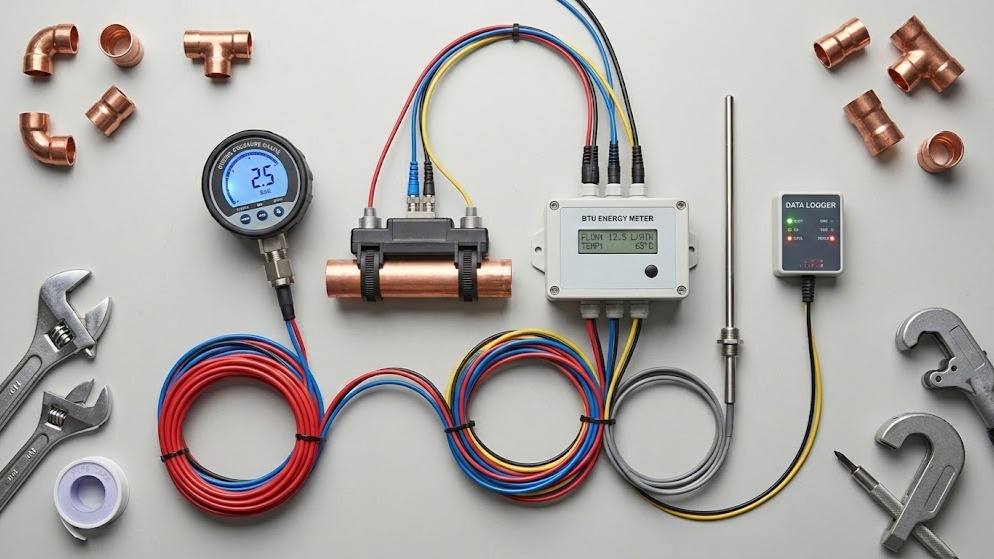
Heating systems rarely fail without warning. Before a complete breakdown occurs, subtle changes in flow patterns, pressure differentials, and circulation rates signal developing problems. Flow meters detect these changes weeks or months before they escalate into expensive failures, giving engineers time to intervene when repairs cost less and disruption remains minimal.
A flow meter measuring 15% below baseline in a commercial heating circuit does not just indicate reduced performance; it reveals underlying issues such as partial blockages, pump wear, or valve failures. National Pumps and Boilers supplies precision flow measurement equipment that transforms system monitoring from reactive firefighting into predictive maintenance. Effective flow meter problem detection capabilities protect heating system investments.
Why Flow Rate Changes Signal Developing Failures
Heating systems operate within designed flow parameters. When a 40-litre-per-minute circuit suddenly delivers 34 litres, something has changed. The flow measurement diagnostics capability lies in recognising these deviations before they cause secondary damage.
Pump impeller wear reduces flow gradually over months. A flow meter tracking daily readings shows the decline curve, allowing scheduled replacement during planned maintenance rather than emergency callouts. Grundfos and Wilo circulators typically lose 2-3% efficiency annually through normal wear, but accelerated decline indicates bearing failure or cavitation damage.
Partial blockages from magnetite accumulation, limescale deposits, or debris create measurable flow restrictions. A system designed for 60 litres per minute that suddenly drops to 52 litres has developed a blockage requiring investigation. Without flow measurement, this restriction goes unnoticed until complete failure occurs or heating performance becomes unacceptable.
Valve failures manifest as flow changes in specific circuits. A motorised valve stuck at 70% open reduces flow proportionally. Flow meters positioned after control valves detect these failures immediately, whilst systems without measurement continue operating with compromised performance until occupants complain about cold rooms. This flow meter problem detection approach prevents comfort complaints.
Flow Meter Installation Points That Maximise Early Detection
Strategic placement determines how effectively flow meters identify problems. Installing meters at critical measurement points creates a diagnostic network that pinpoints failure locations.
Primary circuit monitoring between the boiler and main distribution manifold establishes baseline system performance. Flow reduction here indicates pump problems, heat exchanger fouling, or primary pipework blockages. A commercial boiler rated for 180 litres per minute should maintain that flow rate under normal operation; deviations trigger investigation.
Secondary circuit measurement on individual heating zones isolates problems to specific areas. When the ground floor circuit shows normal flow whilst the first floor drops 20%, the fault lies in that specific zone's pipework, valves, or emitters. This precision eliminates guesswork and reduces diagnostic time by 60-70%.
DHW pumps circulating through calorifiers and storage vessels accumulate scale deposits that restrict flow. A flow meter showing gradual decline over 6-8 months indicates developing scale problems, allowing descaling during scheduled maintenance.
Return line measurement provides comparative data. The difference between flow and return circuit readings reveals system imbalances, partial blockages, or bypass valve problems. Identical flow rates on both sides indicate proper circulation; significant differences signal restrictions requiring attention. These flow measurement diagnostics reveal hidden system issues.
Baseline Data Requirements for Effective Problem Detection
Flow meters only detect problems when compared against known-good performance data. Establishing accurate baselines immediately after installation or commissioning creates the reference point for future comparisons.
Commissioning measurements document system performance when new or freshly serviced. Recording flow rates at various operating conditions, including full load, part load, and DHW priority, provides the complete performance envelope. A commercial system might show 220 litres per minute at full heating load but only 80 litres per minute during DHW-only operation. Both readings become baseline references.
Seasonal variations affect flow characteristics. Heating systems work harder during winter, potentially revealing marginal problems that remain hidden during summer operation. Recording flow data across 12 months captures seasonal patterns and distinguishes normal variation from developing faults.
Temperature-corrected readings account for viscosity changes. Water at 40°C flows differently than water at 80°C through identical pipework. Professional flow measurement equipment compensates automatically, but manual readings require correction factors to ensure accurate comparisons.
Load-dependent baselines recognise that flow rates change with demand. A modulating boiler system might operate at 30% capacity during mild weather and 100% during peak winter conditions. Flow rates scale proportionally; the baseline must reflect these legitimate variations to avoid false problem identification.
Common Problems Flow Meters Detect Before Failure
Specific failure modes create characteristic flow signatures. Recognising these patterns enables targeted investigation and early intervention. Flow meter problem detection capabilities identify these signatures reliably.
Pump cavitation shows intermittent flow fluctuations before complete failure. A pump operating with insufficient net positive suction head (NPSH) creates vapour bubbles that collapse violently, causing flow instability. Flow meters record these fluctuations as rapid variations between normal and reduced flow rates, sometimes 10-15% swings within minutes. This pattern indicates imminent pump damage requiring immediate attention.
Air entrainment creates similar fluctuations but with different characteristics. Air pockets moving through pipework cause brief flow reductions followed by rapid recovery. Flow meters show sharp dips lasting seconds rather than the sustained reduction caused by blockages. Identifying air problems early prevents pump damage and maintains system efficiency.
Heat exchanger fouling produces gradual flow reduction over months. A plate heat exchanger accumulating scale deposits shows 1-2% monthly flow decline. After 12 months, the 20-25% total reduction significantly impacts heating performance. Flow monitoring catches this deterioration early, allowing scheduled cleaning before efficiency losses become severe.
Check valve failures create reverse flow during pump shutdown. Flow meters with bidirectional capability detect this backflow immediately. A heating system that continues showing 5-10 litres per minute flow after pump shutdown has a failed check valve allowing gravity circulation or reverse flow. This wastes energy and indicates component failure requiring replacement.
Balancing valve drift changes flow distribution between circuits. Multi-zone systems rely on precise flow balancing to maintain comfort. When balancing valves shift position through vibration or component wear, flow redistributes incorrectly. Flow meters on individual circuits detect these changes, allowing rebalancing before comfort complaints arise. Flow measurement diagnostics reveal these subtle distribution changes.
Integration With System Controls for Automated Monitoring
Modern building management systems (BMS) accept flow meter inputs, enabling continuous automated monitoring without manual intervention. This integration transforms flow meters from diagnostic tools into predictive maintenance systems.
Alarm thresholds trigger notifications when flow deviates from acceptable ranges. Setting alarms at 10% below baseline provides early warning whilst avoiding false alarms from normal variations. A commercial heating system might set critical alarms at 20% deviation, requiring immediate investigation, and advisory alarms at 10% for scheduled inspection.
Trend analysis reveals developing problems through gradual changes invisible in daily operation. BMS software plotting flow rates over weeks or months shows decline curves indicating pump wear, fouling, or blockage development. This predictive capability enables maintenance scheduling based on actual equipment condition rather than arbitrary time intervals.
Differential monitoring compares multiple flow meters simultaneously. A system with flow measurement on supply and return circuits calculates the differential continuously. Sudden changes in this differential indicate system problems even when absolute flow rates remain within acceptable ranges. A 5-litre-per-minute increase in differential flow might indicate bypass valve problems or circuit imbalance requiring attention.
Performance verification confirms that maintenance work achieved expected results. After cleaning a heat exchanger or replacing a pump, flow measurements verify that performance returned to baseline levels. This objective confirmation prevents incomplete repairs and ensures maintenance effectiveness.
Flow Meter Types and Their Problem Detection Capabilities
Different flow meter technologies offer varying capabilities for early problem detection. Selecting appropriate technology depends on system requirements, installation constraints, and diagnostic priorities.
Ultrasonic flow meters measure non-invasively through pipe walls, making them ideal for retrofit installations. Transit-time ultrasonic meters achieve ±1% accuracy in clean water systems, detecting subtle flow changes that indicate developing problems. Their ability to measure bidirectional flow reveals check valve failures and reverse circulation issues immediately.
Electromagnetic flow meters provide high accuracy (±0.5%) with no moving parts, eliminating maintenance requirements. These meters excel in systems with suspended solids or varying fluid properties. Their fast response time captures rapid flow fluctuations caused by cavitation or air entrainment that slower meters might miss.
Turbine flow meters offer excellent accuracy at moderate cost, though moving parts require periodic maintenance. These meters respond quickly to flow changes, making them suitable for detecting intermittent problems like partial blockages or valve issues. Regular calibration verification ensures continued accuracy for baseline comparisons.
Differential pressure meters using venturi or orifice plates provide reliable measurement at low cost. Whilst less accurate than other technologies (typically ±2-5%), they detect significant flow reductions indicating major problems. These meters suit applications where detecting large deviations matters more than precise measurement. This flow meter problem detection approach suits budget-conscious installations.
Practical Implementation for Commercial Heating Systems
Large commercial installations benefit most from comprehensive flow monitoring, but implementation requires careful planning to balance diagnostic capability against installation costs.
Phased installation prioritises critical measurement points. Starting with primary circuit monitoring and major secondary circuits establishes core diagnostic capability. Additional meters added during subsequent maintenance periods expand coverage without excessive initial investment. A 500kW commercial system might begin with three flow meters covering primary flow, return, and DHW circuits, adding zone-specific meters over 2-3 years.
Wireless monitoring systems reduce installation costs by eliminating control wiring. Battery-powered flow meters with wireless communication transmit data to central monitoring systems without extensive cable runs. This technology particularly suits retrofit applications where cable installation proves difficult or expensive.
Data logging intervals balance diagnostic detail against storage requirements. Recording flow rates every 15 minutes captures most developing problems whilst maintaining manageable data volumes. Critical applications might log every 5 minutes, whilst less critical systems manage with hourly readings.
Integration with existing controls leverages current BMS infrastructure. Most modern building management systems accept 4-20mA or Modbus inputs from flow meters, incorporating flow data into existing alarm and trending systems. This integration provides comprehensive system monitoring without separate standalone systems. Flow measurement diagnostics integrate seamlessly with modern building controls.
Cost-Benefit Analysis of Flow Meter Problem Detection
Flow meter installation represents upfront investment that delivers returns through reduced failure costs and improved system reliability.
Emergency callout prevention provides immediate savings. A single emergency pump failure requiring weekend callout costs £800-1,200 including parts and labour. Flow monitoring detecting impending failure allows scheduled replacement during normal working hours at 60% lower cost. Three prevented emergencies annually justify flow meter investment.
Extended equipment life results from operating systems within design parameters. Pumps running with adequate flow and proper conditions last 12-15 years; those operating with cavitation, blockages, or improper conditions fail within 5-7 years. Flow monitoring maintaining optimal conditions doubles equipment lifespan, reducing lifecycle costs significantly.
Energy savings from maintaining design efficiency offset operational costs. A central heating system operating 15% below design flow rate consumes 10-12% more energy achieving the same heat output. Flow monitoring maintaining optimal performance recovers installation costs through energy savings within 3-4 years in commercial applications.
Reduced diagnostic time cuts maintenance costs directly. Engineers equipped with flow data diagnose problems 60-70% faster than those relying on symptom-based troubleshooting. This efficiency reduces labour costs and minimises system downtime during repairs.
Conclusion
Flow meters transform heating system maintenance from reactive crisis management into proactive problem prevention. By detecting flow rate deviations weeks or months before complete failures occur, these instruments provide the early warning necessary for cost-effective intervention. Flow meter problem detection delivers measurable returns across commercial heating installations.
The diagnostic capability extends beyond simple flow measurement. Strategic meter placement creates a comprehensive monitoring network that pinpoints problem locations, distinguishes between failure types, and tracks system performance over time. Integration with building management systems automates this monitoring, triggering alerts when flow deviations indicate developing problems.
Commercial installations gain maximum benefit through reduced emergency callouts, extended equipment life, and maintained energy efficiency. The initial investment in flow measurement equipment typically recovers within 2-3 years through prevented failures and reduced operational costs. Flow measurement diagnostics provide the foundation for predictive maintenance programmes.
National Pumps and Boilers supplies precision flow measurement equipment alongside the pumps, valves, and system components that keep heating systems operating reliably. Combining quality equipment with comprehensive monitoring creates heating infrastructure that delivers consistent performance whilst minimising lifecycle costs. For technical guidance on implementing flow monitoring in specific applications or to discuss equipment options suited to particular system requirements, contact the technical team for expert advice on predictive maintenance strategies.