

Understanding BTU Meters: Measuring Actual Heating Energy Use
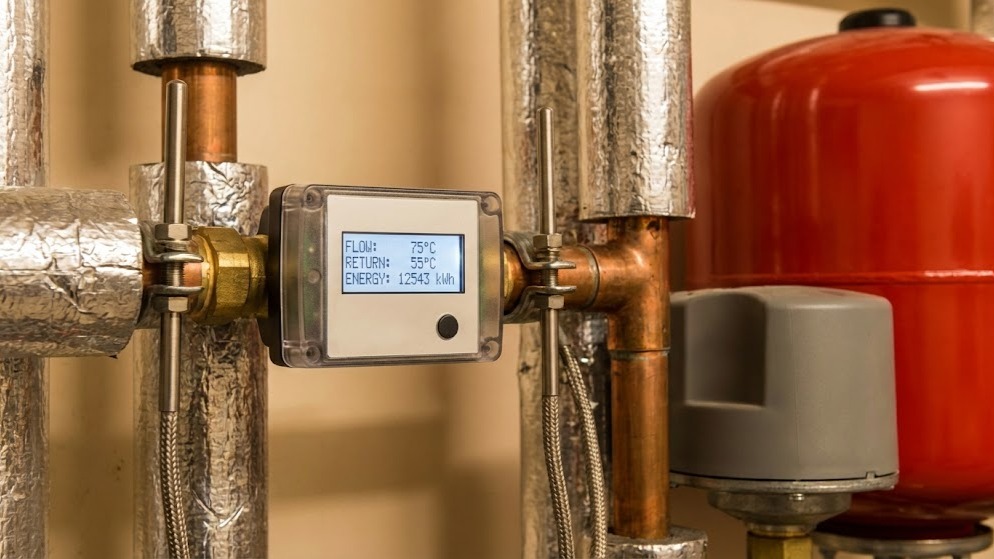
Most heating systems are billed on assumptions, including boiler capacity, estimated run times, or flat-rate charges that bear little resemblance to actual energy consumption. For commercial buildings, district heating schemes, and multi-tenanted properties, this guesswork creates disputes, inefficiency, and wasted expenditure. BTU meter heating systems eliminate the ambiguity by measuring the precise thermal energy delivered to each zone, tenant, or building.
A BTU meter calculates heat energy by monitoring flow rate, supply temperature, and return temperature in real time. The difference between these values determines how much thermal energy the system has transferred. This data allows building managers to bill tenants fairly, identify system inefficiencies, and comply with Heat Network Regulations that now mandate consumption-based billing across the UK.
National Pumps and Boilers supplies BTU meters and heat measurement equipment designed for commercial heating systems, district heating networks, and multi-occupancy buildings where accurate energy accounting is essential. Heat meter commercial applications require precision measurement technology.
How BTU Meters Calculate Thermal Energy
A BTU meter comprises three core components: a flow meter, two temperature sensors, and a calculator unit. The flow meter measures the volume of water passing through the heating circuit. One temperature sensor sits in the flow pipe (hot water leaving the heat source), while the second sits in the return pipe (cooler water returning after delivering heat).
The calculator applies a straightforward formula: thermal energy equals flow rate multiplied by the temperature difference (delta T) multiplied by the specific heat capacity of the fluid. In practical terms, if 10 litres per minute flow through a system with a 20°C temperature drop, the meter calculates the kilowatt-hours or megawatt-hours delivered over time.
Modern BTU meters record data at intervals as short as one second, capturing fluctuations in demand throughout the day. This granular data reveals patterns invisible to traditional billing methods, including morning peaks when heating systems fire up, midday lulls, and evening surges as occupants return. BTU meter heating technology provides unprecedented visibility into consumption patterns.
Applications in Commercial and District Heating
District heating networks supply thermal energy from a central plant to multiple buildings through insulated pipework. Without accurate metering, operators struggle to allocate costs fairly or detect leaks and inefficiencies. BTU meters installed at each building's heat interface unit provide consumption data that supports transparent billing and identifies underperforming substations.
Multi-tenanted commercial buildings face similar challenges. A single boiler plant may serve dozens of offices, retail units, or apartments. Installing BTU meters on each tenant's heating circuit ensures charges reflect actual usage rather than arbitrary floor area calculations. This approach incentivises energy conservation and prevents disputes over heating bills.
Industrial facilities use BTU meters to monitor process heating, steam systems, and heat recovery equipment. Accurate measurement helps engineers optimise heat exchanger performance, validate energy-saving projects, and comply with ISO 50001 energy management standards. Heat meter commercial installations deliver measurable operational benefits.
BTU Meter Installation Requirements
Installation demands precision. Temperature sensors must sit in thermowells positioned correctly in the flow and return pipes, typically at least five pipe diameters downstream of bends or valves to avoid turbulence. The flow meter requires straight pipe runs before and after the sensor, with lengths specified by the manufacturer based on pipe diameter and flow velocity.
Strainers upstream of the flow meter prevent debris from fouling the sensor. Even small particles can distort readings or damage mechanical components. For magnetic flow meters, ensure the pipe remains full at all times; air pockets disrupt the magnetic field and cause erroneous readings.
Electrical requirements vary by meter type. Battery-powered units offer installation flexibility but require periodic replacement. Mains-powered meters provide continuous operation and support advanced features like real-time data transmission. Many systems now integrate with building management platforms via M-Bus, Modbus, or BACnet protocols, allowing centralised monitoring and automated billing.
Accuracy and Calibration Standards
UK Heat Network Regulations require BTU meters to meet MID (Measuring Instruments Directive) Class 2 accuracy standards. This specification mandates maximum permissible errors of ±2-3% depending on flow rate and temperature differential. High-quality meters often exceed these requirements, achieving ±1% accuracy across their operating range.
Calibration intervals depend on application and meter type. Most manufacturers recommend verification every five years for commercial installations. Facilities subject to stringent energy accounting, such as those claiming Enhanced Capital Allowances or participating in energy trading schemes, may calibrate annually.
Field verification involves comparing the meter's readings against reference instruments traceable to national standards. Engineers check flow accuracy using portable ultrasonic meters and verify temperature sensors with calibrated thermometers or resistance bridges. Significant drift indicates sensor degradation, scaling, or mechanical wear requiring repair or replacement. Meter accuracy depends on regular verification.
Selecting the Right BTU Meter for Your System
Flow meter technology determines suitability for specific applications. Ultrasonic meters use sound waves to measure flow velocity without mechanical components, offering excellent accuracy and minimal pressure drop. They suit large-diameter pipes and clean water systems but require careful installation to avoid air entrapment.
Mechanical turbine meters provide cost-effective solutions for smaller systems. A rotating turbine generates pulses proportional to flow rate. These meters handle a wide range of flow rates but introduce slight pressure losses and require periodic inspection of moving parts.
Electromagnetic flow meters excel in challenging conditions, including high temperatures, variable flow rates, and systems containing glycol or other additives. They impose no pressure drop and tolerate suspended solids better than mechanical alternatives. However, they require conductive fluids and mains power.
Temperature sensor quality affects overall accuracy significantly. Platinum resistance thermometers (PT500 or PT1000) offer superior precision and stability compared to cheaper thermocouples. Paired sensors should be matched to within 0.1°C to ensure accurate delta T measurement, particularly in low-temperature differential systems where small errors compound.
Pipe diameter, flow rate range, and fluid properties guide meter sizing. An oversized meter operating at the low end of its range sacrifices accuracy. An undersized meter creates excessive pressure drop and may exceed velocity limits. Manufacturers provide selection charts based on peak and minimum flow rates, ensuring optimal performance across operating conditions. Heat meter commercial applications require careful specification.
Integration With Heat Networks and Billing Systems
The Heat Network (Metering and Billing) Regulations 2014 mandate consumption-based billing for most heat networks in England and Wales. BTU meters provide the data foundation for compliance, recording hourly or half-hourly consumption that supports transparent invoicing.
Data loggers within BTU meters store months of historical readings, accessible via optical interfaces or wireless connectivity. Building management systems retrieve this data automatically, feeding energy dashboards and billing software. Tenants access web portals showing real-time consumption, empowering them to adjust usage and reduce costs.
Advanced systems incorporate predictive analytics, alerting operators to anomalies that suggest leaks, faulty valves, or tenant equipment issues. A sudden spike in consumption may indicate a stuck-open thermostatic radiator valve. Gradual increases over time could signal scaling in heat exchangers reducing efficiency.
Central heating systems benefit from integrated BTU metering that connects with broader building management infrastructure.
Common Installation Mistakes and How to Avoid Them
Reversed temperature sensors rank among the most frequent errors. Installing the flow sensor in the return pipe (or vice versa) produces negative readings or wildly inaccurate data. Clear labelling and verification during commissioning prevent this issue.
Inadequate insulation around temperature sensors allows heat exchange with ambient air, skewing readings. Thermowells must be insulated to the same standard as the pipework, particularly in plant rooms with high air temperatures.
Air locks in the flow meter disrupt measurement. Horizontal installations should position the flow meter on the return pipe where pressure is highest, reducing the risk of vapour formation. Automatic air vents upstream of the meter remove trapped air during system filling and operation.
Incorrect flow direction through the meter causes significant errors. Most flow meters operate in one direction only, indicated by an arrow on the body. Installing the meter backwards may damage internal components or render readings meaningless.
Electrical interference affects electronic meters. Route signal cables away from variable speed drives, contactors, and other sources of electromagnetic noise. Use screened cables and proper grounding to maintain signal integrity. BTU meter heating installations require careful electrical planning to maintain accuracy.
Maintenance and Troubleshooting
Routine inspection includes checking sensor connections, verifying data logging, and inspecting strainers for debris accumulation. Blocked strainers reduce flow rate and pressure, affecting both system performance and meter accuracy.
Scaling on temperature sensors increases thermal resistance, causing delayed response and reduced accuracy. In hard water areas, inspect sensors annually and descale as necessary. Some installations use brass or stainless steel thermowells with removable sensors to simplify maintenance.
Battery-powered meters display low-battery warnings months before failure. Replace batteries proactively to avoid data loss. Mains-powered units should have surge protection to guard against voltage spikes that damage electronics.
Flow meter drift often results from wear in mechanical components or fouling of sensor surfaces. Ultrasonic meters may require transducer cleaning if deposits accumulate on the pipe wall. Electromagnetic meters rarely drift but can fail if the electrode coating degrades in aggressive fluids. Grundfos pump systems integrate effectively with BTU metering installations.
Sudden reading anomalies warrant immediate investigation. A delta T dropping to near zero suggests a stuck-open bypass valve or a failed circulation pump. Flow rate spikes indicate valve failures or leaks. Historical data comparison helps distinguish genuine changes in demand from equipment faults.
Compliance With UK Heat Network Regulations
Heat Network Regulations require meters to be installed, maintained, and read in accordance with best practice guidance. Operators must provide bills based on actual consumption at least twice yearly, with information presented clearly to help consumers understand their usage.
Exemptions apply to small systems and certain technical configurations, but most commercial and residential heat networks fall within scope. Non-compliance risks enforcement action from local authorities and undermines consumer confidence in district heating.
Meter data must be accessible to consumers on request, typically within one month. Many operators exceed this requirement by providing online portals with near-real-time data. Transparency builds trust and encourages energy-conscious behaviour.
Operators must also demonstrate that heat networks operate efficiently. BTU meter data supports this by revealing system losses, distribution inefficiencies, and opportunities for improvement. Comparing metered output from the central plant against the sum of individual building meters quantifies network losses, guiding investment in insulation upgrades or leak detection. Heat meter commercial compliance protects operators and consumers.
Cost-Benefit Analysis for BTU Meter Installation
Initial costs include the meter, installation labour, and any necessary pipework modifications. A typical commercial BTU meter costs £300-£800 depending on size and specification. Installation adds £200-£500 per meter depending on site complexity.
Savings accrue through accurate billing, reduced disputes, and improved system efficiency. Multi-tenanted buildings often see 10-20% reductions in overall heating consumption once tenants pay for actual usage rather than flat rates. This behavioural change alone can recover installation costs within two to three years.
Operational savings extend beyond billing. BTU meter data identifies inefficient zones, oversized pumps, and control problems that waste energy. Targeted improvements guided by measured data deliver better returns than speculative upgrades. Expansion vessels and other system components can be optimised based on metering data.
Regulatory compliance avoids penalties and supports applications for renewable heat incentives or other government schemes requiring verified energy data. Meters provide the audit trail necessary for claiming payments or demonstrating carbon reductions. Heat meter commercial benefits extend throughout operational life.
Future Developments in Heat Metering Technology
Wireless connectivity is becoming standard, eliminating the need for manual meter reading and enabling real-time monitoring from remote locations. LoRaWAN and NB-IoT protocols suit heat networks spanning large areas or multiple buildings.
Artificial intelligence algorithms analyse consumption patterns to predict maintenance needs, detect anomalies, and optimise system operation. Machine learning models trained on historical data can forecast demand, allowing operators to adjust plant output proactively and reduce standby losses.
Integration with smart home systems allows consumers to automate heating based on occupancy, weather forecasts, and time-of-use tariffs. BTU meters provide the feedback loop that makes these optimisations possible, closing the gap between intent and actual energy use.
Miniaturisation and cost reduction are expanding BTU meter applications into smaller systems previously considered uneconomical to meter. Compact meters now suit individual apartments, enabling consumption-based billing in residential buildings where communal heating was once charged by floor area or number of radiators. BTU meter heating technology continues advancing rapidly.
Conclusion
BTU meters transform heating from an estimated expense into a measured, manageable resource. By capturing actual thermal energy consumption, these devices enable fair billing, reveal inefficiencies, and support regulatory compliance across commercial, industrial, and district heating applications. Accurate measurement empowers building managers to optimise system performance, tenants to control their costs, and operators to demonstrate the value of efficient heat networks.
As UK regulations increasingly mandate consumption-based billing and energy transparency, BTU meter heating systems have shifted from optional monitoring tools to essential infrastructure for any multi-occupancy or networked heating system. Proper selection, installation, and maintenance ensure these meters deliver reliable data that drives better decisions and measurable savings.
National Pumps and Boilers offers technical support for BTU meter selection, installation guidance, and system integration. For advice on metering solutions tailored to specific heating applications, contact the technical team for expert assistance.