

Understanding Coil vs External Heat Exchanger Designs in Commercial Calorifiers
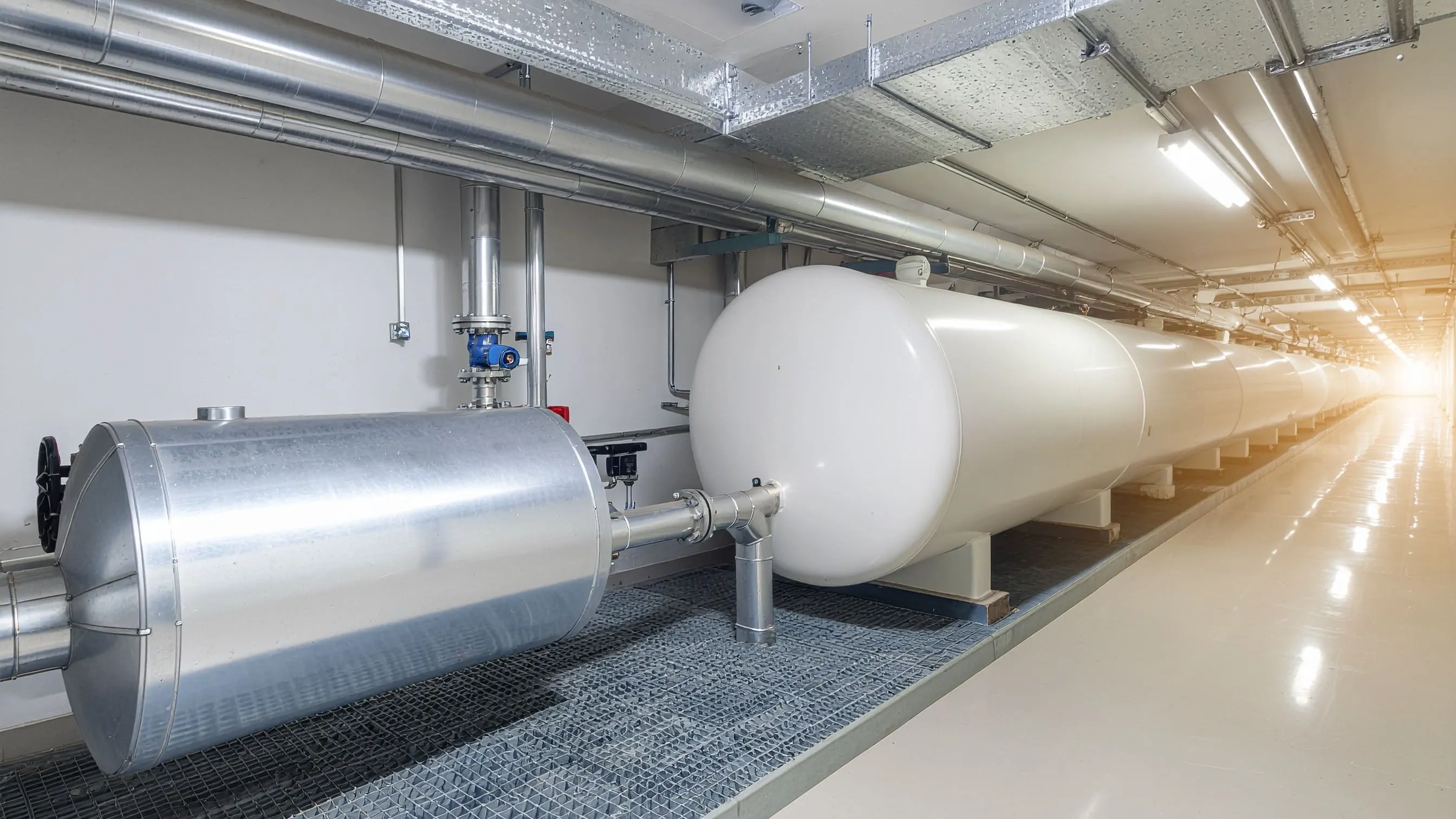
Commercial hot water generation relies entirely on moving massive thermal energy from a primary boiler to a secondary domestic water supply. Understanding the different calorifier heat exchanger types is absolutely critical for modern plant room design. This vital mechanical decision dictates your upfront capital costs, long-term maintenance schedules, and overall system reliability perfectly. Choosing the wrong mechanism can cripple your building's hot water supply and destroy your boiler plant within months.
The heat exchanger acts as the absolute physical boundary between the toxic heating fluid and the clean drinking water. This boundary prevents dangerous cross-contamination completely while allowing thermal energy to pass through efficiently. The two dominant calorifier heat exchanger types include traditional internal fixed coils and modern external plate systems. Each mechanical design offers specific operational advantages depending heavily on your exact building demand and local water quality.
Understanding Calorifier Heat Exchanger Types
Engineers must match the precise heat transfer mechanism to the specific daily usage profile of the commercial property. A small boutique hotel presents completely different hydraulic demands compared to a massive public leisure centre. You must map these daily usage spikes mathematically before purchasing any expensive heat exchange equipment. Evaluating different calorifier heat exchanger types prevents you from installing a system that cannot handle sudden morning rushes safely.
Securing continuous flow across these complex systems prevents the primary boilers from short-cycling destructively. Sourcing reliable Grundfos Pumps Available guarantees that the primary heating fluid circulates robustly regardless of the chosen heat exchanger method. Reliable circulation prevents sudden temperature drops during intense usage peaks and maintains a bactericidal environment perfectly.
How Indirect Calorifier Coil Design Works
The traditional plumbing approach utilises a heavy metallic heating coil submerged directly inside the main hot water storage vessel. The primary boiler water flows continuously through this sealed internal tube. This specific indirect calorifier coil design transfers heat directly into the surrounding volume of stored domestic water smoothly. This method provides immense mechanical simplicity because the entire heating mechanism sits safely inside one single large cylinder.
Copper and stainless steel represent the most common materials used to manufacture these submerged internal heating coils. Copper provides exceptional thermal conductivity but suffers severe degradation in highly aggressive or acidic water conditions. Stainless steel offers superior longevity and resists harsh chemical disinfection treatments safely without eroding. A premium indirect calorifier coil design typically features a massively extended surface area positioned near the bottom of the tank.
This specific lower positioning promotes natural thermal stratification, forcing the heated water to rise cleanly to the top. This ensures the absolute hottest water remains ready for immediate distribution to the building outlets. Heavy-duty Lowara Pumps Available push the primary fluid through these internal coils efficiently to maintain rapid recovery times.
The Mechanics of External Plate Heat Exchangers
Modern high-demand facilities increasingly separate the heat exchanger entirely from the actual hot water storage vessel. External plate heat exchangers consist of dozens of thin, corrugated metallic plates stacked tightly together in a compact block. The hot primary fluid and the cold domestic water flow through alternating microscopic channels between these metallic plates. This creates a massive, highly turbulent surface area for incredibly rapid thermal transfer.
Because the water moves through these metallic plates so quickly, it heats up almost instantaneously. You then pump this newly heated water directly into a completely separate, empty buffer storage vessel. Using external plate heat exchangers allows engineers to generate massive volumes of hot water without requiring giant internal heating coils. This separation also completely protects the storage vessel from severe internal thermal stress and metal fatigue.
This arrangement requires a dedicated secondary circulation pump to move water between the plate exchanger and the storage tank constantly. Reliable Wilo Pumps Available manage this specific secondary charging loop flawlessly, ensuring the buffer tank remains fully heated. This precise setup perfectly handles sudden, massive surges in commercial hot water demand safely.
Comparing Heat Transfer Efficiency
Thermal performance dictates your overall commercial energy consumption and strict Building Regulations compliance entirely. The heat transfer efficiency of an external plate system significantly outperforms a traditional submerged internal heating coil. The highly turbulent flow inside a plate exchanger violently strips away thermal boundary layers, forcing heat across the metal instantly. This allows the primary boiler to operate at lower, highly efficient condensing temperatures safely.
Submerged coils rely heavily on natural convection currents within the storage tank to move the heated water upward. This natural process is inherently slower and limits the maximum possible heat transfer efficiency during peak usage. When a massive continuous draw-off occurs, a standard coil might struggle to recover the tank temperature quickly enough.
Plate systems provide rapid recovery that prevents your hotel guests from experiencing freezing cold showers during the morning rush. Intelligent DAB Pumps Available monitor these rapid recovery networks, ramping up flow speeds exactly when the building demand peaks. This ensures your commercial boilers operate perfectly within their most efficient thermal condensing zones constantly.
Plant Room Space and Footprint Considerations
Commercial plant room real estate carries a massive financial premium in modern architectural developments. Traditional calorifiers with internal coils require giant, heavy cylinders that consume huge amounts of valuable floor space. If you need massive daily volumes, you must install multiple giant cylinders, filling the plant room completely. This severe spatial requirement often ruins complex inner-city refurbishment projects entirely.
Plate systems offer an incredibly compact mechanical alternative for tight urban refurbishments. A tiny plate exchanger can deliver the exact same thermal output as a massive traditional heating coil. You can then pair this compact exchanger with a much smaller, highly insulated buffer storage vessel safely. Installing premium Valve Trusted Range isolation components allows you to fit these modular systems into incredibly cramped basements easily.
This reduced physical footprint frequently makes external plate systems the absolute only viable choice for dense city centre hotels. It completely eliminates the need for expensive structural engineering assessments required to support multiple tonnes of stored water.
System Vulnerabilities and Hard Water Scaling
Every mechanical heating system faces severe physical degradation from hard water limescale accumulation. When you heat domestic water beyond 60°C, dissolved calcium and magnesium precipitate out as solid rock incredibly rapidly. This rock adheres directly to the hottest metallic surfaces, creating a heavily insulated, highly destructive thermal barrier. External plate heat exchangers suffer terribly in hard water areas because their internal microscopic channels clog incredibly fast.
Even a single millimetre of hard scale ruins the system performance and chokes the water flow completely. If you ignore this severe scaling, the internal plates will literally fracture under the immense hydraulic pressure. A traditional indirect calorifier coil design handles minor scaling slightly better because it has much more physical space around it. However, heavy scale still destroys internal coil recovery rates entirely and burns out the primary boilers eventually.
Quality Vaillant Engineer Supplies help commercial operators implement strict water treatment protocols to protect these vulnerable components. You must install highly reliable water softening equipment upstream of any commercial hot water generator safely. Preventing scale formation is always drastically cheaper than replacing fractured metallic heat exchangers.
Managing Strict Mechanical Descaling Requirements
Maintenance practicalities often dictate the final equipment specification for large commercial buildings. When an internal coil scales up, you must drain the entire giant storage vessel completely to access it. You then face a highly laborious mechanical descaling process, scraping rock off the copper tubes through a tiny access hatch. This primitive mechanical descaling process takes the entire calorifier offline for several consecutive days.
Plate systems offer a dramatically superior maintenance experience for busy commercial facility managers. You can safely isolate a plate heat exchanger, remove it from the pipework, and clean it in a chemical bath within hours. This rapid mechanical descaling process keeps your commercial hot water system highly operational with minimal costly downtime.
Many critical healthcare facilities install a secondary backup plate exchanger to guarantee continuous hot water during these cleaning cycles. Utilising full-bore isolation valves from our Heating Valve Range makes swapping these plate modules incredibly safe and fast. You simply close the brass valves, swap the heat exchanger, and restore the hot water supply instantly.
Conclusion: Professional Heat Exchanger Specification
Selecting the correct commercial hot water system requires deep hydraulic knowledge and strict mathematical calculation. You must carefully balance the superior thermal performance of plate systems against their severe vulnerability to hard water scaling. Traditional internal coils offer rugged simplicity but consume massive amounts of highly valuable plant room space.
Understanding the different calorifier heat exchanger types prevents catastrophic mechanical failures and highly expensive premature replacements. You must specify appropriate water treatment systems to protect your chosen heat exchanger mechanism safely from scale. Regular maintenance and strictly scheduled chemical cleaning protocols guarantee your expensive commercial equipment survives its intended lifespan.
Do not guess your commercial hot water requirements or simply replace an old system with identical outdated technology. If you need expert guidance navigating commercial calorifier specifications safely, Request Technical Support from our dedicated engineering team today.