

Understanding Commercial Gas Safety Certificates (CP12) for Large Facilities
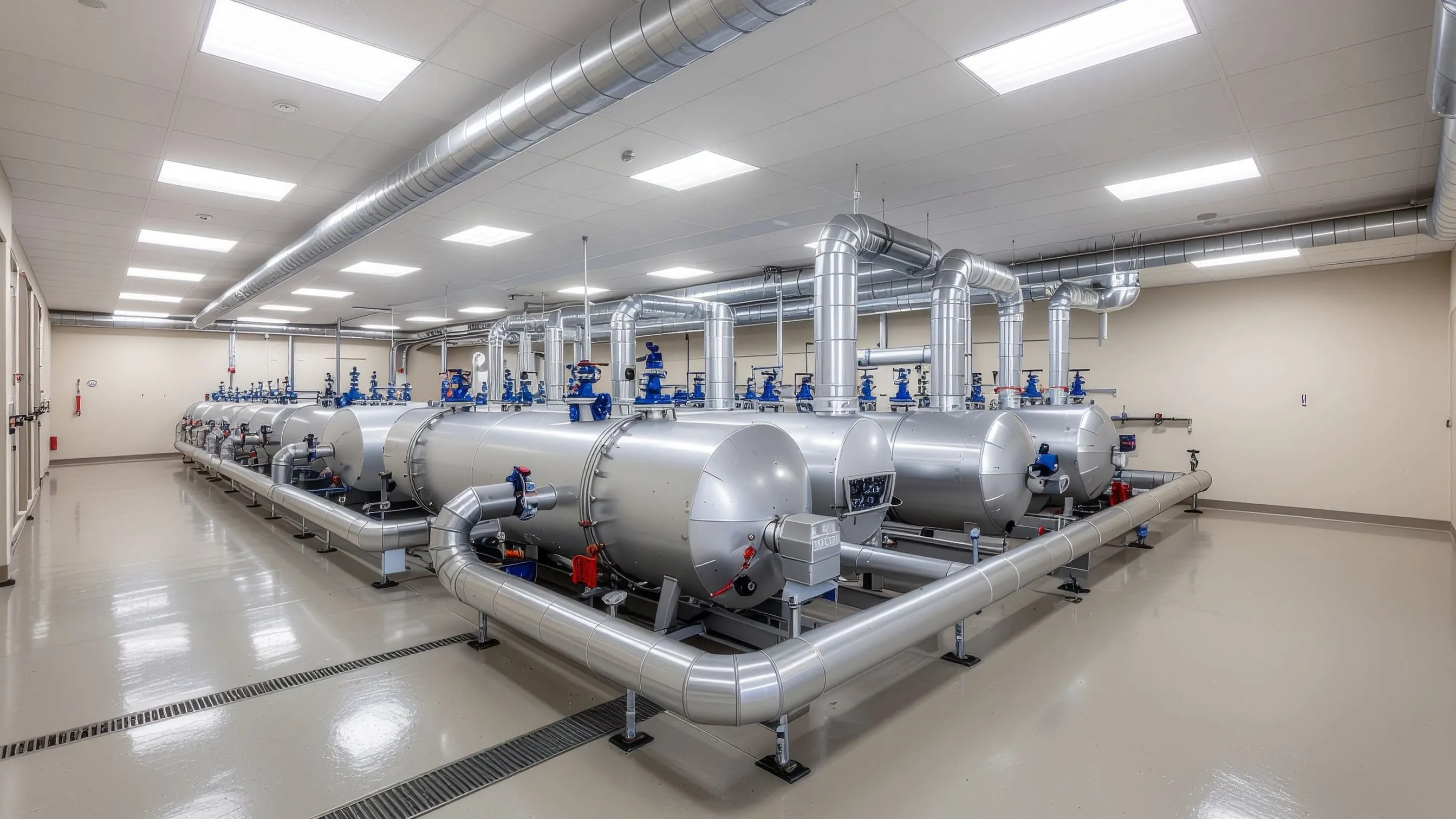
Large commercial facilities operate under significantly stricter gas safety regulations than domestic properties. The Gas Safety (Installation and Use) Regulations 1998 place absolute responsibility on commercial property owners, landlords, and managers. You must ensure all gas appliances and installations undergo an annual inspection by a Gas Safe registered engineer. The resulting commercial gas safety certificate serves as legal proof of compliance. It's also a critical safety document that protects occupants from serious risks associated with faulty gas equipment.
Understanding these requirements becomes particularly complex in large facilities. These buildings often house multiple gas appliances across extensive floor areas. Industrial boilers, commercial catering equipment, process heating systems, and water heating installations each present unique inspection challenges. The consequences of non-compliance extend well beyond potential fines. They encompass genuine safety risks, insurance invalidation, and potential criminal prosecution if incidents occur.
What Is a Commercial Gas Safety Certificate?
A commercial gas safety certificate is a legal document. It confirms that all gas appliances, flues, and associated pipework within a commercial property have been inspected and deemed safe. Domestic certificates typically cover a handful of appliances. In contrast, commercial CP12s often encompass dozens of individual items across multiple zones within a single facility.
The certificate must be issued by a Gas Safe registered engineer. They must hold the appropriate commercial competencies for the specific equipment. This distinction proves crucial because not all domestic gas engineers possess the qualifications to certify commercial boiler certification. National Pumps and Boilers provides qualified engineers to handle complex certification needs.
Each CP12 remains valid for exactly 12 months from the date of issue. Commercial property owners must commission a fresh inspection before expiry. Many facilities schedule CP12 inspection requirements 4 to 6 weeks ahead of the deadline. This allows time for remedial works if defects are found.
The certificate itself details every appliance inspected and records safety checks performed. It notes any defects discovered and classifies them by severity. Immediately Dangerous (ID) defects require instant disconnection of the appliance. At Risk (AR) defects mean the appliance shouldn't be used until repaired. Not to Current Standards (NCS) items may continue operating, but you should address them during the next service.
Key Differences Between Domestic and Commercial CP12 Requirements
Commercial gas safety inspections operate under fundamentally different parameters than domestic checks. The primary distinction lies in scope and complexity. A typical domestic property might contain a single combi boiler and a gas hob. In contrast, large commercial facilities frequently house multiple heating zones, extensive hot water systems, and process heating installations.
Inspection duration reflects this complexity. Domestic checks usually complete within 30 to 60 minutes. Commercial inspections in large facilities may require full-day site visits. Sometimes they need staged inspections across multiple days. This is particularly true when equipment operates continuously and can't be easily shut down for testing.
Documentation requirements also differ substantially. Commercial certificates must provide granular detail about each appliance's location, make, model, and specific test results. Many large facilities maintain comprehensive asset registers. These registers cross-reference CP12 certificates with maintenance schedules, warranty information, and replacement planning.
The engineer's qualifications represent another critical difference. Domestic Gas Safe registration doesn't automatically grant authority to inspect commercial equipment. Engineers working on commercial installations require additional competencies. For example, they need CODNCO1 for non-domestic natural gas or ICPN1 for large commercial boilers.
Types of Gas Appliances Requiring Certification in Large Facilities
Commercial properties encompass a far broader range of gas-fired equipment than domestic settings. Central heating installations in large facilities often comprise multiple boilers. These operate in cascade or duty/standby configurations, and each requires an individual inspection.
Commercial boiler rooms frequently house equipment from manufacturers such as Remeha or Vaillant. Their outputs range from 100kW to several megawatts. These systems incorporate sophisticated controls, multiple safety interlocks, and complex flue arrangements that demand specialist inspection expertise. Ensuring your remeha boilers are properly certified is a critical compliance step.
Hot water generation represents another significant category. Large facilities often employ dedicated commercial water heaters. They provide high-volume hot water for showers, washing facilities, and process requirements. Ensuring andrews water heaters are functioning safely requires specific testing protocols.
Commercial kitchens introduce additional complexity. Ranges, ovens, fryers, griddles, and combi-ovens all fall within the CP12 scope. A thorough commercial catering equipment inspection demands rigorous safety checks around ventilation, flame supervision devices, and emergency shut-off systems.
Process heating equipment represents the most specialised category. These are used in manufacturing, laundries, laboratories, and industrial applications. These installations often operate continuously and incorporate custom configurations. They may require production shutdowns to facilitate safe inspection.
The Commercial CP12 Inspection Process
A comprehensive commercial gas safety inspection follows systematic procedures. These are established by Gas Safe Register technical bulletins and manufacturer specifications. The engineer begins with a visual examination of all accessible gas pipework and pump valves. They check for corrosion, mechanical damage, inappropriate modifications, and adequate support.
Each appliance undergoes specific safety checks tailored to its type and application. A Vaillant commercial boiler receives particular scrutiny regarding combustion performance. Flue gas analysis measures CO/CO₂ ratios to verify complete combustion. Excessive carbon monoxide indicates combustion defects that require immediate attention.
Flame supervision devices undergo functional testing on every appliance. These safety mechanisms shut off the gas supply if the flame extinguishes. A Gas Safe registered engineer verifies these devices operate within manufacturer-specified response times. This is typically 60 to 90 seconds for commercial equipment.
Think of checking ventilation like ensuring a deep sea diver has a reliable air line. Just as the diver needs a constant supply to survive, large boiler rooms require substantial air supply for combustion and cooling. Engineers calculate ventilation requirements based on total appliance input ratings. They then verify that adequate free area exists in the ventilation grilles, which must always remain unobstructed.
Operating pressure testing confirms the gas supply pressure falls within appliance specifications. Commercial installations often incorporate pressure governors and meter regulators requiring separate verification. Standing pressure tests check for supply-side leakage when all appliances are turned off.
Flue integrity testing ensures combustion products discharge safely into the atmosphere. Engineers perform spillage tests. They check that the flue draught adequately removes combustion gases under all operating conditions. Shared flue systems serving multiple appliances receive additional scrutiny regarding potential interactions between units.
Legal Responsibilities for Commercial Property Owners
The Gas Safety (Installation and Use) Regulations 1998 place unambiguous legal duties on anyone with control of commercial premises containing gas appliances. This typically means the property owner. However, it can extend to managing agents, facilities managers, or tenants depending on lease arrangements.
Regulation 36 requires landlords and those with control of premises to ensure all gas appliances, installations, and flues are maintained in a safe condition. Annual inspection by a qualified commercial gas engineer represents the minimum compliance standard. More frequent inspections may be necessary for heavily-used equipment or where manufacturers specify shorter service intervals.
Record retention requirements mandate keeping CP12 certificates for at least two years. Many organisations maintain longer retention periods. They often match equipment lifespan to demonstrate ongoing compliance history and support insurance claims if incidents occur.
Where commercial property is leased, landlords must provide tenants with a copy of the current CP12 within 28 days of completion. New tenancies require certificate provision before occupation commences. You can't waive or transfer these obligations to tenants through lease agreements. Ultimate responsibility remains with the landlord.
Non-compliance carries serious consequences. The Health and Safety Executive prosecutes failures resulting in injury or death. Penalties include unlimited fines and imprisonment up to two years. Even without incidents, failure to maintain a valid commercial gas safety certificate can result in prohibition notices preventing building use until compliance is achieved.
Selecting a Gas Safe Registered Engineer for Commercial Work
Not all Gas Safe registered engineers possess the qualifications to certify commercial installations. The Gas Safe Register operates a competency-based system. Engineers hold specific category codes authorising work on particular appliance types and settings.
Commercial work requires CODNCO1 competency as a minimum. This covers non-domestic natural gas installations. Larger boilers over 70kW net input require ICPN1 qualification. A commercial catering equipment inspection demands CIGA1 competency. Engineers working on LPG installations need corresponding commercial LPG qualifications.
National Pumps and Boilers maintains a team of engineers holding comprehensive commercial competencies across heating, hot water, and process applications. This breadth of qualification proves essential in large facilities housing diverse equipment types. It avoids the need to coordinate multiple contractors to meet your CP12 inspection requirements.
Verification of credentials should precede any work. The Gas Safe Register website provides a free lookup service. Property managers can confirm an engineer's registration status and view their specific competencies. Engineers must carry their Gas Safe ID card on site. Facilities should request to see it and verify it against the online register.
Experience with similar facilities provides valuable context. Engineers familiar with large commercial installations understand the operational constraints of continuously-running systems. They can recommend practical remedial approaches and typically complete commercial boiler certification more efficiently through familiarity with common equipment configurations.
Common Issues Found During Commercial Gas Safety Inspections
Ventilation deficiencies represent the most frequently identified defect category in commercial CP12 inspections. Boiler rooms often accumulate stored materials over time, which obstructs ventilation grilles. Refurbishment works may inadvertently block air bricks or reduce ventilation free area below calculated requirements. These defects typically classify as At Risk, requiring remediation before continued operation.
Flue problems appear particularly common in older commercial buildings. Shared flue systems serving multiple appliances can develop blockages from debris, bird nests, or structural deterioration. Flue terminals sometimes become obscured by building extensions or vegetation growth, creating spillage risks. Condensing boiler flues require proper condensate drainage. Blocked condensate traps cause flue gas spillage and boiler shutdowns.
Maintenance-related failures frequently emerge during CP12 inspections. Commercial equipment operating continuously between annual services develops wear that may compromise safety. Flame supervision devices can fail, allowing gas flow without ignition. Heat exchangers develop cracks or corrosion perforations, potentially leaking combustion products into occupied spaces. These issues underscore why annual commercial gas safety certificate inspections represent a minimum requirement.
Installation defects occasionally surface. This is particularly true in facilities that have undergone piecemeal equipment additions without comprehensive design review. A facility manager at a regional leisure centre recently inherited a plant room where multiple central heating system pump units had been squeezed in without upgrading the main gas supply line. The undersized pipework caused erratic boiler shutdowns during peak morning demand. Upgrading the gas main resolved the lockouts and ensured the system met current commercial gas safety standards.
Combustion performance issues indicate deteriorating equipment condition or incorrect setup. Elevated carbon monoxide readings signal incomplete combustion from burner wear, incorrect gas pressure, or insufficient combustion air. These defects require immediate investigation and typically result in an Immediately Dangerous classification if CO levels exceed safe thresholds.
Maintaining Compliance Between Annual Inspections
Annual CP12 certification represents a legal minimum, not a complete maintenance strategy. Large commercial facilities benefit from structured preventive maintenance programmes. These address equipment between statutory inspections. Manufacturers typically recommend quarterly or bi-annual servicing for heavily-used commercial boilers. More frequent attention is needed for critical or continuously-operating equipment.
Routine maintenance schedules should align with operational requirements. Many facilities schedule major equipment servicing during planned shutdown periods. This minimises disruption whilst allowing comprehensive access for maintenance activities.
Staff training creates a valuable first line of defence against developing problems. Facilities personnel should understand basic gas safety principles. They need to recognise warning signs like unusual smells or flame appearance changes, and know how to isolate gas supplies in emergencies. Regular briefings reinforce these competencies and ensure new staff receive appropriate induction.
Record-keeping extends beyond retaining CP12 certificates. Comprehensive maintenance logs document all servicing, repairs, and modifications to provide valuable equipment history. These records help identify recurring problems, support warranty claims, inform replacement decisions, and demonstrate due diligence if regulatory authorities investigate incidents.
Building management systems increasingly incorporate gas safety monitoring. Carbon monoxide detectors in boiler rooms and plant spaces provide early warning of combustion problems. Gas leak detection systems can automatically isolate supplies when leaks are detected. These technological safeguards complement but never replace the requirement for competent human inspection through an annual commercial gas safety certificate.
Conclusion
A commercial gas safety certificate represents far more than a bureaucratic compliance exercise for large facilities. It constitutes essential safety verification, protecting building occupants whilst confirming legal obligations are met. The complexity of commercial installations demands specialist expertise that only appropriately qualified Gas Safe registered engineers can provide.
Property owners and facilities managers should approach CP12 requirements proactively. Schedule inspections well ahead of expiry dates to accommodate any necessary remedial works. Selecting engineers with relevant commercial competencies and facility-specific experience ensures inspections are thorough, efficient, and provide genuine value beyond mere certificate production.
Maintaining compliance between annual inspections creates a robust safety culture that protects both people and property. This is achieved through structured maintenance programmes, staff awareness, and proper record-keeping. If you need help managing your facility's compliance, Speak to a Pump & Boiler Specialist to discuss how experienced commercial heating engineers can help maintain continuous compliance whilst optimising equipment performance.