

Understanding Condensate Pumps for Modern Boiler Systems
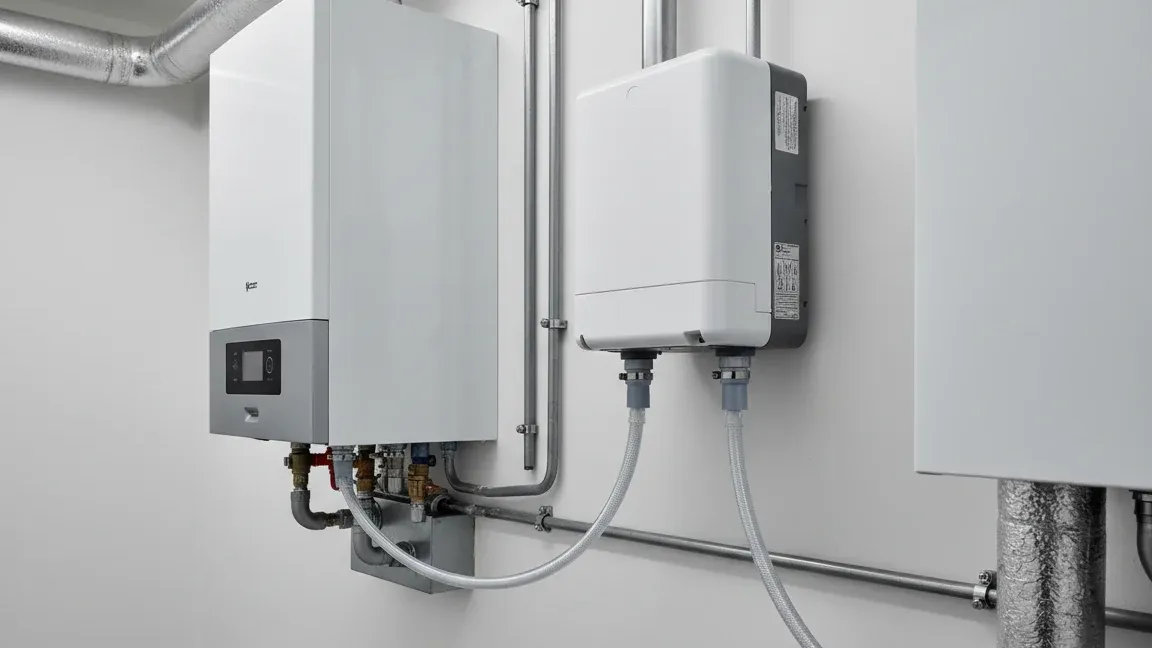
Modern condensing boilers represent a significant advancement in heating efficiency, routinely achieving seasonal efficiency ratings above 90% by extracting heat from flue gases that older boilers simply vented to atmosphere. This efficiency gain comes with a practical consequence: condensate pumps become essential components when gravity drainage proves impossible. Understanding how these devices work, when they prove necessary, and how to maintain them properly ensures reliable boiler operation and prevents costly system failures.
What Are Condensate Pumps and Why Do They Matter?
The Science Behind Condensate Production
Condensing boilers achieve their impressive efficiency by cooling flue gases to the point where water vapour condenses back into liquid form. This process releases latent heat that would otherwise escape through the flue, adding several percentage points to overall efficiency. A typical domestic condensing boiler produces between 2-3 litres of condensate per hour during operation, with larger commercial units generating considerably more.
The condensate produced carries mild acidity with a pH typically ranging from 3 to 5, similar to vinegar. This acidity results from dissolved carbon dioxide and other combustion products. Whilst modern drainage systems handle this without issue when properly installed, the acidic nature means condensate requires appropriate disposal methods and cannot simply be released anywhere without consideration.
Proper condensate handling represents a fundamental requirement of condensing boiler installation covered by Building Regulations Part L. Installations that fail to address condensate disposal correctly face compliance issues and potential damage to drainage infrastructure, boiler components, and building fabric.
When Condensate Pumps Become Essential
Gravity drainage represents the simplest solution when feasible. If the boiler sits above a suitable drainage point and pipework can be routed with adequate fall (minimum 2.5 degrees), no pump proves necessary. However, many modern installations lack this luxury due to building configurations and boiler positioning.
Basement boiler rooms present the most obvious scenario requiring condensate pumps. With the boiler below ground level and drainage points above, gravity cannot move condensate upward. Similarly, internal boiler locations within living spaces often lack convenient drainage access, requiring condensate to be pumped several metres horizontally and vertically to reach a soil stack or external drain.
Multi-storey commercial buildings frequently install boilers on intermediate floors or roof levels where drainage routing becomes complex. In these situations, condensate pumps provide the necessary pressure to overcome vertical lift and horizontal distance. Some installations require pumps capable of lifting condensate 5-8 metres vertically whilst simultaneously pushing it 10-20 metres horizontally.
Building Regulations require condensate disposal to appropriate drainage systems - typically foul drainage via internal soil stacks, external drains, or purpose-built soakaways. Simply allowing condensate to discharge onto surfaces or into rainwater systems fails to meet compliance standards. When gravity cannot achieve compliant disposal, pumps become mandatory.
Types of Condensate Pumps for Different Applications
Internal vs External Condensate Pumps
Some modern boilers incorporate integral condensate pumps within the boiler casing. These internal pumps offer convenience and compact installation, with the manufacturer having sized the pump appropriately for the boiler's condensate production. Internal pumps typically handle modest lift heights of 2-3 metres, suitable for many residential applications where drainage points sit slightly above boiler level.
External standalone pumps offer greater flexibility and capacity. Positioned adjacent to the boiler with a gravity-fed connection from the boiler's condensate outlet, these units can handle higher flow rates and greater vertical lifts. External pumps prove essential for commercial installations, cascade boiler systems, or residential situations requiring significant vertical lift beyond internal pump capabilities.
Noise levels differ between pump types. Internal pumps benefit from the boiler casing providing sound dampening, whilst external pumps may produce audible cycling sounds as the reservoir fills and empties. Quality external pumps incorporate noise-reduction features, but positioning away from quiet areas like bedrooms remains advisable where installation flexibility permits.
Grundfos pumps include condensate pump options designed specifically for heating applications, with features addressing common installation challenges including chemical resistance and reliable float switches.
Pump Capacity and Performance Specifications
Condensate pump specifications focus on two key parameters: flow rate (litres per hour) and maximum head height (metres of vertical lift). A typical domestic condensing boiler producing 2-3 litres per hour requires a pump rated for at least 5-10 litres per hour to provide adequate margin for peak production periods and system variations.
Head height specification determines how high the pump can lift condensate against gravity. Basic pumps manage 2-3 metres, mid-range units handle 5-6 metres, and heavy-duty commercial pumps achieve 8-10 metres. Remember that horizontal pipe runs also create resistance - roughly 10 metres of horizontal run equals 1 metre of vertical lift in terms of pump workload.
Reservoir capacity affects cycling frequency and pump longevity. Smaller reservoirs (0.5-1 litre) mean the pump activates frequently, potentially increasing wear and noise disturbance. Larger reservoirs (2-4 litres) reduce cycling but require more physical space. For residential applications, 1-2 litre reservoirs typically provide good balance between cycling frequency and compact installation.
Electrical consumption remains modest for most condensate pumps. Domestic units typically draw 15-45 watts during operation. Given intermittent operation (only when reservoir fills), annual electricity costs prove negligible compared to overall heating system running costs.
Installation Requirements and Best Practices
Positioning and Drainage Connections
Optimal pump positioning places the unit as close to the boiler as practical whilst ensuring the condensate inlet pipe maintains adequate fall from boiler to pump. The connection from boiler to pump should be gravity-fed - never rely on the pump to draw condensate uphill to its inlet. Position the pump reservoir below the boiler's condensate outlet with pipework falling continuously at minimum 2.5 degrees.
Discharge pipework requires careful sizing based on lift height and horizontal distance. Whilst 22mm copper or plastic pipe suits most domestic installations, commercial systems may require 28mm or larger diameter. The pipe must terminate at an appropriate drainage point - internal soil stack (with air break), external drain, or compliant soakaway.
Air breaks prevent drainage gases entering the heating system and protect against siphonage effects. When discharging to a soil stack, terminate the pipe above the water line with an open end or tundish arrangement that maintains visible separation. External drain connections similarly require visible discharge points where any overflow would be noticed promptly.
Pipe routing should minimise horizontal runs and avoid unnecessary changes of direction that create additional resistance. Where pipes pass through unheated spaces, insulation becomes essential to prevent freezing during cold weather. Frozen condensate pipes represent one of the most common winter boiler failures, often requiring emergency callouts that proper insulation would prevent entirely.
Electrical and Safety Considerations
Condensate pumps require electrical connection via a fused spur, typically 3-amp rating for domestic units. The pump must be independently isolatable from the boiler to allow safe servicing, but many installations incorporate an interlock system that prevents boiler operation if the pump fails or condensate levels rise too high.
Float switches detect when the reservoir reaches capacity and activate the pump motor. Quality pumps incorporate dual float systems - the primary float triggers normal pumping, whilst a secondary high-level float activates an alarm or boiler lockout if the primary system fails. This redundancy prevents overflow and associated water damage.
Overflow protection represents critical safety provision for any installation. If the pump fails whilst the boiler continues operating, condensate will overflow the reservoir. Better installations include overflow pipes directing excess condensate to visible locations where problems will be noticed immediately, or incorporate electrical interlocks that shut down the boiler automatically if high water levels are detected.
Gas Safe registered engineers must ensure condensate pumps integrate properly with boiler controls during installation. Many modern boilers incorporate safety systems that prevent operation unless condensate drainage functions correctly, using pressure switches or electrical interlocks to verify system integrity before allowing burner operation.
Common Problems and Troubleshooting Techniques
Pump Failure and Blockage Issues
Condensate pump failures typically announce themselves clearly through boiler lockout, visible overflow, or unusual pump noises. The most common cause involves debris or limescale accumulation within the pump reservoir interfering with float switches. Regular inspection reveals sediment buildup before it causes operational problems.
Float switches malfunction when limescale deposits prevent free movement or when debris lodges beneath the float, holding it in permanent "up" or "down" position. Cleaning the reservoir and float mechanism during annual service prevents most float-related failures. Replacement float switches typically cost £10-30 and represent straightforward repairs for competent technicians familiar with the specific pump model.
Discharge pipe blockages create back-pressure preventing effective pumping. Ice blockages in uninsulated external pipes cause winter failures, whilst limescale can gradually restrict internal pipework over time. If the pump runs continuously without emptying the reservoir, suspect discharge pipe problems rather than pump failure. Clearing blockages or replacing affected pipe sections resolves these issues.
National Pumps and Boilers recommends professional assessment when pump problems recur despite basic maintenance. Underlying issues including incorrect pump sizing, inadequate discharge routing, or boiler problems affecting condensate production may require expert diagnosis and system modification.
Preventative Maintenance Strategies
Annual inspection should include reservoir cleaning, removing accumulated sediment and limescale deposits that affect float operation. This simple maintenance task prevents the majority of condensate pump failures. During heating system service, engineers should remove the reservoir cover, clean all internal surfaces, verify float movement remains free, and flush the discharge pipe to confirm unobstructed flow.
Testing pump operation involves filling the reservoir with water to trigger the float switches, verifying the motor activates promptly and empties the reservoir completely. This functional test confirms both electrical operation and discharge pipe integrity. Any hesitation, unusual noise, or incomplete emptying warrants investigation before the heating season begins.
Central heating maintenance schedules should explicitly include condensate pump inspection as standard practice. For commercial systems with larger pumps or critical applications where heating failure poses serious consequences, quarterly inspection provides additional security against unexpected failures during peak demand periods.
Discharge pipe flushing annually prevents gradual limescale accumulation that restricts flow. Pouring several litres of clean water through the system whilst observing the discharge point confirms free flow. Where accessible, inspecting air breaks and tundish arrangements ensures these safety features remain functional and compliant.
Selecting the Right Condensate Pump
Matching Pump Specifications to System Requirements
Calculating required head height involves measuring vertical distance from pump location to discharge point, then adding equivalent height for horizontal runs using the approximate 10:1 ratio. Add 20-30% safety margin to this calculation to accommodate system variations and ensure reliable operation. A system requiring 4 metres actual lift with 15 metres horizontal run needs a pump rated for approximately 6-7 metres head capacity.
Flow rate matching ensures the pump handles the boiler's maximum condensate production with adequate margin. Domestic boilers rarely exceed 3-4 litres per hour, making pumps rated for 10-15 litres per hour appropriate for most residential applications. Commercial installations require detailed calculation based on total boiler capacity, particularly for cascade systems serving multiple boilers simultaneously.
Reservoir capacity selection balances cycling frequency against physical space constraints. Smaller installations accept compact 0.5-1 litre reservoirs that fit tight spaces, whilst larger systems benefit from 2-4 litre capacity that reduces pump activation frequency and extends component life through reduced cycling.
Noise ratings matter significantly for residential installations, particularly where pumps sit near living spaces or bedrooms. Manufacturers specify sound levels in decibels - seek pumps rated below 40dB for quiet operation that avoids disturbance. Installation on vibration-damping mounts further reduces noise transmission through building structures.
Leading Brands and Product Options
The condensate pump market includes specialist heating component manufacturers and general pump producers offering products for this specific application. Wilo and other established heating brands offer pumps designed specifically for condensing boiler applications, with features addressing common installation challenges.
Universal pumps suit any boiler brand, offering flexibility for replacement scenarios or new installations where brand matching proves unnecessary. These standalone units connect via standard pipe fittings and electrical connections, making them adaptable to various situations. Brand-specific pumps potentially offer tighter integration with particular boiler models but may limit future flexibility if boiler replacement involves changing manufacturers.
Price points range from £80-150 for basic domestic pumps to £300-600 for commercial units with enhanced capacity and features. Mid-range pumps typically provide the best balance of features, reliability, and longevity for residential applications. Commercial installations justify premium products given the consequences of failure in larger systems.
Replacement parts availability deserves consideration when selecting condensate pumps. Lowara and other major manufacturers maintain parts stocks for current and discontinued models, whilst obscure brands may become unsupportable over time. This factor particularly matters for commercial installations where long-term serviceability proves essential.
Integration with Modern Heating Systems
Compatibility with High-Efficiency Boilers
All condensing boilers produce condensate requiring proper drainage, whether from major manufacturers or specialist suppliers. The condensate pump must handle the specific boiler's output volume and integrate correctly with its control systems. Most modern boilers include condensate-related safety features that prevent operation if drainage fails.
System boilers and combination boilers differ in their installation flexibility, but both require identical condensate management when condensing technology forms part of their operation. The pump specification depends on installation location and drainage routing rather than boiler type or heating system configuration.
Cascade systems serving multiple boilers require careful condensate pump sizing to handle combined output. Total condensate production equals the combined output of all boilers, though diversity factors may apply if boilers operate sequentially rather than simultaneously. Commercial installations often employ multiple pumps for redundancy, ensuring continued operation if one pump fails during critical periods.
Expansion vessels and other heating system components should be considered alongside condensate pump selection during system design. Proper integration ensures all components work together reliably, with appropriate safety interlocks preventing operation when any critical component fails.
Building Regulations and Compliance
Part L of the Building Regulations addresses energy efficiency requirements including condensing boiler technology for most new installations and replacements. These regulations include specific requirements for condensate disposal, mandating connection to appropriate drainage systems that handle acidic wastewater without causing environmental harm or infrastructure damage.
Environmental discharge standards prohibit releasing acidic condensate where it could cause harm to drainage systems, septic tanks, or natural watercourses. Whilst domestic quantities pose minimal risk when properly dispersed through compliant drainage, commercial installations may require neutralisation treatment before discharge.
Gas Safe registered engineers must verify condensate pump installations comply with regulatory requirements during boiler commissioning. Documentation should record pump specifications, installation details, and discharge arrangements on benchmark commissioning records. DHW pumps and other system components should be similarly documented for future reference.
For expert guidance on condensate pump selection, installation requirements, and maintenance strategies, Contact Us to discuss specific requirements and receive professional recommendations tailored to individual installations.