

Understanding ErP Directive Requirements for Commercial Circulators (UK)
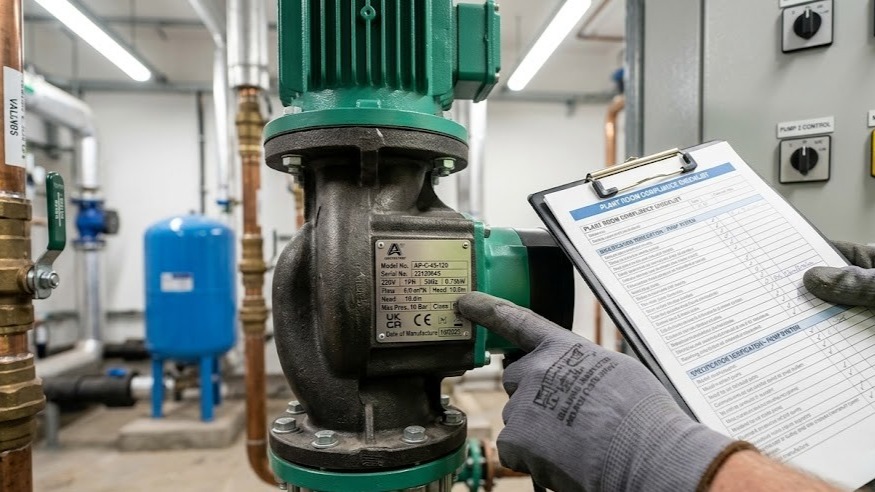
Commercial heating systems across the UK operate under strict energy efficiency regulations that directly impact equipment selection, system design, and operating costs. The Energy-related Products (ErP) Directive establishes minimum performance standards for commercial circulators, fundamentally changing how heating engineers specify and install commercial circulation equipment.
Since January 2013, all ErP directive commercial circulators placed on the UK market must meet ErP requirements, with progressively tighter standards introduced in subsequent years. These regulations eliminate inefficient pump technology from commercial installations, driving adoption of variable-speed drives, permanent magnet motors, and intelligent control systems that reduce energy consumption by 50-80% compared to legacy equipment.
Understanding these requirements proves essential for mechanical contractors, building services engineers, and facilities managers responsible for commercial heating infrastructure. Non-compliant equipment cannot legally be installed in UK buildings, and system designers must demonstrate ErP compliance pumps UK standards in Building Regulations submissions.
What the ErP Directive Covers
The ErP Directive (2009/125/EC) establishes ecodesign requirements for energy-related products sold within the UK and European markets. For ErP directive commercial circulators, Commission Regulation (EU) No 641/2009 sets specific performance standards based on the Energy Efficiency Index (EEI) - a dimensionless value that compares actual pump power consumption against a reference baseline.
The regulation applies to standalone circulators and circulators integrated into heating products with rated hydraulic output between 1W and 2,500W. This covers the vast majority of commercial heating circulators, from small zone pumps to large commercial systems serving multi-storey buildings.
Implementation Stages and Standards
Three implementation stages progressively raised minimum efficiency standards:
Stage 1 (August 2015): Maximum EEI of 0.27 for all covered circulators
Stage 2 (January 2020): Maximum EEI reduced to 0.23, eliminating remaining fixed-speed technology
Current Requirements: All new installations must use pumps meeting the 0.23 EEI threshold
The Energy Efficiency Index calculation incorporates pump hydraulic performance, electrical power consumption, and operating characteristics across the full performance curve. Lower EEI values indicate higher efficiency - a pump with EEI 0.20 consumes approximately 13% less energy than one rated at 0.23.
Calculating Energy Efficiency Index
The EEI formula compares a circulator's actual power consumption (P) against a reference power value (Pref) calculated from its hydraulic performance:
EEI = (P₁ + 0.45 × P₂ + 0.15 × P₃ + 0.40 × P₄) / Cload
Where P₁ through P₄ represent power consumption at 25%, 50%, 75%, and 100% of the pump's best efficiency point, and Cload is the reference power consumption calculated from flow rate and head pressure specifications.
Part-Load Performance Considerations
This weighted calculation reflects real-world operating patterns in commercial heating systems. Most central heating circulators operate at partial load for 60-80% of their runtime, making part-load efficiency critical to overall energy performance.
Manufacturers publish EEI values in product documentation, eliminating the need for manual calculation during specification. However, understanding the calculation methodology helps explain why variable-speed pumps with permanent magnet motors consistently achieve lower EEI ratings than fixed-speed alternatives.
The reference power calculation (Cload) increases with both flow rate and head pressure, meaning larger commercial circulators face more stringent absolute efficiency requirements. A pump delivering 10 m³/h at 6m head must consume significantly less power than a smaller unit to achieve the same EEI rating.
Commercial Circulator Categories Under ErP
The directive distinguishes between several circulator types, each subject to specific requirements:
Standalone Circulators
Independent pumps are installed in heating circuits, including single-head and twin-head configurations. These represent the majority of commercial heating applications and must meet the 0.23 EEI threshold regardless of size within the 1W-2,500W hydraulic output range.
Integrated Circulators
Pumps are incorporated into boilers, heat interface units, or other heating products. These must meet identical efficiency standards, though compliance responsibility falls to the equipment manufacturer rather than the installer.
Replacement Circulators
Pumps installed to replace existing equipment in operational systems. ErP compliance pumps UK regulations apply equally to replacement installations - specifying non-compliant pumps for retrofit projects violates UK regulations regardless of the existing system age.
The regulations specifically exclude certain specialist applications: pumps handling fluids other than water-glycol mixtures, circulators designed exclusively for solar thermal systems, and units intended for swimming pool circulation. Standard commercial heating applications receive no exemptions.
Technical Implications for System Design
Meeting ErP directive commercial circulators requirements fundamentally changes commercial heating system design. Fixed-speed circulators with three-speed manual selection cannot achieve 0.23 EEI ratings, effectively eliminating this technology from new installations and major refurbishment projects.
Variable-Speed Technology Solutions
Variable-speed pumps with automatic differential pressure control have become the standard solution for ErP compliance. These units adjust motor speed continuously to maintain target pressure differential across the system, matching pump output to instantaneous heating demand.
This operational approach delivers substantial energy savings beyond the efficiency gains captured in EEI calculations. A properly sized variable-speed circulator in a commercial heating system typically operates at 40-60% of maximum speed during normal conditions, reducing power consumption by 60-85% compared to a fixed-speed pump sized for peak load.
Grundfos MAGNA3 and ALPHA3 series, Wilo Stratos MAXO and Yonos MAXO ranges, and comparable products from other manufacturers all meet current ErP compliance pumps UK requirements while offering EEI ratings as low as 0.18-0.20 - approximately 15-20% better than the regulatory minimum.
Building Regulations Integration
System designers must verify ErP compliance during specification and document this in Building Regulations submissions. Part L (Conservation of Fuel and Power) requires demonstration that heating system components meet minimum efficiency standards, with circulator EEI ratings forming part of this evidence.
Labelling and Documentation Requirements
ErP-compliant circulators must display specific information on the product label and in technical documentation. The pump label must show:
- Manufacturer name and model designation
- Energy Efficiency Index (EEI) value
- Hydraulic performance data (flow rate and head at best efficiency point)
- Rated power consumption
- Maximum operating pressure and temperature
Technical Documentation Standards
Product literature must include the full performance curve, power consumption across the operating range, and installation instructions that enable the pump to achieve its declared efficiency rating. This documentation proves essential during Building Control inspections and commissioning verification.
The label requirement applies to the physical pump unit - installers cannot legally remove or obscure ErP information during installation. Building Control officers may request sight of pump labels during site inspections to verify regulatory compliance.
Manufacturers typically provide declaration of conformity documents confirming ErP compliance and listing the harmonised standards used for testing. These declarations form part of the technical file required under UK product safety regulations and may be requested during compliance audits.
Enforcement and Compliance Verification
The Office for Product Safety and Standards (OPSS) enforces ErP requirements in the UK, with Trading Standards officers conducting market surveillance to identify non-compliant products. Penalties for placing non-compliant circulators on the market include prohibition notices, product recalls, and financial penalties up to £5,000 per offence.
Contractor Responsibilities
For installers and contractors, responsibility centres on the specification and installation of compliant equipment. While manufacturers face primary liability for product compliance, installing circulators that clearly fail to meet ErP requirements exposes contractors to Building Regulations enforcement action and potential project rejection.
Building Control officers increasingly request ErP documentation during heating system inspections, particularly for commercial installations where circulation pump energy consumption significantly impacts overall building performance. Demonstrating compliance requires:
- Product datasheets showing EEI ratings of 0.23 or lower
- Installation records documenting the make, model, and serial numbers of installed circulators
- Commissioning records confirming that pumps operate within their declared performance parameters
Post-Brexit Continuity
The UK's continued alignment with ErP standards post-Brexit means existing requirements remain in force without modification. Future updates to efficiency thresholds will likely follow EU revisions, maintaining consistency across European markets where most commercial circulators are manufactured.
Practical Selection Considerations
ErP compliance represents a minimum threshold rather than a specification target. Most commercial applications benefit from selecting pumps with EEI ratings significantly below 0.23, typically in the 0.18-0.20 range offered by premium variable-speed circulators.
Economic and Performance Advantages
This approach delivers three advantages: lower operating costs through reduced energy consumption, better part-load performance across varying heating demands, and future-proofing against potential regulatory tightening. The incremental cost of a pump rated at EEI 0.19 versus 0.23 typically recovers within 12-18 months through electricity savings in commercial applications.
System sizing remains critical to achieving declared efficiency performance. Oversized circulators operate inefficiently even when ErP-compliant, while undersized units run continuously at maximum speed without achieving target system performance. Proper sizing requires accurate calculation of system flow rates, pressure losses, and control valve authority - fundamental hydraulic design principles unchanged by ErP requirements.
Sizing Software and Selection Tools
Grundfos GO and Wilo-Select sizing software incorporate EEI ratings into pump selection, automatically filtering non-compliant options and highlighting products with superior efficiency performance. These tools streamline specification while ensuring regulatory compliance.
Twin-head circulators serving commercial systems must meet ErP requirements on a per-pump basis - each head requires independent EEI verification. Duty/standby configurations commonly specified for critical heating applications, therefore require two compliant pumps, not one compliant unit paired with a legacy standby.
Retrofit and Replacement Applications
ErP compliance pumps UK standards apply equally to replacement installations in existing commercial heating systems. Contractors cannot legally install non-compliant circulators as replacements for failed pumps, regardless of the original equipment age or type.
Legacy System Compatibility
This creates practical challenges when replacing circulators in older systems designed around fixed-speed pumps. Variable-speed replacements may require control system modifications, pressure sensor installation, or system balancing adjustments to achieve optimal performance.
National Pumps and Boilers supplies ErP directive commercial circulators across all common commercial sizes, with technical support available to assist contractors in matching modern variable-speed technology to legacy system requirements. Proper replacement specification considers mounting dimensions, pipe connections, electrical supply compatibility, and control signal requirements.
Energy Savings from Systematic Upgrades
Many commercial buildings achieve 40-60% reductions in circulation pump energy consumption through systematic replacement of pre-ErP circulators with modern variable-speed units. These savings accumulate continuously over the 10-15 year service life of commercial heating equipment, making ErP-compliant replacements economically attractive even when existing pumps remain operational.
Building owners and facilities managers should prioritise the replacement of pre-2015 circulators during planned maintenance programmes. Beyond regulatory compliance, the energy savings and improved system control justify replacement costs within 2-3 years in most commercial applications.
Conclusion
The ErP Directive establishes mandatory minimum efficiency standards that have fundamentally improved commercial circulator technology available in the UK market. The current 0.23 EEI requirement eliminates inefficient fixed-speed pumps, driving adoption of variable-speed technology that reduces energy consumption by 50-80% compared to legacy equipment.
Compliance proves straightforward when specifying products from established manufacturers - virtually all current commercial circulators from Grundfos, Wilo, DAB, and other major brands meet or exceed ErP requirements. The key considerations involve proper system sizing, installation according to manufacturer instructions, and documentation of compliance for Building Regulations approval.
Commercial heating systems specified today will operate for 15-20 years, making current equipment selection decisions critical to long-term energy performance. Specifying pumps with EEI ratings well below the regulatory minimum - typically 0.18-0.20 rather than 0.23 - delivers superior efficiency, lower operating costs, and protection against future regulatory tightening.
For technical guidance on ErP-compliant commercial circulators suited to specific system requirements, contact us for expert specification support and competitive pricing on premium heating equipment.