

Understanding Glycol Concentration: Why Getting It Right Matters
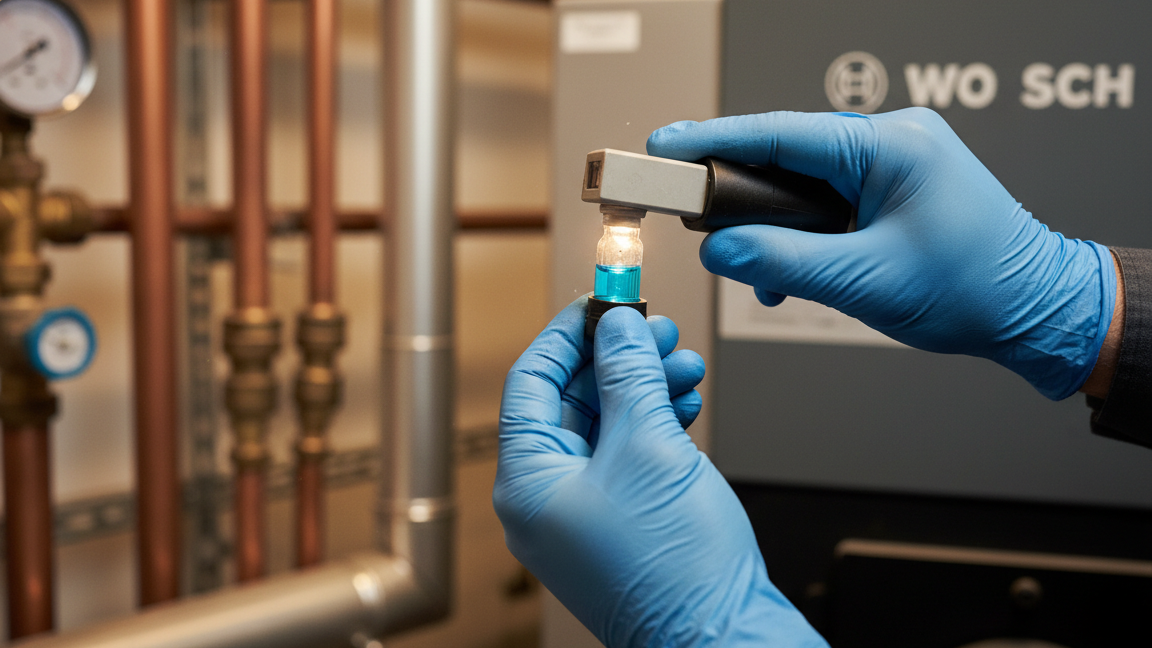
When heating systems face freezing temperatures, water alone becomes a liability. Glycol solutions provide essential freeze protection, but the concentration level determines whether a system receives adequate protection or suffers performance problems. Getting the ratio right matters more than many installers realise - the difference between proper protection and costly problems often comes down to a few percentage points.
Glycol concentration affects everything from freeze protection to heat transfer efficiency. Too little glycol leaves systems vulnerable to ice damage that can destroy expensive components. Too much glycol wastes money and reduces system performance whilst providing no additional benefit. Understanding the relationship between glycol concentration and system behaviour enables informed decisions that protect equipment without unnecessary compromise.
What Glycol Does in Heating Systems
Freeze Protection Fundamentals
Water freezes at 0°C, expanding by approximately 9% as it transforms into ice. This expansion generates tremendous force - enough to crack copper pipes, split heat exchangers, and destroy pump housings. The damage from a single freeze event can cost thousands of pounds to repair, not including the disruption to building operations whilst repairs take place.
Glycol lowers the freezing point of water, creating a solution that remains liquid at temperatures well below zero. The relationship between glycol concentration and freeze point depression follows a predictable curve that enables precise specification for any application. A 25% glycol solution provides protection down to approximately -12°C. A 33% concentration extends protection to -18°C. A 50% solution protects to approximately -37°C.
Beyond 50% concentration, the freeze protection actually decreases rather than improves - pure glycol freezes at around -13°C. This counterintuitive behaviour demonstrates why proper mixture ratios matter critically. Simply adding more glycol does not guarantee better protection and may actually reduce it whilst creating other performance problems.
UK central heating systems typically use concentrations between 25% and 40%, depending on location and system vulnerability. Properties in Scotland or exposed rural locations often require higher concentrations than urban properties in southern England, where winter temperatures rarely drop below -5°C for extended periods.
Corrosion Inhibition Properties
Freeze protection represents only half of glycol's protective function. Quality glycol products contain corrosion inhibitor packages that protect metal components from oxidation, scale formation, and galvanic corrosion throughout the system. These inhibitors create protective films on metal surfaces, preventing direct contact between water and vulnerable materials.
Glycol concentration affects inhibitor effectiveness directly. Insufficient glycol means insufficient inhibitors, leaving metal components vulnerable to accelerated corrosion even when temperatures never approach freezing. The inhibitor package in most commercial glycols remains effective for approximately five years under normal operating conditions, after which the fluid requires replacement regardless of freeze protection capability.
Different metals in heating systems create galvanic corrosion risks when dissimilar materials contact the same fluid. Copper pipes, aluminium heat exchangers, steel radiators, and brass fittings commonly coexist in typical installations. Quality glycol formulations include inhibitors specifically designed to protect this mixture of materials, but only when concentration remains within specified ranges.
The Consequences of Incorrect Concentration
Too Little Glycol: Inadequate Protection
Under-concentration creates false confidence that proves dangerous during severe weather events. A system containing 15% glycol might seem protected, but that concentration only prevents freezing to approximately -7°C - inadequate for most UK winter conditions and certainly insufficient for cold snaps that occur regularly in many regions.
Ice formation begins at the coldest points first. External pipes, components in unheated spaces, and areas with poor insulation freeze before the main system reaches damaging temperatures. Once ice forms, it blocks circulation, creating stagnant zones where temperatures drop further still. The ice expands, generating pressure that cracks pipes and damages components throughout the affected section.
Grundfos pumps and other circulation equipment suffer particularly expensive damage from freeze events. Ice forming inside pump housings destroys impellers, damages bearings, and often cracks the housing itself - requiring complete pump replacement rather than simple repair. The cost of a single pump replacement typically exceeds the entire cost of proper glycol protection for the complete system.
Boiler heat exchangers represent particularly costly casualties of inadequate glycol concentration. A frozen heat exchanger often means complete boiler replacement, as repair costs approach or exceed replacement costs for most domestic and commercial boilers. Modern condensing boilers with compact heat exchangers prove especially vulnerable to freeze damage.
Too Much Glycol: Performance Problems
Over-concentration seems like a safe approach on first consideration - if 30% provides good protection, surely 60% provides better protection whilst eliminating any risk? Unfortunately, excessive glycol concentration creates multiple performance problems that reduce system efficiency and increase operating costs throughout the system's operational life.
Heat transfer efficiency decreases as glycol concentration increases. Pure water transfers heat more effectively than glycol solutions due to its superior thermal conductivity and specific heat capacity. A 50% glycol mixture transfers approximately 10-15% less heat than pure water under identical conditions. Higher concentrations reduce heat transfer further, meaning radiators feel cooler and heating times extend noticeably.
Viscosity increases dramatically with glycol concentration, requiring more pumping power to maintain equivalent flow rates. Wilo circulators and other commercial equipment sized for water circulation may struggle to move highly concentrated glycol solutions, leading to reduced flow, inadequate heat distribution, and increased energy consumption. The increased pumping work accelerates wear on pump components as well.
The Optimal Concentration Range
Industry standards recommend glycol concentration between 25% and 50% for most heating applications. The optimal concentration for any specific system depends on several factors: lowest expected ambient temperature, system design, component locations, and economic considerations that balance protection costs against efficiency penalties.
A practical approach calculates the lowest expected temperature for the installation location, then adds a safety margin of 5-10°C. A property in Manchester might experience minimum temperatures around -5°C during typical winters. Adding a 10°C safety margin suggests protection to -15°C, requiring approximately 30% glycol concentration - adequate protection without unnecessary over-specification.
Properties with vulnerable components - external pipes, pumps in outbuildings, or systems in unheated spaces - require additional safety margins beyond basic climate calculations. Unoccupied properties where heating might be turned off during cold periods need higher concentrations than continuously heated buildings where minimum temperatures remain controlled.
Testing and Measuring Glycol Concentration
Refractometer Testing Method
Refractometers provide the most accurate field testing method for glycol concentration verification. These handheld optical instruments measure how light bends through the glycol solution, providing instant concentration readings without complex laboratory procedures. Quality refractometers designed for glycol testing cost between £30 and £150, depending on features and accuracy - a modest investment that protects against both under-protection and over-specification.
Testing procedure requires only a few drops of system fluid placed on the refractometer prism. Close the cover, look through the eyepiece, and read the concentration directly from the scale. The boundary line indicates glycol concentration with sufficient accuracy for routine monitoring purposes. The entire test takes less than 30 seconds once the technique becomes familiar.
Temperature affects refractometer readings, requiring compensation for accurate results. Most quality instruments include automatic temperature compensation (ATC) that corrects readings for ambient temperature variations. Without ATC, manual temperature correction using manufacturer charts becomes necessary for reliable measurements. Testing at system operating temperature provides the most accurate results for critical applications.
National Pumps and Boilers recommends testing glycol concentration during system commissioning, annually during routine maintenance, and whenever system performance seems compromised. Document test results with dates, readings, and any corrective actions taken - this documentation helps track concentration changes over time and supports maintenance planning.
Hydrometer Testing Alternative
Hydrometers measure fluid density, which correlates with glycol concentration through established relationships. These simple glass instruments float in a sample of system fluid, with the floating height indicating concentration. Hydrometers cost less than refractometers but require larger samples and provide somewhat less accuracy for critical applications.
Temperature correction becomes particularly important with hydrometer testing. Density changes significantly with temperature, so readings taken at different temperatures need correction factors applied before interpreting results. Most hydrometers include temperature correction charts, but applying corrections adds complexity and potential error compared to refractometer testing.
Sample size requirements make hydrometers less convenient for field testing in some situations. Collecting sufficient fluid (typically 250-500ml) means draining more from the system than refractometer testing requires. For smaller domestic systems where every litre counts, this larger sample size represents a meaningful consideration.
Professional Testing Services
Laboratory analysis provides comprehensive fluid testing beyond simple concentration measurement. Professional testing identifies glycol degradation, contamination, inhibitor depletion, and potential system problems that field testing cannot detect. When systems show unexplained performance issues or glycol appears discoloured or contaminated, laboratory analysis reveals problems requiring attention.
Comprehensive fluid analysis reports include glycol concentration, pH level, reserve alkalinity, inhibitor concentration, metal content indicating corrosion, and contamination identification. These reports guide maintenance decisions, identifying whether fluid requires replacement or systems need additional attention beyond fluid management.
Testing costs typically range from £50 to £150 per sample depending on analysis depth. Whilst more expensive than field testing, laboratory analysis provides information that prevents costly problems. An analysis revealing inhibitor depletion might prompt fluid replacement that prevents thousands of pounds in corrosion damage.
Glycol Types and Selection
Propylene Glycol vs Ethylene Glycol
Two glycol types dominate heating system applications: propylene glycol and ethylene glycol. Both provide freeze protection and corrosion inhibition when properly formulated, but important differences affect selection for specific applications and regulatory compliance requirements.
Ethylene glycol provides slightly better heat transfer and lower viscosity than propylene glycol at equivalent concentrations. These performance advantages make ethylene glycol popular for closed heating systems where fluid contact with potable water cannot occur. Ethylene glycol also costs less than propylene glycol, providing economic advantages for large systems where safety protocols permit its use.
Propylene glycol offers critical safety advantages that outweigh performance differences for most applications. Unlike ethylene glycol, propylene glycol is classified as food-safe and non-toxic. Regulations require propylene glycol in any system where cross-contamination with potable water might occur. DHW pumps and systems with indirect domestic hot water heating must use propylene glycol without exception.
Pre-Mixed vs Concentrated Glycol
Pre-mixed glycol solutions arrive ready to use at specified concentrations, typically 25%, 33%, or 50%. These products eliminate mixing errors and ensure consistent concentration throughout the system. Pre-mixed solutions cost more per litre than concentrated glycol but save labour time and reduce error risks during installation.
Concentrated glycol requires dilution with water before system filling - a process that demands accurate measurement of both glycol and water volumes to achieve target concentration. Field mixing introduces error risks from incorrect measurements, inadequate mixing, or contaminated water that can compromise system protection.
Large commercial systems often justify concentrated glycol despite mixing requirements. The cost savings on systems requiring thousands of litres can reach hundreds of pounds. However, the mixing process requires proper procedures, accurate measurement equipment, and quality control testing to verify final concentration meets specification.
Maintaining Correct Concentration Over Time
Natural Concentration Changes
Glycol concentration changes over time through several mechanisms that require ongoing monitoring. Water evaporation through automatic air vents, pressure relief valves, and small leaks gradually increases concentration by removing water whilst glycol remains in the system. Each water loss event concentrates the remaining fluid slightly.
Top-up procedures affect concentration depending on what fluid gets added. Adding pure water dilutes the concentration. Adding pre-mixed glycol at the original specification maintains the ratio. Adding concentrated glycol increases concentration beyond original levels. Tracking additions and testing regularly helps maintain proper concentration despite ongoing system water management.
Expansion vessels properly sized for glycol systems accommodate the fluid's greater thermal expansion compared to water, reducing pressure relief discharge that would otherwise lose fluid and alter concentration. Undersized expansion vessels cause frequent relief valve operation and progressive concentration changes.
Glycol Degradation and Replacement
Inhibitor packages in glycol solutions degrade over time, even when concentration remains correct. Thermal stress, oxygen exposure, and chemical reactions gradually deplete inhibitors, reducing corrosion protection regardless of freeze protection capability. Most manufacturers recommend complete fluid replacement every five years, though annual testing may indicate earlier replacement needs.
Visual inspection provides early warning of degradation. Fresh glycol appears clear or slightly coloured depending on inhibitor packages. Degraded glycol turns brown, develops sediment, or appears cloudy. Discolouration indicates oxidation and inhibitor depletion requiring fluid replacement before corrosion damage occurs.
pH testing reveals inhibitor depletion before visible changes occur. Fresh glycol maintains pH between 8.5 and 10.5 depending on formulation. As inhibitors deplete, pH drops toward neutral or acidic levels that accelerate corrosion. pH below 8.0 indicates immediate replacement requirements.
System Design Considerations
Calculating System Volume Accurately
Accurate system volume calculation ensures correct glycol quantities during initial fill and subsequent maintenance. Calculate volume by adding pipe volumes (based on diameter and length), radiator capacities (from manufacturer data), boiler content, pump valves, buffer vessels, and any other system components. Underestimating volume leads to insufficient glycol; overestimating wastes money.
Expansion vessel sizing requires adjustment for glycol systems. Glycol solutions expand more than water when heated, requiring larger expansion vessel capacity to prevent excessive pressure build-up during normal operation. Undersized expansion vessels cause pressure problems, frequent relief valve discharge, and fluid loss that affects concentration.
Pump selection must account for glycol's higher viscosity compared to water. Lowara pumps and other quality manufacturers include performance curves showing flow rates with glycol solutions at various concentrations. Selecting pumps based on water performance without glycol correction leads to inadequate flow and poor heat distribution.
Fill and Purge Procedures
Proper filling procedures prevent air entrainment that causes circulation problems and accelerates glycol degradation. Use filling pumps that introduce glycol under controlled pressure, working systematically through the system to displace air completely. Rushing the fill process traps air pockets that prove difficult to eliminate afterwards.
Systematic venting removes air from high points, automatic air vents, and any locations where air might collect. Check all manual and automatic vents operate correctly before and after filling. Pressurising the system briefly, then venting, then repressurising often removes stubborn air pockets more effectively than continuous filling alone.
Pressure testing after filling confirms system integrity before commissioning. Any leaks that develop will progressively dilute glycol concentration and may allow air ingress that degrades the fluid. Identifying and repairing leaks during commissioning prevents ongoing maintenance problems.
Practical Application Guidelines
Residential Heating Systems
Standard residential heating systems in typical UK locations require 25-30% glycol concentration for adequate freeze protection. This concentration protects against temperatures down to -12°C to -18°C - sufficient for all but the most extreme conditions experienced in mainland Britain.
Vulnerable locations within residential systems require particular attention. Pipes running through unheated garages, loft spaces, or external walls face higher freeze risk than internal pipework. Conservatory heating circuits, outdoor taps connected to heating systems, and any external pipework justify higher concentration margins.
Seasonal properties including holiday homes present special challenges. Armstrong pumps installed in such properties must handle glycol solutions effectively during extended dormant periods followed by sudden activation when owners arrive. Higher concentration (35-40%) provides additional margin for properties left unheated during winter months.
Commercial and Industrial Applications
Large commercial systems often require higher concentrations due to greater exposure and consequences of failure. Multi-zone systems may include circuits with significantly different freeze risks - external pipe runs, rooftop equipment, or unheated warehouse sections alongside fully heated office areas. Designing concentration for the most vulnerable section protects the entire system.
Process heating applications may specify precise glycol concentration for reasons beyond freeze protection. Some industrial processes require specific fluid properties for heat transfer performance, whilst others must avoid glycol contamination entirely. Understanding application requirements beyond basic freeze protection ensures appropriate specification.
Compliance documentation for commercial systems must record glycol type, concentration, test history, and maintenance actions. Building management protocols should include regular testing schedules and clear procedures for concentration adjustment when testing reveals drift from specification.
Renewable Energy Systems
Solar Thermal Applications
Solar thermal systems face extreme temperature variations that demand careful glycol concentration specification. Roof-mounted collectors experience overnight freezing during winter, afternoon stagnation temperatures exceeding 150°C during summer, and everything between across seasonal cycles. Glycol must maintain stability across this entire range.
Most solar thermal systems specify 40-50% glycol concentration to provide adequate freeze margin for overnight temperatures well below ambient due to radiative cooling effects. The higher concentration accepts some heat transfer efficiency penalty in exchange for reliable protection against the severe conditions solar collectors encounter.
Ground Source Heat Pump Systems
Ground source heat pumps extract energy from soil at relatively stable temperatures, but collector loops still require freeze protection. Soil temperatures in the UK typically remain above 5°C throughout the year, but heat extraction during peak demand can locally cool the fluid below freezing if inadequately protected.
Concentration requirements depend on system design and regional climate. Southern UK installations may adequately protect with 25-30% glycol, whilst Scottish sites typically specify 35-40% to accommodate lower soil temperatures and more demanding heating loads during extended cold periods.
Making Informed Decisions
Glycol concentration represents a critical system parameter that deserves careful specification and ongoing monitoring. The optimal concentration balances adequate freeze protection against efficiency penalties from over-specification, considering local climate, system design, and operational requirements.
Testing concentration annually confirms protection remains adequate and identifies degradation requiring fluid replacement. Document results to track trends over time and support maintenance planning decisions. Address concentration drift promptly to maintain both freeze protection and system efficiency.
For expert guidance on glycol concentration selection, testing protocols, and maintenance strategies, Contact Us to discuss specific requirements and receive professional recommendations tailored to individual installations.