

Understanding Like-for-Like Replacement vs. System Upgrade Options
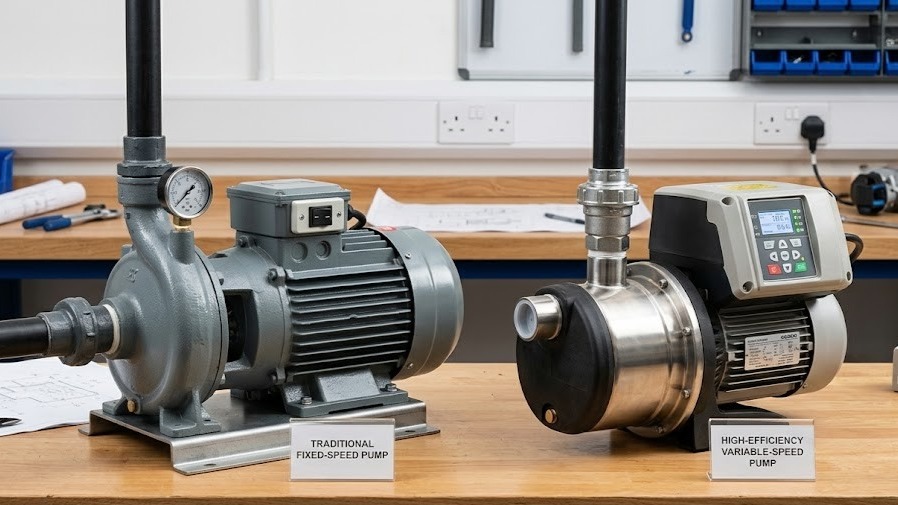
When a circulation pump fails in a commercial heating system, facilities managers face an immediate decision: replace the failed unit with an identical model or use the opportunity to upgrade the system. This choice affects equipment performance, energy costs, regulatory compliance, and long-term maintenance requirements for years to come.
The decision between like for like pump replacement and system upgrades depends on factors including the age of existing equipment, current energy efficiency standards, system compatibility requirements, and budget constraints. National Pumps and Boilers supplies both direct replacement pumps and modern upgrade solutions for commercial and domestic heating systems across the UK.
What Defines a Like-for-Like Replacement
A like for like pump replacement means installing a pump with identical or closely matched specifications to the original unit. This approach maintains the same flow rate, head pressure, electrical requirements, and physical dimensions as the failed pump.
Key Characteristics of Direct Replacements
Key characteristics of direct pump swap installations include:
- Matching flow rate (typically measured in litres per second or m³/h)
- Equivalent head pressure capability (measured in metres or bar)
- Same electrical connection (single-phase or three-phase, voltage rating)
- Identical mounting dimensions and pipe connection sizes
- Compatible control interface with existing building management systems
For systems designed before 2015, finding exact like-for-like replacements can prove challenging. Manufacturers regularly discontinue older pump models, particularly those that no longer meet current ErP (Energy-related Products) regulations. In these situations, heating engineers identify the closest modern equivalent that matches critical performance specifications.
The Grundfos range includes direct replacement models for many legacy systems, with retrofit kits that adapt modern pumps to existing pipework configurations. Similarly, Wilo offers backward-compatible solutions for older installations.
When Like-for-Like Replacement Makes Sense
Like for like pump replacement suits specific circumstances where system changes would introduce unnecessary complexity or cost. This approach works best when the existing system operates efficiently and meets current building requirements.
Situations Favouring Direct Replacement
Recently installed systems - Equipment less than five years old typically incorporates modern efficiency standards and requires minimal modification. Replacing a failed pump with an identical model maintains warranty coverage and system integrity.
Budget constraints - Direct pump swap installations avoid the engineering assessment, system modifications, and control reprogramming associated with upgrades. Installation time reduces from several days to a few hours in straightforward cases.
Rental properties with short holding periods - Property investors planning to sell within 1-2 years often prioritise immediate functionality over long-term efficiency gains. The payback period for upgraded equipment may exceed the ownership timeframe.
Systems with integrated controls - Building management systems programmed for specific pump characteristics may require extensive reconfiguration for different equipment. The cost of control system updates can outweigh energy savings from more efficient pumps.
Multiple identical pumps in a plant room - Facilities with several pumps of the same model benefit from maintaining standardisation. Keeping identical units simplifies spare parts inventory, reduces training requirements, and streamlines maintenance procedures.
The Case for System Upgrades
System upgrades replace failed equipment with modern alternatives that improve performance, reduce energy consumption, or enhance system capabilities. This approach transforms a reactive maintenance event into a strategic improvement opportunity.
Compelling Reasons to Upgrade
Energy efficiency improvements - Pumps manufactured before 2013 typically consume 30-50% more electricity than current ErP-compliant models. A commercial building running a 1.5kW legacy pump for 5,000 hours annually spends approximately £900 on electricity at current rates. Upgrading to a 0.75kW high-efficiency circulator reduces this cost to £450, saving £450 per year with a typical payback period of 2-3 years.
Regulatory compliance - Building Regulations Part L requires non-domestic buildings to meet specific energy performance standards. Replacing old pumps with ErP-rated equipment helps achieve compliance during refurbishment projects or Energy Performance Certificate assessments.
Variable speed capability - Older fixed-speed pumps run at full capacity regardless of system demand, wasting energy during partial load conditions. Modern pumps with integrated variable frequency drives adjust speed based on system requirements, reducing energy consumption by 40-60% in typical applications.
Improved system control - Contemporary pump valves and controls enable sophisticated system management including weather compensation, night setback, and zone control. These features improve comfort whilst reducing fuel consumption.
Reduced maintenance requirements - Modern pumps feature ceramic bearings, improved seal designs, and longer service intervals compared to equipment from the 1990s and early 2000s. This reduces maintenance costs and equipment downtime over the pump's operational life.
Technical Considerations for System Upgrades
Upgrading heating system components requires careful assessment of system compatibility and performance requirements. Simply installing a more efficient pump without considering system characteristics can create problems, including noise, inadequate heat distribution, or premature equipment failure.
Critical Technical Factors
System volume and heat load - Pump sizing calculations must account for total system volume, heat emitter requirements, and pipe friction losses. Under-sizing creates insufficient flow rates and cold spots in the building. Over-sizing wastes energy and can cause noise problems from excessive flow velocity.
Existing pipe sizing - Older systems often use smaller diameter pipes than modern designs. High-efficiency pumps operating in undersized pipework may struggle to overcome friction losses, negating efficiency benefits. Engineers calculate available pump head against system resistance to ensure adequate performance.
Electrical supply capacity - Upgrading from a single-phase domestic pump to a three-phase commercial unit requires electrical infrastructure modifications. Control panel upgrades, circuit breaker replacements, and cabling work add to project costs and installation time.
Control interface compatibility - Modern pumps communicate via protocols including Modbus, BACnet, and proprietary systems. Integrating new equipment with existing building management systems may require gateway devices or control panel modifications.
Expansion vessel sizing - System upgrades that increase flow rates or operating temperatures may require larger expansion vessels to accommodate thermal expansion. Undersized vessels cause pressure relief valve discharge and system inefficiency.
Cost-Benefit Analysis Framework
Evaluating like for like pump replacement against system upgrades requires comparing total lifecycle costs rather than initial purchase prices alone. A comprehensive analysis includes equipment costs, installation labour, energy consumption, maintenance requirements, and expected service life.
Financial Considerations
Equipment and installation costs - Like-for-like replacements typically cost £300-£800 for domestic systems and £1,200-£4,000 for commercial applications. System upgrades cost 30-80% more due to additional components including new controls, modified pipework, and electrical work. Installation time increases from 2-4 hours for direct pump swap projects to 1-3 days for comprehensive upgrades.
Annual energy costs - Calculate the difference in power consumption between existing and proposed equipment. A commercial building replacing a 2.2kW fixed-speed pump with a 1.1kW variable-speed model saves approximately 5,500 kWh annually (assuming 5,000 operating hours at 50% average load). At £0.20 per kWh, this represents £1,100 in annual savings.
Maintenance cost differences - Modern pumps with ceramic bearings and improved seals typically require servicing every 5-7 years compared to 3-5 years for older designs. Reduced maintenance frequency saves £150-£400 per service interval in labour costs plus reduced system downtime.
Expected service life - High-quality circulation pumps from manufacturers like Lowara typically operate for 12-15 years in well-maintained systems. Budget equipment may last only 7-10 years, requiring more frequent replacement and associated installation costs.
Payback period calculation - Divide the additional cost of upgrading by annual savings to determine payback period. Projects with payback periods under 5 years generally justify investment, particularly in commercial buildings with long ownership horizons.
Hybrid Approaches: Staged Upgrades
Facilities managers don't face a binary choice between complete system upgrades and basic replacements. Staged upgrade strategies implement improvements incrementally, spreading costs whilst delivering progressive efficiency gains.
Practical Hybrid Strategies
Replace pumps now, upgrade controls later - Install modern ErP-rated pumps with manual controls initially, then add building management system integration during future maintenance windows. This approach captures immediate energy savings whilst deferring control system costs.
Prioritise high-use equipment - Focus upgrades on pumps operating continuously or serving critical areas. Replace secondary circulation pumps or zone pumps with direct pump swap units where operating hours remain low.
Upgrade primary circuits first - In multi-zone systems, modernise the primary heating circuit and main circulation pumps before addressing secondary circuits. This approach delivers the largest efficiency gains from initial investment.
Combine with planned maintenance - Schedule system upgrades to coincide with boiler replacements, pipework modifications, or building refurbishment projects. Shared labour costs and reduced system downtime improve project economics.
Regulatory and Compliance Factors
Building Regulations and energy efficiency requirements influence replacement decisions, particularly in commercial buildings and social housing. Understanding these obligations helps avoid compliance issues and potential enforcement action.
Key Regulatory Considerations
Part L Building Regulations - Non-domestic buildings must meet minimum energy efficiency standards when replacing heating system components. Fixed-speed pumps above 1kW typically require replacement with ErP-compliant variable-speed models rather than like-for-like units.
Energy Performance Certificate requirements - Commercial properties require valid EPCs for sale or lease transactions. Outdated heating equipment reduces EPC ratings, potentially affecting property value and rental income. Strategic upgrades improve ratings and demonstrate energy management commitment.
Social housing regulations - Housing associations and local authorities face specific requirements for heating system efficiency in social housing. Replacement projects must consider tenant comfort, fuel poverty reduction, and long-term maintenance costs.
Grant funding and incentives - Various schemes support energy efficiency improvements in commercial and domestic properties. Upgrading to high-efficiency equipment may qualify for funding through local authority programmes, whilst basic replacements typically don't.
Making the Decision: A Practical Framework
Facilities managers and heating engineers can follow a structured approach to evaluate replacement options objectively, considering technical requirements, financial constraints, and operational priorities.
Five-Step Evaluation Process
Step 1: Assess system age and condition - Systems over 15 years old with multiple component failures indicate broader obsolescence. Comprehensive upgrades make more sense than replacing individual components in deteriorating systems.
Step 2: Calculate energy savings potential - Compare current pump power consumption against modern equivalents. Projects saving over £500 annually typically justify upgrade costs in commercial applications.
Step 3: Evaluate budget and financing options - Consider total project costs, including equipment, installation, and system modifications. Explore financing option,s including energy performance contracts that fund upgrades through guaranteed savings.
Step 4: Review maintenance history - Frequent repairs and high maintenance costs suggest systemic issues that like-for-like pump replacement won't resolve. Persistent problems indicate the need for a comprehensive system evaluation.
Step 5: Consider building lifecycle - Properties scheduled for demolition or major refurbishment within 5 years rarely justify significant upgrade investment. Basic replacements maintain functionality until planned changes occur.
Conclusion
The choice between like-for-like pump replacement and system upgrades depends on specific circumstances, including equipment age, energy costs, regulatory requirements, and budget constraints. Like-for-like replacement suits recently installed systems, budget-limited projects, and situations where system modifications introduce unnecessary complexity. System upgrades deliver long-term benefits through reduced energy consumption, improved performance, and enhanced control capabilities, particularly in older installations with outdated equipment.
Facilities managers should evaluate total lifecycle costs rather than initial purchase prices alone, considering energy savings, maintenance requirements, and regulatory compliance over the equipment's expected service life. For commercial buildings with high operating hours and long ownership horizons, system upgrades typically deliver positive returns within 3-5 years whilst improving building performance and occupant comfort.
National Pumps and Boilers supplies both direct replacement pumps and modern upgrade solutions for heating systems across the UK, with technical support to help identify the most appropriate option for specific applications. Whether replacing a failed circulator in a domestic property or upgrading a commercial building's central heating equipment, selecting the right approach ensures reliable operation, regulatory compliance, and optimised lifecycle costs. For guidance on direct pump swap options or system upgrade specifications, contact us for expert advice tailored to specific heating system requirements.