

Understanding Thermostatic vs. Motorized Mixing Valves
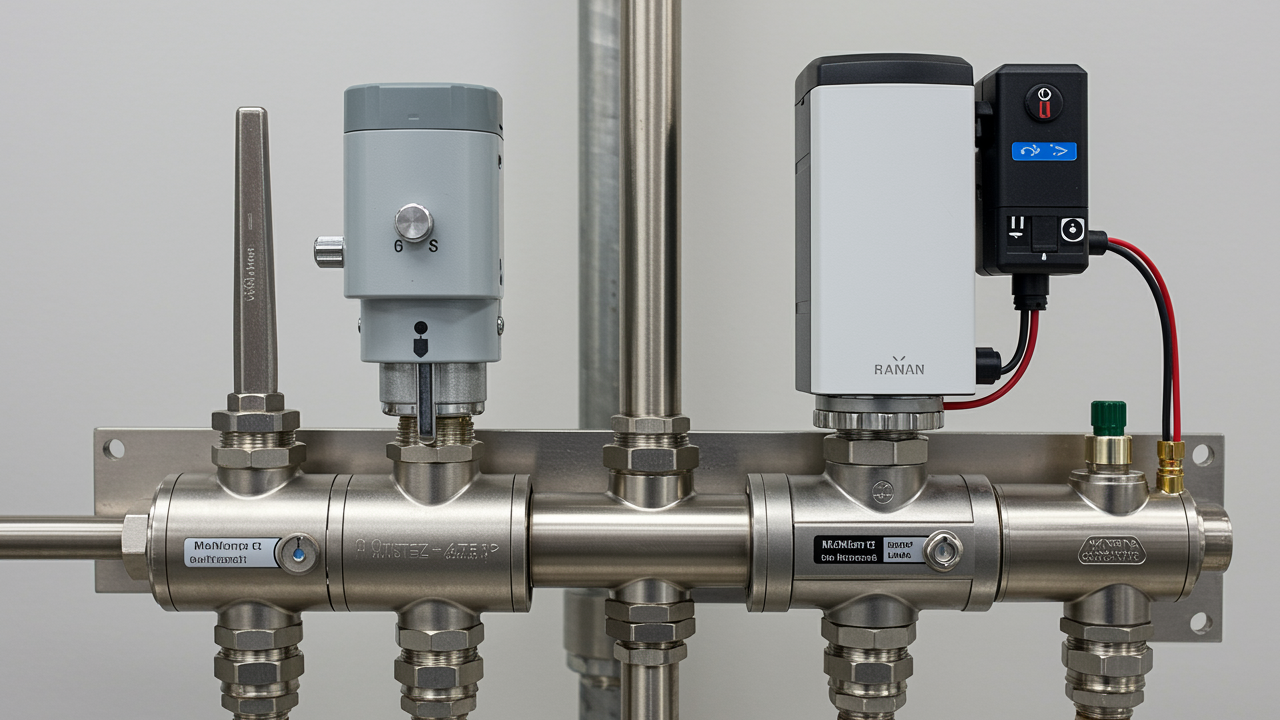
Commercial heating systems and residential installations demand precise temperature control to ensure safety, comfort, and efficiency. The choice between thermostatic and motorized technology fundamentally shapes system performance. National Pumps and Boilers supplies both valve types for projects ranging from domestic retrofits to complex commercial plant rooms, where the technical distinctions between mechanical and electronic control directly impact operational costs and reliability.
What Are Mixing Valves and Why Do They Matter?
Mixing valves serve a critical function in modern heating and hot water infrastructure. These components blend hot water from heat sources with cooler return water or cold supply to achieve specific target temperatures. In central heating applications, this regulation is essential for underfloor heating circuits, which typically operate at 35-45°C. This is significantly lower than the 60-80°C output of standard boilers. Without effective mixing, high temperatures can cause thermal stress to pipework and damage floor finishes.
For domestic hot water systems, these valves provide a vital safety barrier. Water must be stored at 60°C or higher to prevent Legionella bacteria growth, yet this temperature poses an immediate scalding risk at the tap. A properly specified mixing valve blends this stored water down to safe usage levels, typically 43-48°C for general outlets. This capability allows systems to maintain bacterial control in storage cylinders without endangering users.
Energy efficiency represents another key benefit. By delivering water at the exact required temperature rather than overheating and diluting, systems minimize thermal losses. In commercial buildings utilizing central heating solutions, correct valve selection can reduce annual fuel consumption by ensuring heat is distributed only at the necessary grade.
Thermostatic Mixing Valves: Mechanical Precision
Thermostatic mixing valves operate using a self-contained mechanical principle. A temperature-sensitive element - usually a wax-filled cartridge or liquid bellows - expands and contracts in response to the mixed water temperature. This physical reaction adjusts the internal valve spindle to alter the proportion of hot and cold water entering the chamber.
This technology requires no external power source, making it inherently fail-safe during power outages. Response times are generally rapid, typically 2-5 seconds for a 10°C shift, which is adequate for most sanitary applications. Grundfos manufactures circulators that pair effectively with these valves in domestic settings. When combined with Grundfos pumps, thermostatic valves ensure consistent delivery for showers and basin taps where user safety is paramount.
Ideal Applications for Thermostatic Control
- Domestic Showering: Prevents temperature surges if cold water pressure drops.
- Point-of-Use Safety: Essential for schools and care homes requiring anti-scald protection at individual outlets.
- Retrofit Projects: The lack of electrical wiring makes them cost-effective for upgrades in older properties.
- Small DHW Systems: Simple, reliable control for DHW pumps and standard hot water cylinders.
Motorized Mixing Valves: Advanced System Control
Motorized mixing valves utilise electronic actuators to position the valve spindle based on signals from a central controller. A sensor monitors the outlet temperature and feeds data back to the unit, which adjusts the valve position to maintain the setpoint. This closed-loop electronic approach delivers superior accuracy, often maintaining temperatures within ±0.5°C.
In large-scale applications, these valves integrate with building management systems (BMS) to offer features like weather compensation. This allows the system to automatically lower flow rate temperatures during milder weather, significantly improving boiler efficiency. Wilo offers advanced pumping technology that complements these setups. High-efficiency Wilo pumps can modulate their speed in tandem with motorized valve positions to optimize energy usage across the entire circuit.
Applications Demanding Motorized Technology
- Commercial Heating Zones: Managing distinct temperatures for offices, reception areas, and core facilities.
- Process Heating: Industrial applications requiring strict temperature control stability.
- Large Underfloor Systems: Where precise blending protects sensitive floor coverings over large areas.
- Smart Buildings: Integration with remote monitoring and optimization software.
Comparing Performance and Efficiency
The decision between valve types often relies on the required level of temperature control precision. Thermostatic valves generally maintain accuracy within ±2-3°C, which is sufficient for general safety and comfort. However, motorized versions provide the tighter tolerances required for specialized heating circuits.
Energy efficiency differs by application. Thermostatic valves consume zero electrical power, offering a passive solution for simple systems. In contrast, motorized valves draw a small amount of power for actuation and control. However, the system-wide savings enabled by motorized control - such as variable flow temperatures and night setback schedules - often outweigh the electrical consumption in commercial settings.
When sourcing components for these critical systems, National Pumps and Boilers recommends evaluating the total lifecycle cost rather than just the initial purchase price. A motorized system may have a higher upfront cost but can deliver substantial fuel savings over a decade of operation in a large facility.
Reliability also varies. Thermostatic elements can suffer from scale buildup in hard water areas, potentially affecting response times. Regular maintenance is required to ensure scalding protection remains effective. Motorized systems, while more complex to install due to wiring requirements, often feature robust pump valves and actuators designed for high-cycle commercial operations.
Selecting the Right Valve for the Application
Residential properties typically favor simplicity. A robust thermostatic valve is often the correct choice for standard domestic hot water safety and basic underfloor blending. Premium domestic boilers, such as those from the Vaillant range, often integrate seamlessly with these mechanical controls to provide a reliable home heating solution.
For commercial and industrial specifications, the focus shifts to connectivity and precision. A hospital or university campus requires the traceability and tight control that only motorized valves provide. Manufacturers like Remeha specialize in commercial heating plant equipment. Integrating motorized mixing technology with Remeha boilers ensures that large-scale heating demands are met with maximum efficiency and minimal waste.
System pressure management is also vital regardless of the valve type chosen. Correctly sized expansion vessels must be installed to handle the pressure fluctuations that occur as water is heated and mixed within the sealed system.
Summary and Recommendations
Mixing valves are indispensable for safe and efficient system design. Thermostatic models offer reliable, power-free safety for domestic applications, while motorized options deliver the precision and integration required for modern commercial infrastructure. Heating engineers must assess the specific requirements of the site - balancing cost, complexity, and performance targets - to select the appropriate technology.
Technical Specification Advice
National Pumps and Boilers stocks a comprehensive range of mixing technology for every sector. For assistance with valve sizing, actuator selection, or system integration, contact us to speak with a technical specialist.