

Understanding Total Cost of Ownership (TCO) for Commercial Pumps
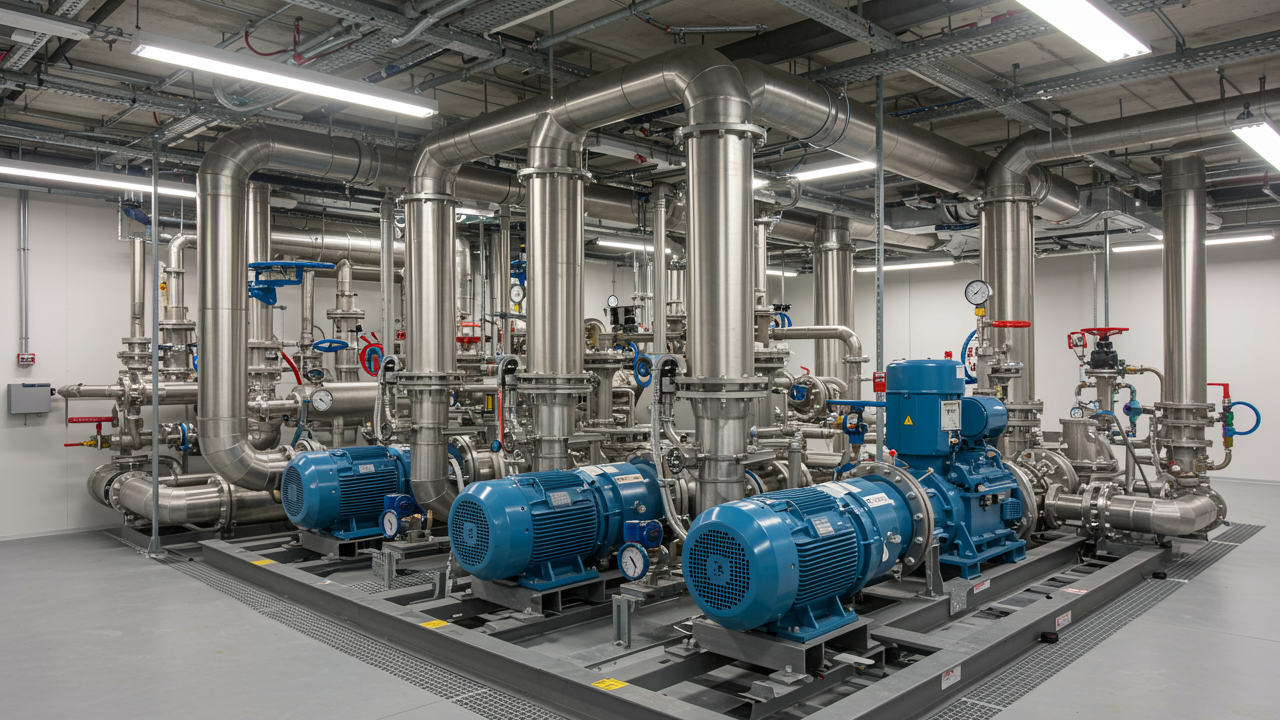
Commercial pump selection decisions based solely on purchase price consistently lead to higher operational expenses over equipment lifecycles. A Grundfos pump with a £2,500 upfront cost may deliver better value than a £1,200 alternative when energy consumption, maintenance requirements, and service life factors receive proper analysis.
Total cost of ownership calculations reveal the actual financial impact of pump installations across 10-15 year operational periods. Facilities managers and mechanical services contractors who apply TCO pump calculation to commercial heating and plumbing systems typically reduce lifecycle costs by 30-45% compared to purchase-price-focused procurement approaches at National Pumps and Boilers.
What TCO Analysis Includes for Commercial Pumps
Total cost of ownership encompasses every expense category from initial purchase through end-of-life disposal. The framework captures costs that purchase price alone completely ignores.
Capital Expenditure includes the pump unit cost, delivery charges, installation labour, electrical connections, pipework modifications, control integration, and commissioning. A commercial circulator pump installation typically adds 20-35% to the equipment purchase price when proper installation standards apply.
Energy Consumption represents the largest TCO component for continuously operating pumps. A 2.2kW commercial heating pump running 6,000 hours annually at £0.25/kWh costs £3,300 per year in electricity - exceeding the initial purchase price within 12-18 months for many installations.
Maintenance and Service covers planned preventive maintenance, spare parts replacement, seal servicing, bearing changes, and unplanned repair callouts. Commercial pump maintenance typically costs £150-400 annually depending on pump size, application duty, and service contract terms.
Downtime Costs capture lost productivity, emergency repair premiums, and business disruption when pump failures occur. A critical heating system pump failure during winter can cost commercial buildings £500-2,000 per day in tenant complaints, temporary heating solutions, and emergency contractor rates.
Disposal and Replacement includes decommissioning costs, equipment removal, and proper waste disposal when pumps reach end-of-life. These costs remain relatively minor - typically £100-300 for commercial pump sizes - but complete TCO pump calculation includes them.
Energy Costs Dominate Commercial Pump TCO
Energy consumption typically represents 60-80% of total cost of ownership for commercial circulator pumps operating in heating, cooling, and DHW systems. This dominance makes energy efficiency the most critical specification for lifecycle cost optimisation.
A standard efficiency commercial heating pump consuming 1.5kW compared to a high-efficiency model using 0.8kW creates a £1,050 annual cost difference at typical UK electricity rates. Over a 12-year service life, this efficiency gap produces £12,600 in additional energy costs - far exceeding any initial purchase price savings.
Variable speed drive technology delivers the most significant energy savings for commercial pump applications. Fixed-speed pumps operate at full power regardless of actual system demand, whilst VSD-equipped pumps modulate motor speed to match real-time flow requirements. This adaptive operation typically reduces energy consumption by 30-60% in variable-load applications like commercial heating systems.
Wilo pumps with integrated VSD technology demonstrate energy cost reductions of £800-2,500 annually in typical commercial building installations compared to fixed-speed alternatives. The initial premium for VSD-equipped models - usually £400-900 - achieves payback within 6-18 months through energy savings alone.
ErP (Energy-related Products) ratings provide standardised efficiency comparisons across commercial pump ranges. The Energy Efficiency Index (EEI) scale runs from >0.27 (lowest efficiency) to <0.20 (highest efficiency). Pumps with EEI ≤0.23 qualify for top-tier ratings and deliver measurably lower operating costs.
A commercial building replacing three fixed-speed heating circulators (combined 4.5kW) with ErP-rated high-efficiency alternatives (combined 2.1kW) saves approximately £3,600 annually in energy costs. This £43,200 saving over 12 years transforms procurement priorities when TCO pump calculation guides equipment selection.
Maintenance Requirements Impact Long-Term Costs
Maintenance frequency and complexity directly affect total cost of ownership through labour costs, spare parts expenses, and system downtime. Commercial pump designs vary significantly in serviceability and maintenance demands.
Bearing and Seal Service represents the most common maintenance requirement for commercial pumps. Traditional pumps with mechanical seals require seal replacement every 2-4 years at costs of £200-600 including labour. Magnetic drive pumps eliminate mechanical seals entirely, removing this recurring expense whilst improving reliability.
Motor and Electrical Components require periodic inspection and occasional replacement. Standard motor designs typically achieve 8-12 year service lives before rewinding or replacement becomes necessary. Permanently sealed motors with IP55 or IP68 ratings extend service intervals and reduce moisture-related failures in plant room environments.
Control and Drive Systems add maintenance considerations for VSD-equipped pumps. Electronic components generally prove reliable but represent additional failure points compared to simple fixed-speed designs. Quality VSD systems from established manufacturers like Grundfos or Wilo typically operate 10-15 years without intervention, whilst budget alternatives may require replacement after 5-8 years.
Pump Body and Impeller Wear varies dramatically based on system water quality and operating conditions. Cast iron pumps in clean closed-loop heating systems operate decades without significant wear. Stainless steel or bronze construction becomes essential in DHW applications or systems with aggressive water chemistry, where material selection prevents premature failure.
Comprehensive service contracts provide predictable maintenance costs and reduce unplanned downtime. Annual service agreements typically cost 8-12% of equipment value but include planned maintenance, priority callout response, and discounted spare parts - often reducing total maintenance costs by 20-30% compared to reactive service approaches.
Installation Quality Affects Lifetime Performance
Proper installation practices significantly impact commercial pump reliability, efficiency, and service life. Poor installation creates operational problems that increase energy consumption, accelerate component wear, and reduce equipment lifespan.
Pipe Sizing and Layout must provide adequate straight pipe runs before and after pump connections. Insufficient straight pipe lengths (minimum 5 pipe diameters upstream, 2 diameters downstream) create turbulent flow patterns that reduce pump efficiency by 10-20% and increase noise and vibration.
Electrical Supply Quality affects motor performance and VSD operation. Voltage fluctuations, phase imbalance, and harmonic distortion reduce motor efficiency and accelerate insulation degradation. Proper electrical installation with appropriate cable sizing and protection devices prevents these issues.
Isolation and Service Access enables efficient maintenance and reduces service costs. Installations requiring system drainage or extensive dismantling for routine maintenance add £100-300 to each service visit. Well-designed installations with isolation valves and adequate clearances reduce service time by 40-60%.
System Balancing and Commissioning ensures pumps operate at design duty points where efficiency peaks. Pumps operating significantly off-curve due to poor system balancing consume 15-35% more energy whilst experiencing accelerated wear. Professional commissioning by qualified heating engineers typically costs £300-800 but optimises lifetime performance.
Real-World TCO Comparison: Budget vs Premium Pumps
A practical example demonstrates TCO pump calculation value for commercial building heating systems. Consider two options for replacing an ageing commercial heating circulator:
Budget Fixed-Speed Pump
- Purchase price: £850
- Installation cost: £300
- Annual energy cost (1.8kW, 5,000 hours): £2,250
- Annual maintenance: £180
- Expected service life: 8 years
- Total 10-year TCO: £24,650
Premium VSD Pump
- Purchase price: £1,950
- Installation cost: £350
- Annual energy cost (0.9kW average, 5,000 hours): £1,125
- Annual maintenance: £220
- Expected service life: 12+ years
- Total 10-year TCO: £15,020
The premium pump with 129% higher purchase price delivers 39% lower total cost of ownership over 10 years - a £9,630 saving. Energy efficiency creates this dramatic difference, with the VSD pump saving £11,250 in electricity costs that completely overwhelm the £1,100 initial price premium.
This calculation assumes £0.25/kWh electricity rates. Rising energy costs increase the advantage of efficient equipment. At £0.35/kWh - a realistic projection for UK commercial rates - the 10-year TCO gap widens to £13,380 in favour of the premium pump.
System Design Factors That Influence TCO
Commercial pump total cost of ownership extends beyond individual equipment specifications to encompass system-level design decisions that affect operational efficiency.
System Volume and Pressure determine pump sizing requirements and energy consumption. Oversized systems with excessive water volumes require larger pumps and consume more energy for heating and circulation. Right-sizing system components during design phases reduces pump power requirements by 20-40% in many commercial installations.
Pipe Sizing and Flow Rates directly impact pump head requirements and energy consumption. Undersized pipework creates excessive friction losses that force pumps to work harder, increasing energy consumption and reducing service life. Proper pipe sizing according to CIBSE guidance optimises flow rates and minimises pumping energy.
Control Strategies significantly affect pump operating hours and energy consumption. Weather compensation, optimum start controls, and night setback strategies reduce unnecessary pump operation. Advanced building management systems can cut commercial heating pump runtime by 30-50% compared to simple time-clock control, delivering proportional energy savings.
Water Treatment and System Protection prevents scale formation, corrosion, and sludge accumulation that impair pump performance and reduce efficiency. Properly treated closed-loop heating systems maintain design efficiency throughout equipment lifecycles, whilst untreated systems experience 5-15% annual efficiency degradation. Expansion vessels and system protection equipment represent small upfront investments that protect much larger pump and boiler capital.
Conducting TCO Analysis for Pump Procurement
Facilities managers and mechanical contractors can apply structured TCO pump calculation to commercial pump selection using readily available data and straightforward calculations.
Step 1: Define Analysis Period - Establish the timeframe for comparison, typically 10-15 years to capture full equipment lifecycles. Shorter periods favour low-cost options; longer periods reveal efficiency benefits.
Step 2: Calculate Energy Costs - Multiply pump power consumption by annual operating hours and electricity rates. Include projected energy cost increases (typically 3-5% annually) for accurate long-term projections.
Step 3: Estimate Maintenance Expenses - Use manufacturer service schedules and local labour rates to project annual maintenance costs. Include both planned preventive maintenance and statistical allowances for unplanned repairs.
Step 4: Factor Reliability and Downtime - Assign costs to potential system failures based on building criticality and business impact. Critical applications justify premium equipment with superior reliability.
Step 5: Apply Discount Rates - Use net present value calculations to account for the time value of money. Future costs receive less weight than immediate expenses, though energy costs remain significant even when discounted.
Step 6: Compare Total Lifecycle Costs - Sum all cost categories across the analysis period for each option. The lowest TCO represents the best long-term value regardless of purchase price.
Spreadsheet templates and online TCO calculators simplify these calculations. Many pump manufacturers provide TCO pump calculation tools that compare equipment options using project-specific parameters.
When Premium Equipment Delivers Best Value
Total cost of ownership analysis consistently favours premium equipment in specific application scenarios where operational costs dominate capital expenditure.
High-Utilisation Applications with 4,000+ annual operating hours achieve rapid payback for efficient equipment. Commercial heating pumps, DHW circulation systems, and process cooling applications typically operate 5,000-8,000 hours annually, making efficiency the critical specification.
Long-Term Installations in permanent buildings with 15-25 year planning horizons benefit from durable, efficient equipment. The extended timeframe allows premium equipment advantages to compound through sustained energy savings and extended service life.
Critical Systems where failures create significant business disruption justify reliability-focused procurement. Hospital heating systems, data centre cooling, and manufacturing process applications require proven equipment with comprehensive service support despite higher initial costs.
Rising Energy Cost Environments amplify efficiency benefits. Organisations projecting significant electricity cost increases over equipment lifecycles see enhanced returns from high-efficiency pumps as energy savings grow annually.
Conclusion
Total cost of ownership analysis transforms commercial pump procurement from price-focused purchasing to value-optimised investment decisions. The methodology reveals that equipment purchase price typically represents just 15-25% of lifecycle costs, with energy consumption dominating long-term expenses for most commercial applications.
Facilities managers applying TCO analysis to central heating equipment selection consistently identify high-efficiency variable speed pumps as the lowest-cost option despite purchase price premiums of 50-150%. Energy savings of £1,000-3,000 annually overwhelm initial cost differences within 1-2 years, then continue delivering value throughout 12-15 year service lives.
Professional pump selection requires balancing capital budgets against operational realities. Comprehensive commercial pump ranges from established manufacturers including Grundfos, Wilo, and Lowara pumps come with technical specifications and performance data supporting informed TCO pump calculation.
For technical advice on commercial pump applications and lifecycle cost analysis tailored to specific building requirements, contact us today.