

Understanding Water Hammer: How to Prevent Pump Damage from Pressure Surges
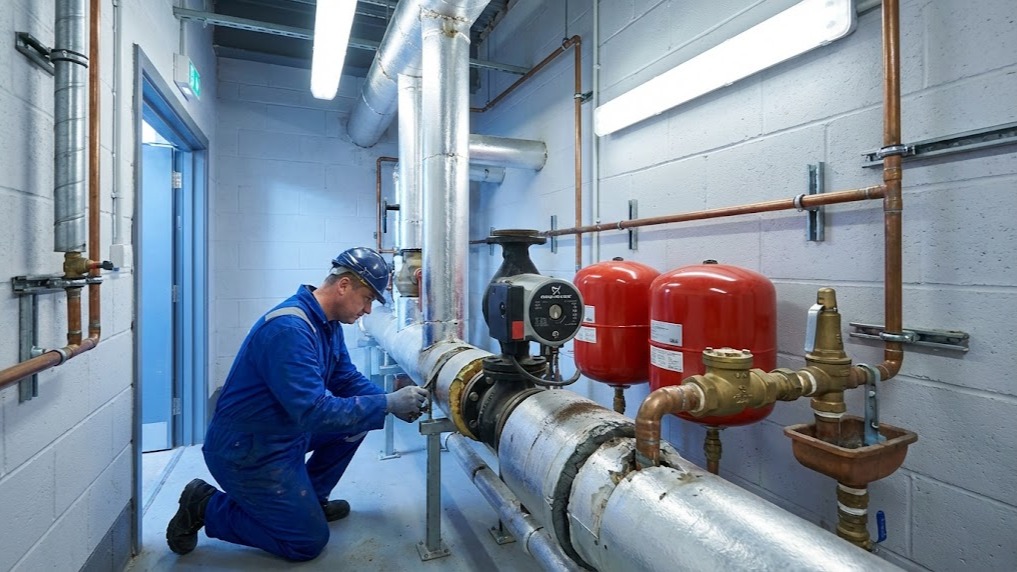
A sudden metallic bang echoing through pipework often signals water hammer - a phenomenon that destroys pumps, ruptures pipes, and causes thousands of pounds in emergency repairs across UK commercial buildings every year. When a heating engineer at a Manchester office complex heard that distinctive hammering sound in 2023, subsequent inspection revealed a cracked pump casing and damaged impeller blades. The repair bill exceeded £3,800, and the building lost heating for two days during a cold snap.
Water hammer occurs when fluid momentum changes abruptly within a piping system, creating pressure waves that can exceed normal operating pressure by 500% or more. These transient pressure surges travel through pipework at the speed of sound in water (approximately 1,400 metres per second), striking valves, pumps, and pipe bends with destructive force. For heating systems, DHW installations, and commercial HVAC applications, understanding water hammer pump protection represents essential system protection.
What Causes Water Hammer in Pumping Systems
Water hammer develops when flowing water stops suddenly or changes direction rapidly. In heating and plumbing systems, several scenarios trigger this destructive phenomenon.
Rapid Valve Closure
Rapid Valve Closure remains the most common cause. When a solenoid valve, motorised valve, or check valve slams shut, the kinetic energy of moving water converts instantly into pressure energy. A column of water travelling at 2 metres per second in a 50mm pipe carries substantial momentum - when that flow stops in 0.1 seconds, the resulting pressure spike can reach 20 bar or higher, far exceeding the design pressure of most domestic and light commercial systems.
Pump Start-Up and Shutdown
Pump Start-Up and Shutdown creates similar conditions. When a central heating pump starts, water accelerates from zero to full flow velocity within seconds. If the system contains trapped air, closed valves, or restrictions, pressure surges develop. Conversely, when pumps stop suddenly due to power failure or emergency shutdown, the momentum of water in the system creates a pressure wave that travels backward through the pipework.
Check Valve and Cavitation Issues
Check Valve Slam occurs when reverse flow causes a non-return valve to close rapidly. In multi-pump installations or systems with varying pressure zones, check valves prevent backflow when pumps stop. If these valves close too quickly, the water column behind them generates significant pressure transients.
Air Pockets and Cavitation compound water hammer effects. Trapped air compresses under pressure surges, then expands rapidly, amplifying the hammering effect. Similarly, cavitation - where low pressure causes water to vaporise and then collapse violently - creates localised pressure spikes that damage pump impellers and seals.
The severity of water hammer depends on several factors: flow velocity, pipe length, fluid properties, and the rate of flow change. British Standard BS 806 provides guidance on pressure surge calculation, with the Joukowsky equation offering a simplified approach: ΔP = ρ × c × Δv, where ΔP represents pressure change, ρ is fluid density, c is the speed of sound in the fluid, and Δv is the velocity change.
Recognising Water Hammer Symptoms in Heating Systems
Early detection prevents catastrophic failures. Heating engineers should watch for these warning signs during system commissioning and maintenance visits.
Audible and Visual Indicators
Audible Indicators provide the most obvious evidence. The characteristic banging, knocking, or hammering sound occurs when pressure waves strike pipe fittings, valves, or changes in pipe direction. The noise intensity correlates with surge severity - a gentle tapping suggests minor pressure fluctuations, whilst loud banging indicates dangerous transients requiring immediate attention.
Vibrating Pipework accompanies pressure surges. Pipes shake, rattle against mounting brackets, or transmit vibrations through building structures. In severe cases, pipe supports fail, allowing unsecured pipework to move visibly when pumps start or valves close.
Pressure and Performance Indicators
Pressure Gauge Fluctuations reveal transient events. System pressure gauges showing rapid needle movement, especially during pump operation changes, indicate pressure surges. Digital pressure monitoring equipment captures these transients more accurately than mechanical gauges, which often cannot respond quickly enough to display peak pressures.
Premature Component Failure suggests ongoing water hammer damage. Grundfos pumps and other quality equipment should deliver years of reliable service, but water hammer accelerates wear. Bearing failures, seal leaks, cracked pump casings, and damaged impellers often result from repeated pressure transients rather than normal wear patterns.
System Integrity Issues
Leaking Joints and Fittings develop as pressure surges stress compression fittings, threaded connections, and welded joints. Heating systems that require frequent joint tightening or develop mysterious leaks may be experiencing water hammer rather than poor installation.
Expansion Vessel Failure occurs when repeated pressure spikes rupture the internal diaphragm. An expansion vessel that loses pre-charge pressure frequently or shows water at the Schrader valve may have suffered water hammer damage.
Water Hammer Pump Protection Methods
Protecting pumping systems requires a combination of design measures, component selection, and operational controls. National Pumps and Boilers supplies equipment specifically designed to mitigate pressure transients in commercial and domestic applications.
Slow-Closing Valves and Actuators
Replacing fast-acting valves with slow-closing alternatives eliminates the primary cause of water hammer. Motorised valves with adjustable closing times (typically 30-90 seconds) allow water columns to decelerate gradually. For zone valves in heating systems, selecting actuators with 60-second closing times rather than 30-second versions significantly reduces pressure surge risk.
Spring-loaded check valves close more gently than swing check valves, cushioning the reverse flow rather than slamming shut. Silent check valves incorporate springs and dampening mechanisms specifically designed for preventing water hammer. These cost slightly more than standard check valves but prevent expensive damage in vulnerable installations.
Variable Speed Pump Control
Modern Wilo pumps and other variable speed circulators incorporate soft-start and soft-stop functions. Rather than reaching full speed instantly, these pumps ramp up gradually over 5-10 seconds, accelerating water smoothly. Similarly, controlled deceleration prevents the pressure drop that occurs when pumps stop abruptly.
Variable speed drives (VSDs) provide even greater control for larger commercial installations. A VSD controlling a Lowara pump in a commercial heating system can implement custom acceleration and deceleration profiles, matching system characteristics to minimise transients.
Pressure Surge Vessels and Accumulators
Installing pressure surge vessels near pumps absorbs transient pressure spikes. These vessels differ from standard expansion vessels - they feature larger connection sizes (typically 25mm or greater) and position closer to pressure surge sources. When a pressure wave arrives, the vessel's air cushion compresses slightly, absorbing energy that would otherwise damage system components.
For critical applications, surge anticipation valves detect rapid pressure changes and open briefly to relieve excess pressure. These sophisticated devices protect high-value pumping installations in district heating networks and large commercial buildings.
Air Chambers and Standpipes
Traditional air chambers - vertical pipes installed near pumps or valves - provide simple, reliable water hammer pump protection. A capped vertical pipe 600mm high and one pipe size larger than the main serves as a pressure cushion. As pressure surges arrive, water compresses the trapped air, dampening the transient. Air chambers require periodic recharging as air gradually dissolves into the water.
Standpipes function similarly but remain open at the top. These suit low-pressure applications where occasional water discharge poses no problem. The standing water column acts as a pressure buffer, rising and falling with pressure fluctuations.
Proper Pipe Sizing and Support
Undersized pipework increases flow velocity, amplifying water hammer effects. Designing systems with flow velocities below 1.5 metres per second for heating applications and 2.0 metres per second for cold water reduces pressure surge magnitude. Larger pipe diameters cost more initially but prevent damage and reduce pumping energy consumption.
Adequate pipe support prevents physical damage when pressure surges cause vibration. BS 6700 specifies maximum spacing for pipe clips and brackets. Additional support near pumps, valves, and direction changes restrains pipework during transient events.
System Design Considerations
Minimising pipe runs between pumps and critical valves reduces the water mass that generates pressure surges. Where long pipe runs prove unavoidable, installing intermediate pressure relief points or surge vessels protects vulnerable components.
Eliminating trapped air through proper pipe gradients, automatic air vents, and commissioning procedures prevents compressible pockets that amplify water hammer. All high points should feature automatic air release valves, whilst low points require drain valves for complete system evacuation during maintenance.
Selecting Water Hammer Resistant Equipment
Component selection significantly influences system vulnerability to pressure transients. Specifying equipment designed for demanding applications provides inherent protection.
Pump Selection Criteria
Pump Selection should prioritise models with robust construction. Cast iron pump bodies withstand pressure spikes better than composite materials. DAB pumps designed for commercial applications feature reinforced casings and heavy-duty bearings that tolerate occasional transients without immediate failure.
For systems prone to water hammer, selecting pumps rated for higher maximum working pressures provides a safety margin. A pump rated for 10 bar maximum pressure operates with greater security in a 3 bar system than one rated for 6 bar maximum.
Valve Specification Requirements
Valve Specification requires attention to closing characteristics. Pump valves should match system requirements - fast-acting valves suit applications where rapid isolation matters, whilst slow-closing valves protect against water hammer in standard installations.
Gate valves close more slowly than ball valves, making them preferable for manual isolation in water hammer-prone systems. Quarter-turn ball valves should only be operated slowly, or replaced with multi-turn alternatives.
Expansion Vessel Considerations
Expansion Vessel Sizing affects water hammer pump protection indirectly. Correctly sized vessels maintain stable system pressure, preventing the pressure drops that can trigger check valve slam and pump cavitation. Oversizing expansion vessels by 25-50% provides additional pressure buffering capacity that helps absorb minor transients.
Installation Best Practices for Water Hammer Prevention
Proper installation techniques prevent water hammer regardless of system design.
Commissioning Procedures
Commissioning Procedures must include gradual system filling and careful air purging. Filling systems slowly from the lowest point whilst venting air at high points prevents trapped air pockets. Rushing commissioning creates problems that manifest as water hammer during operation.
Flow Balancing and Testing
Flow Balancing ensures design flow rates throughout the system. Excessive flow velocities in unbalanced systems increase water hammer risk. Using flow measurement devices during commissioning verifies that actual flow rates match design parameters.
Pressure Testing should follow controlled procedures. Rapid pressurisation during testing can cause water hammer. Building Regulations Approved Document G recommends gradual pressure increases during testing, allowing trapped air to dissolve and identifying weak points before full system operation.
Control System Configuration
Control Settings require optimisation for individual systems. Adjustable valve actuators should be set to appropriate closing times. Pump controllers need configuration to match system characteristics - soft-start duration, acceleration rates, and stopping profiles all influence water hammer risk.
Retrofitting Water Hammer Protection to Existing Systems
Many heating systems operate without adequate water hammer pump protection. Retrofitting protective measures prevents damage and extends equipment life.
System Assessment
Assessment begins with identifying water hammer sources. Monitoring pressure at various points during pump starts, stops, and valve operations reveals where transients occur and their severity. Portable pressure loggers capture data over several days, showing patterns invisible during brief site visits.
Priority Interventions
Priority Interventions focus on the most vulnerable components. If a pump shows signs of water hammer damage - bearing noise, seal leaks, or vibration - installing a surge vessel nearby provides immediate protection. Replacing fast-closing zone valves with slow-closing alternatives addresses another common source.
Incremental and Comprehensive Solutions
Incremental Improvements suit budget-conscious projects. Adding pipe supports, installing air vents, and adjusting control settings cost little but improve system resilience. These measures often suffice for systems with minor water hammer issues.
System Modifications may be necessary for severe cases. Redesigning pipework to eliminate long, straight runs, adding surge vessels at strategic locations, or replacing pumps with variable speed models provides comprehensive protection. National Pumps and Boilers offers technical guidance for system modifications, helping heating engineers specify appropriate equipment for retrofit applications.
Long-Term Maintenance and Monitoring
Water hammer protection requires ongoing attention. Regular maintenance preserves system integrity and identifies developing problems before they cause failures.
Annual Inspection Requirements
Annual Inspections should include listening for unusual noises during pump operation, checking pipe supports for looseness, and examining pumps for vibration or leaks. Pressure gauge readings during pump starts and stops reveal whether transients remain within acceptable limits.
Component Maintenance
Expansion Vessel Maintenance ensures these critical components function correctly. Checking pre-charge pressure annually and recharging as necessary maintains pressure buffering capacity. Vessels showing frequent pressure loss require replacement - the internal diaphragm may have failed due to age or water hammer damage.
Control System Review verifies that valve closing times and pump acceleration profiles remain correctly configured. Building management system updates or component replacements sometimes alter settings, inadvertently removing water hammer protection.
Strategic Replacement
Component Replacement should prioritise water hammer-resistant alternatives. When pumps, valves, or controls reach end of life, specifying models with enhanced surge protection improves overall system resilience. The modest additional cost proves worthwhile compared to emergency repairs and system downtime.
Conclusion
Water hammer represents a serious threat to heating and plumbing systems, causing component damage, system failures, and costly emergency repairs. The characteristic hammering noise signals pressure transients that can exceed normal operating pressure by 500% or more, destroying pumps, rupturing pipes, and damaging valves within seconds.
Effective water hammer pump protection combines proper system design, careful component selection, and appropriate operational controls. Slow-closing valves, variable speed pumps, surge vessels, and adequate pipe sizing prevent the rapid flow changes that generate destructive pressure waves. For existing systems, preventing water hammer through retrofitting protective measures addresses vulnerabilities before they cause failures.
Heating engineers and facilities managers must recognise water hammer symptoms - banging noises, vibrating pipes, pressure fluctuations, and premature component failures - and implement appropriate protective measures. Regular maintenance, including expansion vessel checks, pipe support inspection, and control system verification, preserves long-term system integrity.
National Pumps and Boilers supplies water hammer-resistant equipment from leading manufacturers including Grundfos, Wilo, Lowara, and DAB, along with surge protection components designed for UK heating and plumbing applications. For technical advice on protecting pumping systems from pressure transients, or to discuss equipment specifications for new installations and system modifications, contact us for expert guidance tailored to specific application requirements.