

Understanding Why Air Gets Trapped in Multi-Story Buildings
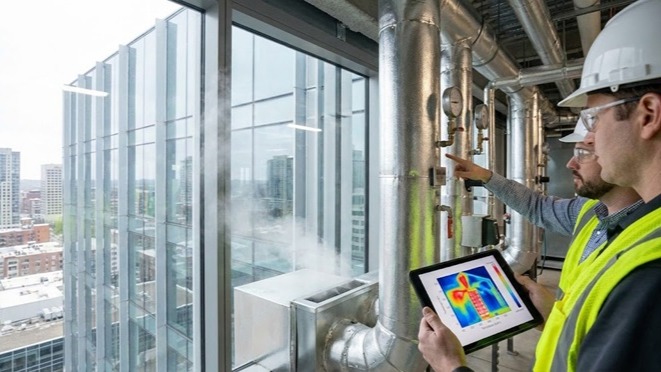
Tall buildings present distinctive challenges for heating system air management that single-storey installations do not encounter. The vertical extent of multi-storey heating systems creates conditions where air migrates, accumulates, and causes problems in ways that differ fundamentally from horizontal configurations. Understanding why air trapped multi storey buildings experience proves particularly persistent helps facilities managers and heating engineers address these challenges effectively.
The physics governing air behaviour in vertical systems produces predictable accumulation patterns that inform effective venting strategies. Height-related pressure variations, extended pipe runs, and the natural buoyancy of air within water all contribute to high rise air problems that require specific solutions. Recognising these factors during design prevents problems that prove difficult and expensive to resolve retrospectively.
The Physics of Air in Vertical Heating Systems
Air within heating systems behaves according to physical principles that become more significant as building height increases. Understanding these fundamentals explains why tall buildings experience air problems that lower structures avoid.
Buoyancy drives air bubbles upward through the water column with force proportional to bubble size. In horizontal pipes, this upward force simply holds bubbles against the pipe crown as water flows past. In vertical risers, buoyancy directly opposes downward flow or assists upward flow, fundamentally changing air migration patterns.
The air trapped multi storey installations experience migrates continuously upward through vertical pipework regardless of flow direction. Even in down-feed systems designed for gravity-assisted circulation, air bubbles eventually reach upper levels where they accumulate in quantities that impair circulation.
System height determines the static pressure difference between top and bottom floors. A thirty-metre building creates approximately three bar static head pressure, meaning that expansion vessels and pressurisation equipment must maintain adequate pressure at the lowest point to ensure positive pressure at the highest. This pressure gradient affects air behaviour throughout the vertical system.
Dissolved air comes out of solution more readily at higher levels where absolute pressure proves lower. Water saturated with dissolved air at ground level releases free gas when pumped to upper floors where pressure cannot hold the same dissolved concentration. This continuous release contributes to ongoing air accumulation at upper levels.
Quality pressurisation equipment from National Pumps and Boilers helps maintain consistent pressure conditions throughout tall building heating systems, reducing the pressure fluctuations that promote air release and ingress.
Why Multi-Storey Buildings Present Unique Challenges
Beyond basic physics, several factors specific to tall building construction contribute to the air management difficulties these structures experience. Design compromises, construction practicalities, and operational factors all influence the severity of air problems.
Pressure Variations With Height
Static head pressure varies continuously from ground to roof level in vertical heating systems. This pressure gradient means that equipment and components at different heights operate under different conditions, complicating system design and operation.
Expansion vessels and pressure relief valves sized for ground-level conditions may prove inadequate for managing pressure variations throughout the building height. Undersized expansion provision causes frequent pressure relief discharge that loses treated water and introduces air during subsequent refilling.
Pump head requirements increase significantly in tall buildings. Circulating pumps must overcome static head in addition to friction losses, demanding higher pressure ratings than equivalent horizontal systems. Operating conditions that cause pump cavitation at ground level may prove acceptable at upper floors where inlet pressure is lower.
Automatic air vents at different heights experience different operating pressures. Vents sized for upper floor pressure may not function correctly if relocated to lower levels, and vice versa. Pressure-appropriate vent specification at each height level ensures reliable operation throughout the building.
High rise air problems intensify when pressure maintenance systems fail or perform inadequately. Periods of low system pressure enable air ingress through pump seals, valve glands, and automatic air vent ports. Restoring pressure does not remove air that has already entered, allowing accumulation despite apparently normal operation.
Extended Pipe Runs and Riser Systems
Vertical risers serving multiple floors create natural pathways for air migration to upper levels. Unlike horizontal runs where air pockets remain localised, vertical pipes allow continuous upward air movement that concentrates accumulation at building tops.
The air accumulation multi-storey buildings experience often collects in risers themselves rather than at terminal equipment. Air pockets lodged in vertical pipes obstruct flow to all floors above the blockage, affecting multiple occupants rather than individual spaces.
Pipe diameter changes along vertical runs create velocity variations that affect air behaviour. Reductions in diameter accelerate flow, potentially entraining air and carrying it past vent points. Enlargements reduce velocity, allowing entrained air to separate and accumulate unexpectedly.
Riser routing that follows building structure often includes horizontal sections traversing floors or deflecting around obstacles. Each horizontal section creates a potential air trap where accumulating bubbles eventually block flow. Identifying these vulnerable locations requires detailed review of actual pipe routing.
Common Air Trap Locations in Tall Buildings
Experience reveals consistent patterns in where air accumulates within multi-storey heating systems. Understanding these common locations focuses investigation and venting efforts on the highest-priority points.
Top Floor and Roof Level Installations
Upper floors invariably experience the worst air problems in any multi-storey heating system. Natural air migration concentrates accumulation at building peaks, whilst lower pressures at height encourage dissolved gas release.
Penthouse apartments and top floor offices often suffer inadequate heating despite systems functioning normally elsewhere in the building. The high rise air problems affecting these spaces may be mistakenly attributed to insufficient heat provision rather than air accumulation blocking circulation.
Roof-level plant rooms containing boilers, heat exchangers, or distribution equipment require particularly thorough venting provision. Equipment at these locations operates in the most air-prone position within the entire building, demanding multiple vent points to manage continuous accumulation.
Rooftop heating units serving specific areas may become completely air-locked despite adequate circulation elsewhere. These isolated units at building peaks collect air from throughout their supply pipework, requiring dedicated venting to maintain function.
Riser Branch Connections
Branch connections where lateral pipework takes off from vertical risers create geometry that traps air. The change from vertical to horizontal flow direction allows rising air bubbles to accumulate at the connection point rather than continuing upward.
The air trapped multi storey configurations experience at riser branches affects individual floors or zones fed from those connections. Symptoms appear similar to valve closure or pump failure, leading to incorrect diagnosis that delays effective resolution.
Connection geometry significantly affects air trap severity. Tee connections from riser tops collect more air than those from sides, whilst swept connections with gradual transitions trap less air than sharp right-angle junctions.
Venting at riser branch connections addresses these accumulation points directly. Small-bore vent tees installed at the highest point of each lateral connection release trapped air before it blocks flow to the dependent circuit.
Intermediate Floor High Points
Air accumulation does not occur exclusively at building tops. Local high points created by building structure, routing around obstacles, or level changes within floors can trap air at any height within the system.
Pipe runs crossing dropped ceiling voids may rise over ducts or structural elements before descending to terminal equipment. Each rise creates a potential air trap that standard high-point venting at floor levels would not address.
Locating these intermediate air traps requires detailed knowledge of actual pipe routing rather than schematic understanding. As-built drawings, site investigation, and thermal imaging during operation all help identify accumulation points that design documents may not reveal.
Systems involving components from various categories including central heating circulators require comprehensive venting throughout distribution pipework to maintain reliable circulation.
Design Factors Contributing to Air Problems
Many tall building air problems originate in design decisions that underestimate or ignore height-related challenges. Understanding these design factors helps prevent problems in new installations and explains difficulties in existing buildings.
Inadequate Initial Venting Provision
Insufficient venting represents the most common design failure affecting tall building heating systems. Designers accustomed to single-storey installations may apply similar venting densities to multi-storey projects, providing inadequate coverage for the more demanding conditions.
High rise air problems often become apparent only after building occupation when heating systems operate under full load. Commissioning during mild weather may not reveal air accumulation that develops when systems run continuously during cold periods.
Retrospective vent installation proves considerably more expensive than original provision. Access to pipework concealed above finished ceilings requires disruptive opening and reinstatement. Adding vents to occupied buildings also causes disruption that appropriate original design would have avoided.
Specification of inadequate vent types compounds insufficient quantity problems. Manual vents where automatic devices would prove appropriate, or low-capacity vents where high-capacity units are needed, leave air problems partially addressed despite apparently comprehensive installation.
System Pressurisation Challenges
Pressurisation systems in tall buildings must accommodate larger pressure variations than single-storey equivalents. Undersized expansion vessels or inadequate pressurisation units cannot maintain stable conditions throughout the building height.
Cold fill pressure must ensure positive pressure at the highest system point. Calculation errors that ignore static head leave upper floors at or below atmospheric pressure, enabling continuous air ingress that venting alone cannot overcome.
The air trapped multi storey systems experience when pressurisation proves inadequate differs from normal accumulation. Rather than gradual buildup addressed by periodic venting, continuous ingress requires pressurisation system upgrade before venting can prove effective.
Properly sized expansion vessels accommodating total system volume plus allowance for height-related pressure variations form essential components of effective tall building pressurisation.
Solutions for Tall Building Air Management
Addressing air problems in multi-storey buildings requires comprehensive approaches that consider the full range of contributing factors. Single interventions rarely resolve complex tall building air management challenges.
Strategic Vent Placement
Effective venting strategy for tall buildings differs significantly from single-storey approaches. Multiple vents at various heights address the distributed nature of air accumulation in vertical systems.
Riser tops require automatic venting as absolute priority locations. Air migrating up risers collects at these points regardless of terminal equipment venting. High-capacity automatic vents at riser tops capture the bulk of accumulated air before it affects individual floors.
Floor-by-floor venting at each lateral branch connection addresses air trapping at these transition points. Automatic vents prove preferable given the quantity of locations and likely access difficulties in occupied buildings.
Circulation pumps from Wilo and Lowara maintain circulation effectively when air management removes accumulation that would otherwise impair hydraulic performance.
Deaeration Equipment
Centralised deaeration equipment provides enhanced air removal beyond what distributed venting can achieve. These systems actively remove dissolved and entrained air from circulating water, reducing the air load that venting must manage.
Vacuum deaerators create reduced pressure conditions that encourage dissolved air release. Water passing through the deaerator releases dissolved gas that is then vented to atmosphere. The treated water returns to circulation with reduced air content.
Pressurised microbubble separators remove entrained air bubbles from flowing water. Coalescing media within the separator causes small bubbles to combine into larger ones that separate and rise to integral vents. These devices prove particularly effective for tall building systems experiencing air accumulation from dissolved gas release.
Return on investment for deaeration equipment depends on the severity of air problems and the costs they create. Buildings experiencing frequent service calls, comfort complaints, and efficiency losses often justify deaeration installation within two to three years.
Maintenance Protocols
Tall buildings require ongoing air management attention beyond initial commissioning. Regular inspection and venting protocols maintain system performance despite continuous air ingress.
Scheduled venting visits should include systematic checking of all vent points, not just those most easily accessible. Upper floor and riser top locations that prove difficult to reach require deliberate scheduling to ensure they receive attention.
Monitoring system behaviour provides early warning of developing air problems. Temperature differentials across risers, pressure fluctuations, and noise complaints all indicate air accumulation requiring investigation.
Building management systems can monitor parameters relevant to air accumulation, alerting maintenance staff to developing problems. Temperature sensors, pressure transmitters, and flow meters all provide data that trained operators can interpret for air-related symptoms.
Conclusion
The challenges of air trapped multi storey buildings present require recognition and specific solutions that differ from single-storey approaches. Height-related physics, pressure variations, and extended pipe runs all contribute to high rise air problems that demand comprehensive management strategies.
Understanding why air accumulates in predictable patterns within tall buildings informs effective venting strategies and equipment selection. Design decisions made during initial planning significantly affect the severity of air problems throughout building life.
Facilities managers and building owners experiencing persistent air problems in multi-storey heating systems should seek professional assessment that considers the height-specific factors described. Early intervention prevents the cascade of consequences that follow from chronic air accumulation.
For guidance on tall building air management and quality heating equipment, contact the National Pumps and Boilers team for expert technical support.