

Variable Speed Booster Sets: How They Cut Energy Use and Reduce Noise
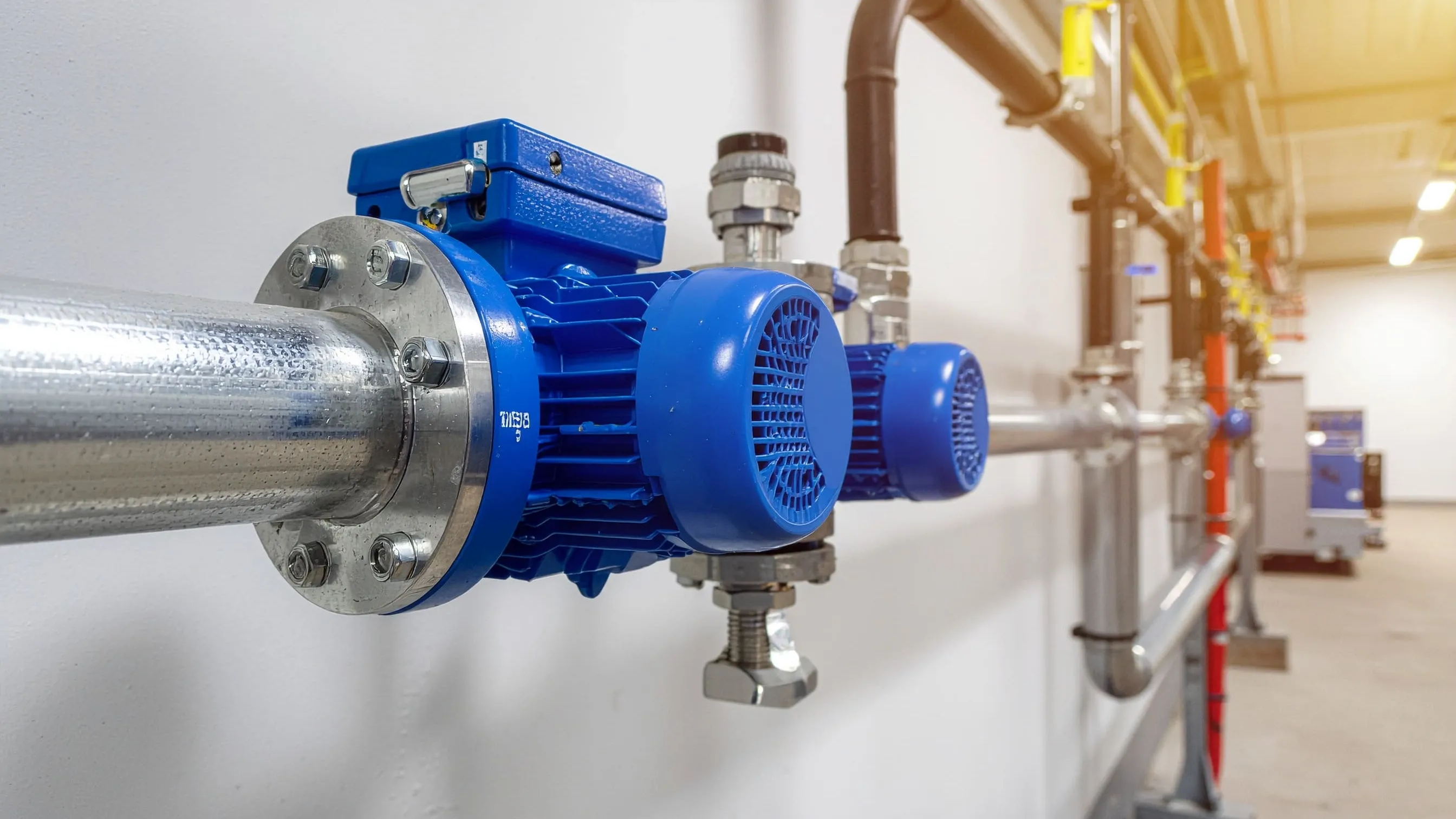
Fixed-speed booster sets waste energy every hour they run. In a typical eight-storey residential building, a conventional fixed-speed pump operates at full capacity regardless of actual water demand - whether three flats use water simultaneously or thirty. The motor runs at 2,900 rpm continuously, consuming the same power at 3am when the building is largely unoccupied as it does during peak morning usage. This approach wastes an average of 40-60% of electrical consumption and generates consistent noise that transmits through plant room structures into occupied spaces.
Variable speed booster set energy saving stems from inverter-driven motor technology that adjusts pump speed to match real-time demand. When fewer outlets draw water, the pump slows down. When demand increases, it accelerates. This fundamental shift in operational principle delivers two measurable and quantifiable benefits: energy consumption drops by 30-50% in typical commercial applications, and acoustic output falls significantly during low-demand periods - quiet enough to meet residential noise standards without the costly acoustic enclosures that fixed-speed alternatives frequently require.
How Variable Speed Control Works
Inverter technology - also called a variable frequency drive (VFD) - sits at the heart of variable speed booster set operation. The inverter controls the electrical frequency supplied to the pump motor, which directly governs rotational speed. A standard three-phase motor runs at 50 Hz in the UK, producing approximately 2,900 rpm. By reducing frequency to 25 Hz, the inverter halves motor speed to roughly 1,450 rpm. This relationship remains linear: frequency determines speed with high precision.
The system maintains target outlet pressure through continuous closed-loop feedback. A pressure transducer mounted on the discharge pipework measures system pressure and transmits this data to the controller at high frequency. If pressure drops below the setpoint - indicating increased water draw somewhere in the building - the controller raises motor frequency to increase pump speed and restore pressure. When demand falls and pressure rises above the setpoint, the controller reduces motor frequency. Well-designed variable speed pump control maintains pressure within ±0.2 bar of the target setpoint under normal operating conditions.
Grundfos pioneered many of the control algorithms used in modern variable speed booster sets, including pressure compensation functions that adjust setpoint based on estimated static head in tall buildings. The system calculates the pressure required to reach the highest outlet and modulates pump speed accordingly, preventing over-pressurisation at lower floors whilst maintaining adequate supply at upper levels - a function that fixed-speed systems with simple pressure switches cannot replicate.
Energy Savings: The Numbers That Matter
The energy advantage of variable speed booster set operation stems from the affinity laws - fundamental hydraulic engineering relationships between pump speed, flow, and power consumption. The third affinity law states that power consumption varies with the cube of the speed ratio. Reducing pump speed by 20% (from 100% to 80%) cuts power consumption by approximately 49%. Halving the motor speed reduces power to just 12.5% of full-speed consumption. This cubic relationship makes even modest speed reductions highly effective for energy saving purposes.
Consider a fixed-speed booster set in a 12-storey office building consuming 11 kW continuously. Annual electricity usage reaches 96,360 kWh. At £0.25 per kWh commercial electricity rates, running costs total £24,090 per year. A variable speed replacement operating at an average of 65% speed - typical for this application type given overnight and weekend low-demand periods - reduces average consumption to approximately 3.0 kW. Annual usage drops to 26,280 kWh, costing £6,570. The saving of £17,520 per year typically recovers the additional capital cost of inverter-driven technology within 18-24 months.
Wilo variable speed booster sets incorporate real-time energy monitoring that tracks cumulative kWh consumption and calculates savings against equivalent fixed-speed operation. This data is particularly valuable for Building Regulations Part L compliance reporting, which requires demonstration of energy-efficient pumping systems in new commercial developments, and for building owners seeking to quantify the return on investment from energy-efficient pumping infrastructure.
Data from independent studies of commercial buildings in London showed average energy reductions of 42% after replacing fixed-speed boosters with variable speed units. Buildings with the greatest daily demand variation - hotels, student accommodation, and residential blocks with concentrated morning peaks - achieved savings of 50-58%. Office buildings with more consistent daytime demand profiles still achieved reductions of 32-38%, demonstrating that variable speed booster set energy saving delivers meaningful returns across a wide range of commercial building types.
Noise Reduction in Practice
Acoustic output from pumping equipment correlates directly with motor speed and the mechanical vibration it generates. A fixed-speed pump motor produces approximately 65-72 dB(A) measured at one metre, depending on motor size and mounting conditions. This noise transmits through structural connections into the building fabric. In plant rooms adjacent to residential spaces, fixed-speed operation frequently generates occupant complaints even where basic rubber vibration isolation is installed.
Variable speed operation reduces booster set noise reduction through three distinct mechanisms. First, lower motor speeds produce less electromagnetic noise from motor windings. A motor running at 40% speed generates approximately 15-20 dB(A) less noise than the same motor at full speed. Second, reduced flow velocity in distribution pipework eliminates the cavitation and water hammer events that generate high-frequency noise in fixed-speed systems running at full pressure regardless of demand. Third, soft-start acceleration prevents the mechanical shock that occurs when fixed-speed motors energise at full torque - a significant source of structural impact noise in plant rooms with hard-mounted equipment.
Building Regulations Approved Document E establishes maximum noise levels for mechanical plant serving residential buildings, specifying that pumping equipment should not generate more than 35 dB(A) in adjacent habitable rooms. Meeting this standard with fixed-speed equipment often requires sound-rated enclosures, spring isolators, flexible connections, and in severe cases, complete acoustic lining of the plant room - additions that can cost £8,000-£15,000 on a typical project. Variable speed units operating at reduced speeds frequently meet Part E requirements with standard rubber anti-vibration mounts and basic flexible pipework connections.
National Pumps and Boilers has conducted acoustic testing on twin-pump variable speed booster sets installed in residential developments, with overnight low-demand periods showing plant room noise levels well within compliance thresholds in adjacent occupied spaces - performance that fixed-speed alternatives cannot consistently achieve without substantial acoustic treatment expenditure.
Hotel applications benefit particularly from the noise characteristics of variable speed operation. Guest rooms above or adjacent to plant rooms require especially quiet equipment during overnight hours. A variable speed booster set serving a 120-room hotel typically operates at 25-40% speed between midnight and 6am, maintaining adequate pressure for occasional bathroom use whilst producing minimal acoustic disturbance. The cost saving from eliminating specialist acoustic enclosures frequently offsets a significant portion of the premium for variable speed technology on hotel specification projects.
System Design Considerations
Sizing variable speed booster sets requires different calculations than fixed-speed units. The system must deliver peak simultaneous flow at maximum operating speed, with the controller managing all demand variations below that maximum automatically. Design engineers specify the duty point based on realistic simultaneous demand - the genuine peak flow rate when multiple outlets operate concurrently - rather than theoretical maximum connected load.
For residential buildings, BS 8558:2015 provides diversity factors that account for the statistical improbability of all outlets operating simultaneously. A 60-flat residential block might have a theoretical maximum flow of 12 l/s if every outlet ran at once. Applying BS 8558 diversity factors, realistic simultaneous demand calculates to approximately 4.2 l/s. The variable speed booster set must deliver this flow at the required head, with the controller managing all demand fluctuations between minimal single-tap flow and the calculated peak. Central heating systems in the same building require analogous diversity-based sizing calculations, making coordinated hydraulic design across both services a worthwhile investment at the design stage.
Multiple pump configurations provide operational flexibility that single-pump variable speed systems cannot match. A 2+0 arrangement uses two identical pumps that alternate as duty pump, sharing accumulated running hours and extending overall system life. Both pumps can operate simultaneously during peak demand periods, with the controller staging the second pump when the first reaches 90-95% speed. A 3+0 configuration provides additional redundancy for critical applications - hospitals, data centres, and high-rise residential buildings - where water supply failure carries significant consequences.
DAB manufactures compact variable speed booster sets with integrated pressure vessels that minimise plant room footprint in space-constrained installations. The pressure vessel - typically 60-200 litres - provides a buffer volume that prevents micro-cycling during very low flows. When a single tap opens briefly, the vessel supplies water without requiring the pump to start. This anti-cycling function extends motor and control component life whilst reducing energy consumption during the low-demand periods that characterise overnight and weekend operation in most commercial buildings.
BMS integration allows remote monitoring and performance-based fault diagnosis. Variable speed booster set controllers communicate via Modbus RTU or BACnet protocols, transmitting real-time data on flow rate, system pressure, power consumption, and alarm conditions to centralised facilities management systems. This integration enables predictive maintenance approaches that identify deteriorating performance before failure occurs.
Maintenance and Reliability Benefits
Variable speed operation extends mechanical component life by eliminating the shock loading associated with fixed-speed motor starts. Starting a fixed-speed motor subjects the pump shaft, bearings, and mechanical seals to instantaneous full-load torque from standstill. This shock occurs every time the pump cycles on. A booster set cycling 20 times daily accumulates 7,300 start events annually, each incrementally degrading bearing races and seal faces.
Variable speed soft-start eliminates this mechanical shock by ramping motor speed gradually over 5-15 seconds, bringing the pump to operating speed smoothly and progressively. Bearing load increases incrementally rather than instantaneously. This gentler starting sequence typically doubles bearing service life compared to fixed-speed equivalents operating under similar total duty cycles. Mechanical seal life extends similarly - gradual pressure build-up during soft-start prevents the seal face damage that abrupt pressurisation causes in fixed-speed systems.
Lowara variable speed booster sets incorporate inverter-based motor protection that monitors current, voltage, and winding temperature continuously. If current exceeds safe limits - indicating a blockage, mechanical seizure, or severe overload condition - the inverter shuts the motor down within milliseconds, preventing winding damage that would otherwise require complete motor replacement. These protective functions significantly reduce the risk of catastrophic failures that generate emergency call-outs and extended supply interruptions.
Armstrong pump systems include performance trending functionality that compares current power consumption against historical data at identical flow and pressure conditions. Gradual increases in energy consumption at constant duty indicate wear progression - impeller erosion, bearing friction increases, or seal drag. This trending allows planned maintenance interventions during scheduled periods rather than reactive emergency repairs, substantially reducing the indirect costs of pump maintenance in occupied commercial buildings.
Service intervals for well-maintained variable speed booster sets typically extend to 24-36 months for bearing inspection and seal replacement, compared to 12-18 months for fixed-speed equivalents operating under similar total demand. Reduced component wear rates translate to lower parts costs and reduced total maintenance expenditure across the 15-20 year service life characteristic of commercial booster sets.
When Variable Speed Technology Delivers Maximum Value
Variable speed booster sets provide the greatest financial return in applications with significant daily demand variation. Residential buildings, hotels, student accommodation, and leisure facilities experience demand patterns ranging from near-zero during overnight hours to pronounced usage peaks during morning and evening periods. Variable speed booster set energy saving in these applications is most dramatic because the pumps spend substantial time operating at reduced speed. The combination of energy savings and noise reduction in these applications consistently justifies the additional capital cost within 12-24 months of operation.
Office buildings with more consistent daytime occupancy still benefit measurably from variable speed control, though savings are less dramatic than in residential applications. Weekend and overnight periods operate at minimal demand, and even during working hours, water usage fluctuates considerably as staff use facilities intermittently throughout the day. Energy savings typically reach 30-40% in office applications - less striking than residential figures, but financially compelling on a 15-year cost-of-ownership basis.
Ebara variable speed pump systems are suited to applications combining process and building services water demand, where demand patterns can be highly variable and difficult to predict in advance - the inverter control automatically adapts to changing demand profiles without requiring setpoint adjustments or manual intervention.
DHW pumps serving large commercial hot water systems demonstrate similar efficiency benefits to cold water boosters, particularly in hospitality and leisure applications where hot water demand varies significantly throughout the day and energy-efficient pumping across both cold and hot water services contributes meaningfully to overall building energy performance.
Retrofit projects replacing ageing fixed-speed booster sets represent particularly straightforward opportunities for variable speed upgrades. The existing electrical infrastructure - three-phase supply, isolation arrangements, and control wiring routes - typically remains usable, reducing installation cost. Energy savings begin immediately from commissioning, and the acoustic improvement frequently resolves long-standing noise complaints. Building operators should prioritise booster set replacement when equipment approaches 12-15 years of age, before reliability deteriorates and emergency replacement on an unplanned basis becomes likely.
Conclusion
Variable speed booster sets cut energy consumption by 30-50% in typical commercial applications through inverter-driven pump control that matches motor speed to real-time water demand. The affinity law relationship between speed and power means that even modest speed reductions deliver substantial energy savings - halving pump speed reduces power consumption to 12.5% of full-speed draw. These savings typically recover the additional capital cost of variable speed technology within 18-24 months in buildings with the variable demand patterns that characterise most commercial and residential applications.
Noise reduction represents an equally significant benefit. Variable speed booster set noise reduction during low-demand periods often eliminates the need for expensive acoustic enclosures, making variable speed technology particularly valuable in residential buildings, hotels, and other noise-sensitive applications where Part E compliance requirements make acoustic performance a specification priority alongside hydraulic performance.
The technology suits virtually any application with varying water demand - from residential blocks and hotels through to offices, student accommodation, and leisure facilities. When replacing ageing fixed-speed equipment or specifying new installations, variable speed booster sets deliver measurable improvements in energy efficiency, acoustic performance, and mechanical component longevity that fixed-speed alternatives cannot match. For guidance on selecting the right variable speed booster set for specific building applications and performance requirements, Contact Us to discuss project requirements and operational specifications.