

What Building Managers Should Know About Energy Metering
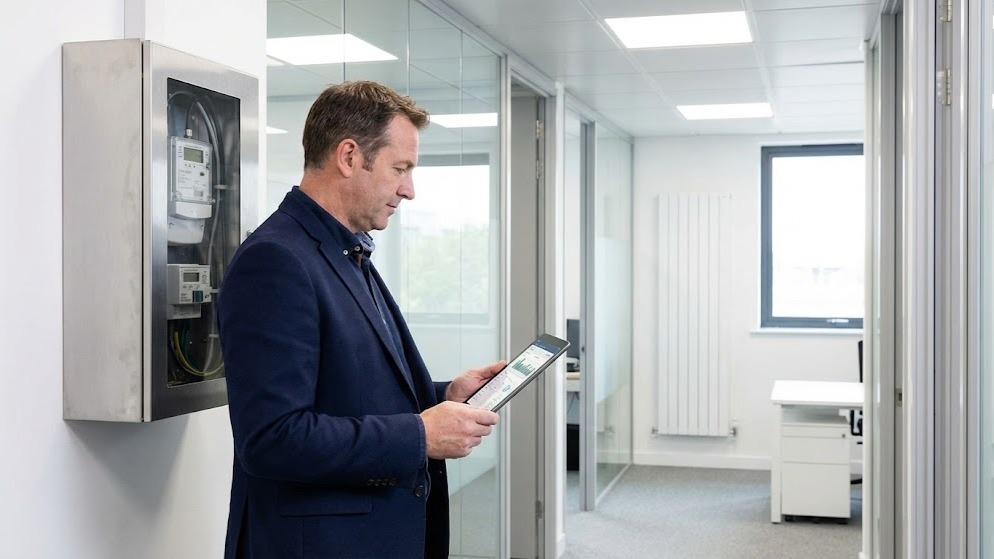
Building managers face mounting pressure to demonstrate energy performance, control operational costs, and meet increasingly stringent environmental regulations. Energy metering provides the data foundation for all three objectives, yet many commercial and industrial facilities still operate with inadequate metering infrastructure or fail to extract actionable insights from the data they collect.
The difference between basic compliance metering and strategic energy monitoring often determines whether a building achieves genuine efficiency gains or simply tracks consumption after the fact. For facilities managing complex heating systems, multiple pump installations, or mixed-use spaces, understanding what to meter, where to place monitoring points, and how to interpret the resulting data separates reactive maintenance from proactive energy management. Energy metering building managers implement drives measurable operational improvements. Strategic monitoring transforms facility performance.
Why Energy Metering Matters Beyond Compliance
Building Regulations Part L mandates minimum metering requirements for non-domestic buildings, but compliance-level monitoring rarely provides sufficient granularity for meaningful operational decisions. A single main meter records total consumption but reveals nothing about which systems waste energy, when inefficiencies occur, or how different operational patterns affect costs.
Facilities with central heating systems spanning multiple zones, commercial boiler installations, or extensive pump networks require sub-metering at system and equipment levels. This granular approach identifies specific inefficiencies: a pump running outside scheduled hours, a boiler cycling excessively, or a heating zone consuming disproportionate energy relative to its conditioned space.
The financial case for comprehensive metering is straightforward. Research from the Carbon Trust indicates that organisations implementing detailed energy monitoring typically achieve 10-20% reductions in consumption within the first year, purely through identifying and eliminating waste. For a medium-sized commercial building with £50,000 annual energy costs, this translates to £5,000-£10,000 in savings, often sufficient to recover metering infrastructure investment within 18-24 months. Utility monitoring commercial facilities implement delivers substantial returns.
Critical Metering Points for Heating and Pumping Systems
Effective energy monitoring requires strategic placement of metering equipment at points where data reveals actionable insights. For heating systems, this means moving beyond building-level consumption to equipment-level visibility.
Boiler Plant Metering
Commercial boiler installations demand dedicated metering that captures gas consumption, electrical input for controls and pumps, and thermal output. This combination allows calculation of actual seasonal efficiency rather than relying on manufacturer nameplate ratings. Buildings operating multiple boilers benefit from individual metering on each unit, enabling performance comparison and identification of underperforming equipment.
Modern condensing boilers achieve optimal efficiency only under specific operating conditions. Metering data reveals whether boilers operate within their designed efficiency envelope or suffer from oversizing, short-cycling, or inappropriate load distribution.
Circulation Pump Monitoring
Circulation pumps represent significant electrical loads in commercial heating systems, yet many facilities lack any monitoring of pump energy consumption. Grundfos and Wilo variable-speed pumps can reduce energy use by 30-70% compared to fixed-speed alternatives, but only when controlled appropriately.
Individual metering on major pump installations answers critical questions: Does the pump modulate speed in response to demand, or does it run at full capacity regardless of system requirements? Do pumps continue operating during unoccupied periods? Does energy consumption align with expected values based on pump specifications and system design?
For facilities with multiple pump systems, including primary/secondary circuits, DHW pumps, booster sets, or process pumps, dedicated metering on each major unit identifies which systems offer the greatest opportunity for efficiency improvements. Energy metering building managers deploy reveals these optimisation opportunities.
Zone-Level Monitoring
Buildings with distinct heating zones benefit from thermal metering that tracks heat consumption by area. This approach proves particularly valuable in mixed-use facilities where different spaces have varying occupancy patterns, temperature requirements, or operational schedules.
Zone metering reveals imbalances that indicate control problems, distribution issues, or opportunities for schedule optimisation. A retail space consuming twice the thermal energy per square metre compared to adjacent office areas suggests either inappropriate setpoints, control valve failures, or distribution system inefficiencies requiring investigation. Energy metering building managers utilise identifies these zone-specific opportunities.
Understanding Meter Types and Selection Criteria
Energy metering encompasses various technologies, each suited to specific applications and measurement requirements.
Electrical Metering
Modern electrical meters range from basic kWh counters to sophisticated power quality analysers. For pump and boiler auxiliary equipment, meters should capture active energy consumption (kWh), power factor and reactive energy, demand profiles showing peak loads, and voltage and current measurements.
Multi-circuit meters monitoring multiple loads simultaneously reduce installation costs compared to individual meters, though they may sacrifice some data granularity. Communication protocols matter significantly; meters supporting Modbus, BACnet, or M-Bus integration connect seamlessly to building management systems, while standalone units require manual reading or separate data collection infrastructure. Energy metering building managers select should prioritise protocol compatibility.
Thermal Metering
Heat meters measure thermal energy transferred through heating circuits by combining flow measurement with temperature differential sensing. Accuracy depends on proper installation; meters require adequate straight pipe runs upstream and downstream, correct sensor placement, and appropriate sizing for expected flow rates.
Ultrasonic heat meters offer advantages over mechanical alternatives: no moving parts to wear, wider turndown ratios, and bidirectional measurement capability. For heating systems with variable flow patterns or low minimum flows, ultrasonic technology maintains accuracy across the operating range. Utility monitoring commercial applications benefit from this precision.
Gas Metering
Facilities with multiple gas-fired boilers or process equipment benefit from sub-metering that allocates consumption to specific plant. Pulse output gas meters integrate with building management systems, enabling correlation between gas consumption, thermal output, and efficiency calculations.
Data Collection and Management Infrastructure
Meters generate value only when data reaches decision-makers in actionable form. This requires robust data collection, storage, and analysis infrastructure.
Automated Data Collection
Manual meter reading introduces delays, transcription errors, and labour costs that undermine monitoring effectiveness. Automated collection via building management systems, dedicated energy management platforms, or wireless sensor networks captures data at intervals sufficient for meaningful analysis, typically 15-minute to hourly readings.
Pulse output meters provide simple integration, transmitting consumption data as discrete pulses proportional to energy use. More sophisticated meters with Modbus or BACnet communication deliver additional parameters, including instantaneous power, power factor, voltage, and current, enabling deeper analysis of equipment performance and power quality issues.
Data Storage and Accessibility
Energy data accumulates rapidly. A facility with 50 metering points collecting 15-minute interval data generates over 1.7 million data points annually. Cloud-based energy management platforms handle this volume efficiently while providing accessibility from any location, facilitating remote monitoring and multi-site management.
Data retention policies should balance storage costs against analytical requirements. Detailed interval data proves essential for recent periods when investigating specific issues, while monthly summaries suffice for long-term trending and year-over-year comparisons. Utility monitoring commercial operations benefit from robust data infrastructure. Energy metering building managers implement requires reliable storage systems.
Interpreting Energy Data for Operational Decisions
Raw consumption data requires analysis and contextualisation to drive meaningful action.
Baseline Establishment
Effective energy management begins with establishing consumption baselines that account for variables affecting energy use: weather conditions, occupancy levels, production schedules, and operational patterns. Degree-day normalisation adjusts heating energy consumption for weather variations, enabling valid comparisons between different periods.
Baseline models quantify expected energy consumption under normal operating conditions, making deviations immediately apparent. A sudden 15% increase in heating system energy use signals investigation requirements, potential issues include control failures, expansion vessel problems causing excessive pump operation, or distribution system faults.
Benchmarking and Targeting
Energy performance gains context through benchmarking against comparable facilities or industry standards. CIBSE TM46 provides energy benchmarks for various building types, enabling facilities to assess performance relative to typical and good practice examples.
Internal benchmarking across similar spaces or equipment proves equally valuable. If three identical Grundfos pumps serve separate building wings, significant consumption variation between units indicates operational differences requiring investigation, perhaps one operates on incorrect speed settings or suffers from control system faults.
Identifying Operational Anomalies
Energy metering excels at revealing operational problems that escape visual inspection. Common findings include base load consumption indicating equipment operating unnecessarily during unoccupied periods, excessive pump energy suggesting incorrect speed settings or control valve failures, boiler short-cycling patterns indicating oversizing or control problems, and consumption spikes correlating with specific operational events or equipment starts.
Automated anomaly detection algorithms flag unusual patterns, though human interpretation remains essential for distinguishing genuine problems from legitimate operational variations. Utility monitoring commercial buildings implement reveals these hidden inefficiencies.
Regulatory Compliance and Reporting Requirements
Energy metering intersects with multiple regulatory frameworks affecting commercial and industrial facilities.
ESOS and Energy Audits
The Energy Savings Opportunity Scheme requires large organisations to conduct comprehensive energy audits every four years. Quality metering data dramatically improves audit effectiveness, providing actual consumption patterns rather than relying on estimates or short-term measurements.
Facilities with established sub-metering can complete ESOS audits more efficiently and identify opportunities more precisely than those dependent on main meter data and assumptions about internal distribution. Utility monitoring commercial buildings require supports comprehensive ESOS compliance.
Display Energy Certificates
Public buildings require Display Energy Certificates showing actual energy performance. DEC ratings depend on metered consumption data, making accurate metering essential for fair assessment. Buildings with poor DEC ratings face reputational risks and may struggle to attract tenants or justify premium rents.
Building Regulations Part L
Current Building Regulations mandate metering provisions for new installations and major renovations. Compliance requires metering capable of monitoring at least 90% of estimated annual energy consumption, with separate metering for different fuel types and major end-uses.
For heating systems, this typically means dedicated metering for boiler plant, separate monitoring of pumping energy, and potentially zone-level metering for larger installations. National Pumps and Boilers provides guidance on metering requirements for specific projects and regulatory compliance strategies.
Implementation Strategies and Common Pitfalls
Successful metering programmes require careful planning and execution.
Phased Implementation
Facilities lacking comprehensive metering benefit from phased approaches that prioritise high-value monitoring points. Initial phases typically focus on major energy consumers, including boiler plant, primary pumps, and whole-building electrical loads, before expanding to secondary systems and individual zones.
This approach delivers early wins that build support for continued investment while allowing organisations to develop data management and analysis capabilities before scaling to comprehensive monitoring.
Integration With Existing Systems
Metering infrastructure should integrate with building management systems rather than creating parallel, disconnected monitoring. Integration enables automated analysis, alarm generation, and correlation between energy consumption and operational parameters like temperature setpoints, occupancy schedules, and equipment status.
Avoiding Common Mistakes
Metering programmes fail when organisations install meters without clear plans for data collection and analysis, select inappropriate meter types or sizes for specific applications, neglect meter commissioning and verification, fail to establish responsibility for data review and action, or generate reports that document consumption without driving decisions.
Effective programmes assign clear accountability for reviewing energy data, investigating anomalies, and implementing improvements. Without this operational discipline, metering infrastructure becomes expensive record-keeping rather than an active management tool. Energy metering building managers establish must include action protocols.
Conclusion
Energy metering transforms building management from reactive response to data-driven optimisation. For facilities with complex heating systems, extensive pump installations, or multiple operational zones, comprehensive metering provides the visibility required to identify inefficiencies, verify improvement measures, and demonstrate regulatory compliance.
The most effective metering strategies move beyond compliance-level monitoring to strategic placement of meters at points where data reveals actionable insights about equipment performance and system operation. Combined with robust data collection infrastructure and disciplined analysis processes, this approach typically delivers 10-20% consumption reductions while improving operational reliability and extending equipment life. Utility monitoring commercial facilities require delivers measurable returns.
Building managers planning metering upgrades should prioritise integration with existing building management systems, select meter types appropriate to specific measurement requirements, and establish clear processes for translating data into operational decisions. National Pumps and Boilers supplies metering-compatible pumps, controls, and system components that support comprehensive energy monitoring strategies for commercial and industrial heating installations. Contact the technical team for expert guidance on metering solutions.