

What Building Managers Should Know About Pump Control Settings
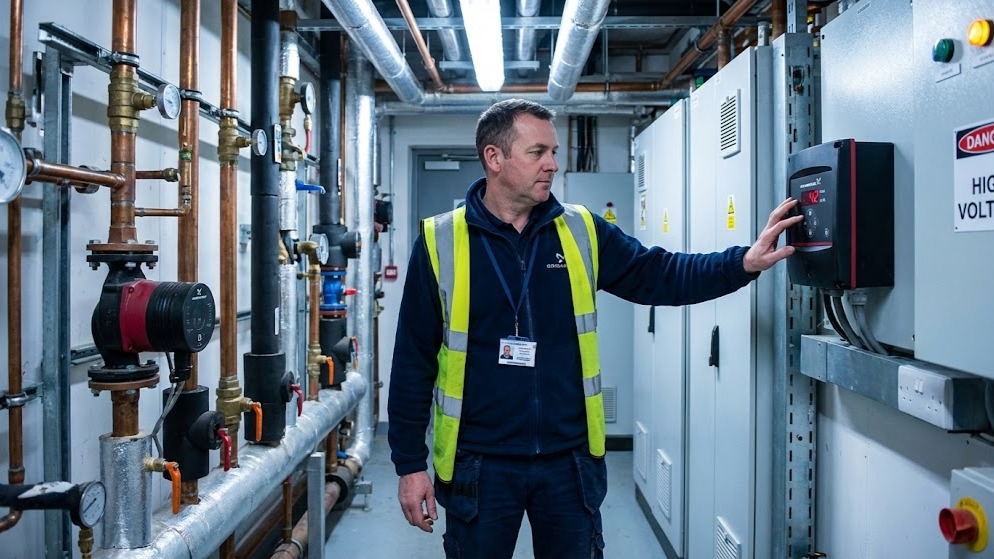
Circulation pumps account for up to 8% of total energy consumption in commercial buildings, yet most building managers rarely adjust control settings after installation. This oversight costs facilities thousands in unnecessary energy bills and premature equipment failure.
Pump control settings determine how heating and cooling systems respond to building demand. Incorrect configurations force pumps to run at maximum capacity regardless of actual load, wasting energy and accelerating wear on mechanical components. This comprehensive pump control settings guide enables building managers to optimise system performance, reduce operating costs, and extend equipment lifespan.
Why Pump Control Settings Matter in Commercial Buildings
Commercial HVAC systems rely on circulation pumps to move heated or chilled water through distribution networks. The way these pumps operate - constant speed versus variable speed, pressure setpoints, differential pressure targets - directly impacts system efficiency and comfort delivery.
Buildings with outdated constant-speed pumps consume 40-60% more energy than facilities using properly configured variable-speed systems. The difference stems from how each approach handles varying demand. Constant-speed pumps run at full capacity continuously, using control valves to restrict flow when demand decreases. Variable-speed pumps adjust motor speed to match actual load, eliminating the energy waste associated with throttling.
Impact on System Reliability
Beyond energy consumption, incorrect pump control settings affect system reliability. Pumps running at excessive speeds create higher-than-necessary pressures, stressing pipe joints and valve seats. Undersized pressure differentials cause poor circulation to remote zones, triggering comfort complaints and equipment cycling.
National Pumps and Boilers supplies commercial circulation pumps with advanced control capabilities, but the equipment only delivers value when configured correctly for specific building requirements.
Understanding Basic Pump Control Modes
Modern circulation pumps offer several control modes, each suited to different applications and system designs. Understanding these fundamental approaches forms the foundation for optimizing pump controls effectively.
Constant Pressure Mode
The pump maintains fixed discharge pressure regardless of flow demand. This mode suits systems with variable flow requirements and control valves that modulate based on zone needs. The pump speed increases or decreases to maintain the target pressure setpoint as valves open and close throughout the building.
Constant pressure settings typically range from 1.5 to 4.0 bar in commercial heating systems, depending on building height and distribution network design. Setting pressure too high wastes energy and increases wear. Setting it too low causes inadequate flow to upper floors or remote zones.
Proportional Pressure Mode
The pump reduces discharge pressure as flow decreases, following a programmed curve. This approach recognises that friction losses decrease with lower flow rates, allowing the pump to reduce pressure proportionally. Proportional pressure control typically achieves 10-20% additional energy savings compared to constant pressure operation.
The control curve requires careful configuration based on system characteristics. Steeper curves provide greater energy savings but risk insufficient pressure during peak demand. Flatter curves maintain better circulation but sacrifice efficiency gains.
Differential Pressure Mode
The pump maintains a specific pressure difference between supply and return lines. This mode suits systems where maintaining consistent pressure differential ensures proper flow distribution across multiple zones or branches. Grundfos pumps commonly feature differential pressure control for commercial applications.
Typical differential pressure setpoints range from 0.5 to 2.0 bar, depending on system design and zone valve configuration. Monitoring actual differential pressure during various load conditions helps identify optimal setpoints.
Fixed Speed Operation
Some applications require constant pump speed regardless of system demand. These include systems with manual balancing valves, gravity-fed circuits, or specific process requirements. Fixed speed operation eliminates the efficiency benefits of variable-speed control but simplifies commissioning and troubleshooting.
Critical Parameters Building Managers Should Monitor
Effective pump control requires understanding which parameters affect system performance and how to interpret their values.
Setpoint Pressure
This fundamental setting determines target pressure or differential pressure. Building managers should verify setpoints match design specifications and actual system requirements. Commissioning documents typically specify required pressures, but building modifications or equipment changes may necessitate adjustments.
Measure actual pressure at the pump discharge and compare against the setpoint during various load conditions. Discrepancies indicate control issues or mechanical problems requiring attention.
Minimum and Maximum Speed Limits
Variable-speed pumps operate within defined speed ranges, typically 30-100% of maximum RPM. The minimum speed setting prevents pump operation below the threshold where circulation becomes inadequate or motor cooling suffers. Maximum speed limits protect against excessive pressure or flow.
Incorrect minimum speed settings cause hunting - the pump repeatedly starts and stops as it attempts to maintain pressure below its operational capability. This behaviour damages motors and control electronics whilst wasting energy.
Night Setback Values
Many commercial buildings reduce heating or cooling during unoccupied periods. Pump control systems should include night setback parameters that lower circulation rates and pressures when full system capacity isn't required. Proper night setback configuration can reduce pump energy consumption by 30-50% during unoccupied hours.
Review night setback timing against actual building occupancy patterns. Facilities with extended hours, weekend operations, or varying schedules benefit from programmable setback schedules rather than fixed timing.
Alarm Thresholds
Modern pump controllers monitor operating parameters and trigger alarms when values exceed acceptable ranges. Building managers should verify alarm thresholds match system requirements and ensure alarm notifications reach responsible personnel.
Common alarm parameters include maximum motor temperature, minimum flow detection, excessive vibration, and power consumption anomalies. Properly configured alarms enable proactive maintenance before minor issues escalate into system failures.
Optimizing Pump Controls for Energy Efficiency
Energy optimisation requires systematic evaluation of current settings against actual building demand patterns. This pump control settings guide outlines proven strategies for maximising efficiency.
Conducting a Baseline Assessment
Document current pump operating parameters over a representative period - ideally including seasonal variations. Record power consumption, operating speeds, flow rates, and supply/return temperatures. This baseline data reveals opportunities for improvement and provides comparison metrics after adjustments.
Many Wilo pumps include integrated data logging that simplifies baseline assessment. Building management systems can also capture relevant parameters if properly configured.
Identifying Excessive Operating Margins
Systems designed with generous safety factors often operate with unnecessary margins that waste energy. Review design documentation against actual measured performance. If pumps consistently run at 60-70% capacity during peak demand, the system likely includes excessive margin allowing for more aggressive efficiency optimisation.
Gradually reduce pressure setpoints whilst monitoring zone performance and comfort feedback. Most commercial systems can achieve 0.2-0.5 bar pressure reduction without affecting comfort delivery, translating to 15-25% energy savings.
Implementing Demand-Based Control
Advanced control strategies adjust pump operation based on actual building demand rather than fixed schedules. Occupancy sensors, zone temperature feedback, and BMS integration enable pumps to respond dynamically to real-time conditions.
Demand-based control requires compatible pump controllers and proper integration with building systems. Central heating equipment with communication protocols like Modbus or BACnet facilitates this integration.
Common Control Setting Mistakes and Their Consequences
Building managers frequently encounter problems stemming from incorrect pump configuration when optimizing pump controls.
Excessive Pressure Setpoints
Setting discharge pressure higher than necessary remains the most common error. Engineers specify conservative pressures during design, but actual system requirements often prove lower after commissioning and balancing. Running pumps at excessive pressure wastes energy and accelerates component wear.
Buildings with frequent valve seat failures, leaking joints, or noisy pipe systems often suffer from excessive pump pressure. Gradually reducing setpoints whilst monitoring system performance identifies optimal operating pressures.
Disabled Variable-Speed Functionality
Some facilities operate variable-speed pumps in fixed-speed mode because commissioning engineers never configured control parameters properly. This negates the primary advantage of variable-speed technology - the ability to match pump output to actual demand.
Review pump controller settings to verify variable-speed operation is active. Controllers should display varying speed percentages as building load changes throughout the day. Constant 100% speed indicates fixed-speed operation regardless of installed equipment capabilities.
Inadequate Minimum Speed Settings
Setting minimum speed too low causes circulation problems during low-load conditions. Pumps operating below 30% speed often cannot maintain stable control, resulting in hunting behaviour and poor zone circulation.
If building occupants report inconsistent temperatures or slow warm-up times during mild weather, inadequate minimum speed may be responsible. Increasing the minimum speed threshold typically resolves these issues without significantly affecting energy consumption.
Mismatched Control Curves
Proportional pressure control requires accurate system curves matching actual friction characteristics. Using default factory curves without customisation often produces suboptimal performance.
Commissioning engineers should develop control curves based on measured system data rather than theoretical calculations. This ensures pump response matches actual building behaviour across all load conditions.
Integrating Pump Controls with Building Management Systems
Modern commercial facilities benefit from integrating pump controls with central BMS platforms for coordinated system operation.
Communication Protocol Compatibility
Verify pump controllers support communication protocols used by the existing BMS. Common protocols include Modbus RTU, Modbus TCP, BACnet, and proprietary systems. Incompatible protocols require gateway devices or limit integration depth.
Data Points Worth Monitoring
Prioritise BMS integration of parameters that inform operational decisions. Essential data points include operating speed, power consumption, discharge pressure, motor temperature, and alarm status. Trending this data reveals performance patterns and developing problems.
Less critical parameters like instantaneous flow rates or vibration levels may not justify integration costs unless specific applications require monitoring.
Remote Adjustment Capabilities
BMS integration enables remote adjustment of pump setpoints and control modes without accessing equipment rooms. This capability proves valuable for facilities with multiple buildings or limited maintenance staff.
Implement appropriate security and access controls for remote adjustments. Unauthorised or accidental changes can disrupt building comfort and damage equipment.
Seasonal Adjustments for Optimal Year-Round Performance
Building heating and cooling loads vary significantly across seasons, requiring corresponding pump control adjustments.
Heating Season Optimisation
Colder weather increases heating demand and system flow requirements. Review pressure setpoints at the start of heating season to ensure adequate circulation to all zones. Buildings with variable occupancy may benefit from different heating-season setpoints compared to shoulder seasons.
Monitor return temperatures throughout the building. Consistently low return temperatures indicate excessive flow rates, suggesting opportunities to reduce pump speeds and save energy.
Cooling Season Considerations
Chilled water systems typically require higher flow rates than heating systems due to smaller temperature differentials. Verify pump control settings transition appropriately when switching from heating to cooling mode.
Some facilities operate separate heating and cooling pumps, whilst others use the same pumps for both functions. Systems sharing pumps require seasonal control parameter updates reflecting different operating requirements.
Maintenance Practices That Protect Control System Performance
Reliable pump control depends on maintaining both mechanical components and electronic systems when optimizing pump controls.
Regular Sensor Calibration
Pressure sensors, temperature probes, and flow metres require periodic calibration to maintain accuracy. Sensor drift causes controllers to respond to incorrect information, degrading system performance.
Establish calibration schedules based on manufacturer recommendations and system criticality. Annual calibration suits most commercial applications, whilst critical systems may justify semi-annual verification.
Control System Software Updates
Pump controller manufacturers periodically release firmware updates addressing bugs, improving functionality, or adding features. Review available updates and evaluate whether benefits justify implementation effort and potential disruption.
Document current firmware versions and control parameters before performing updates. This enables quick restoration if updates cause unexpected problems.
Backup Configuration Settings
Controller failures or power events can corrupt stored configuration parameters. Maintain documented backups of all pump control settings, including setpoints, control curves, alarm thresholds, and communication parameters.
Many modern controllers support configuration export to USB drives or network storage. Implement regular backup procedures ensuring current settings remain recoverable.
When to Consult Specialists About Control Configuration
Building managers should recognise situations requiring specialist expertise rather than attempting adjustments independently.
Persistent Comfort Complaints
If occupants consistently report comfort issues despite normal equipment operation, control configuration may require specialist evaluation. Heating engineers can assess system hydraulics, measure actual performance parameters, and identify configuration changes that resolve problems.
Unexplained Energy Increases
Rising pump energy consumption without corresponding changes in building usage suggests control problems or mechanical issues. Specialist diagnostic support helps identify root causes and recommend solutions for pressurisation units and circulation systems.
System Modifications
Adding zones, replacing equipment, or modifying distribution networks affects pump requirements and control parameters. Specialist input ensures modifications integrate properly with existing systems and control strategies.
Complex Multi-Pump Systems
Buildings with multiple pumps operating in parallel, series, or duty-standby configurations require sophisticated control coordination. These systems benefit from specialist commissioning ensuring pumps operate efficiently together rather than fighting each other.
Conclusion
Proper pump control configuration transforms circulation systems from energy-wasting liabilities into efficient, reliable building assets. Building managers who understand control modes, monitor critical parameters, and optimise settings based on actual demand patterns achieve substantial energy savings whilst improving comfort delivery and extending equipment lifespan.
The difference between adequate and optimal pump control often represents 30-50% of circulation system energy consumption - thousands of pounds annually in typical commercial buildings. Regular review of control settings, seasonal adjustments, and integration with building management systems maximise these savings whilst maintaining reliable operation.
Facilities experiencing comfort issues, excessive energy consumption, or frequent pump problems should evaluate current control configurations against best practices outlined in this pump control settings guide. Many performance problems stem from suboptimal settings rather than equipment failures, making control optimisation a cost-effective improvement strategy.
For technical guidance on pump control configuration specific to particular equipment or building requirements, contact us for technical support to discuss system optimisation opportunities.