

What Causes Pump Cavitation and How Installation Location Affect It
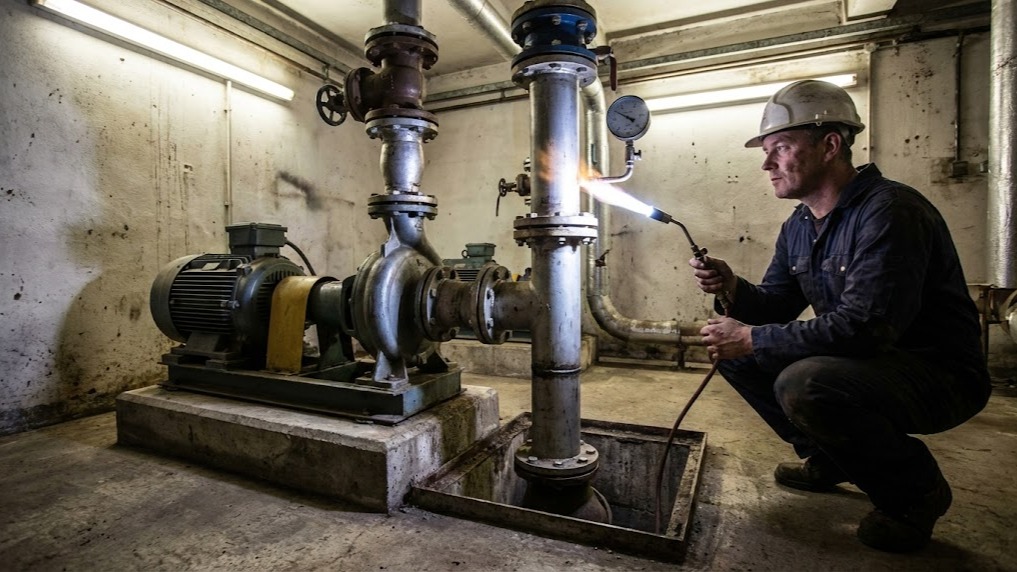
Pump cavitation remains one of the most destructive phenomena in commercial heating and plumbing systems, yet many installations fail before operators recognise the warning signs. The distinctive rattling noise signals vapour bubbles collapsing inside the pump casing - a process that erodes impellers, damages seals, and reduces system efficiency by up to 30%. Understanding what triggers this condition and how installation location influences risk helps prevent premature equipment failure.
The Physics Behind Pump Cavitation
Cavitation occurs when the liquid pressure at the pump inlet drops below the vapour pressure of the fluid being pumped. At this critical threshold, the liquid transforms into vapour, forming bubbles that travel through the pump. When these bubbles reach areas of higher pressure, they collapse violently against metal surfaces, creating shock waves that pit and erode pump components.
The process accelerates rapidly once established. A Grundfos circulator operating with insufficient inlet pressure can experience impeller damage within 200 hours of continuous cavitating operation. The microscopic pitting caused by bubble collapse weakens the metal structure, eventually leading to catastrophic failure.
Water temperature directly affects vapour pressure. At 20°C, water requires approximately 2.3 kPa absolute pressure to remain liquid. At 80°C - typical for heating system returns - this threshold rises to 47.4 kPa. Higher temperature systems face greater cavitation risk because the margin between operating pressure and vapour pressure narrows significantly.
Primary Causes of Pump Cavitation
Insufficient Net Positive Suction Head (NPSH)
Insufficient Net Positive Suction Head (NPSH) represents the most common pump cavitation cause in commercial installations. NPSH available must exceed NPSH required by the pump manufacturer's specifications. When system conditions fail to meet this requirement, cavitation becomes inevitable.
A Wilo circulator rated for 6 metres head requires a minimum NPSH of 2.5 metres at the design flow rate. Installing this pump with only 1.8 metres NPSH available guarantees cavitation under normal operation.
Excessive Suction Lift and System Restrictions
Excessive suction lift creates negative pressure conditions at the pump inlet. Systems requiring pumps to draw fluid from tanks or vessels positioned below the pump centreline face inherent cavitation risk. The vertical distance between the liquid surface and the pump inlet directly reduces available NPSH.
Restricted inlet piping throttles the flow before it reaches the pump, dropping pressure below safe thresholds. Common restrictions include:
- Undersized suction pipework (velocity exceeding 1.5 m/s)
- Partially closed isolation valves
- Clogged strainers or filters
- Sharp bends or elbows immediately before the pump inlet
- A long horizontal pipe runs with an inadequate diameter
High Fluid Velocity and Air Entrainment
High fluid velocity in suction lines creates friction losses that reduce inlet pressure. British Standard BS EN 12828 recommends a maximum velocity of 1.5 m/s for pump suction lines, yet many installations exceed 2.5 m/s through poor pipe sizing.
System air entrainment introduces gas bubbles that mimic cavitation symptoms and reduce effective NPSH. Air enters through leaking pump seals, faulty automatic air vents, or vortexing in open expansion tanks. The combined effect of air and low pressure accelerates damage.
How Installation Location Determines Cavitation Risk
The physical positioning of circulation pumps relative to system components fundamentally affects cavitation susceptibility. Location determines static pressure at the pump inlet - the foundation of NPSH available.
Pumping on the Return vs Flow
Installing circulation pumps on the system return rather than the flow side provides inherent cavitation protection. Return-side installation positions the pump after heat emitters, where fluid temperature drops and pressure remains highest.
A heating system with a 10-metre static head and a pump installed on the return benefits from full system pressure plus expansion vessel pre-charge pressure at the pump inlet. The same pump installed on the flow side experiences reduced inlet pressure due to circuit resistance between the pump and the expansion vessel connection point.
Central heating pumps demonstrate 15-20% longer service life when installed on return pipework in systems above 50kW capacity. The cooler fluid temperature on return also extends seal life and reduces bearing wear.
Elevation Relative to System Components
Vertical positioning affects the static pressure available at the pump inlet. Pumps installed at the lowest point of closed heating systems benefit from maximum static head - the weight of the water column above the pump adds to the inlet pressure.
Commercial installations with plant rooms positioned in basements naturally provide superior NPSH conditions compared to rooftop mechanical spaces. A pump located 15 metres below the highest system point gains approximately 1.5 bar static pressure advantage over an identical pump at roof level.
Systems with pumps positioned above the expansion vessel connection require careful NPSH calculation. The vertical distance between the vessel and the pump reduces available inlet pressure by approximately 0.1 bar per metre elevation.
Proximity to Expansion Vessels and Feed Points
The expansion vessel acts as the pressure reference point for closed heating systems. Positioning pumps close to vessel connection points stabilises inlet pressure and reduces pump installation cavitation risk.
National Pumps and Boilers recommends installing expansion vessels on the suction side of circulation pumps, within 1.5 metres of the pump inlet. This configuration ensures the pump operates within the stable pressure zone created by the vessel.
Systems with vessels mounted remotely - more than 5 metres from the pump - experience pressure fluctuations that increase cavitation susceptibility. The pipe length between the vessel and pump introduces resistance that dampens pressure stabilisation effects.
Suction Line Configuration
The pipework arrangement between system components and the pump inlet directly impacts NPSH available. Optimal configurations minimise friction losses and maintain smooth flow patterns.
Straight pipe runs of at least five pipe diameters before the pump inlet allow flow to stabilise and pressure to recover. A 50mm suction line requires a minimum 250mm straight approach distance. Installations with elbows, reducers, or valves immediately before the pump inlet create turbulence that reduces effective NPSH by 10-25%.
Horizontal suction lines should maintain a slight upward slope (1:100 minimum) toward the pump to prevent air pocket formation. Air trapped in suction pipework reduces the flow area and creates localised low-pressure zones that trigger cavitation.
Installation Practices That Prevent Cavitation
Adequate Pipe Sizing and Strainer Selection
Adequate pipe sizing ensures suction line velocity remains below 1.5 m/s. A system flowing 20 litres per second requires a minimum 130mm diameter suction pipe to maintain a safe velocity. Undersizing to 100mm increases velocity to 2.5 m/s - sufficient to induce cavitation in most DHW pumps.
Proper strainer selection balances filtration requirements with pressure loss. Y-pattern strainers with 40-mesh screens typically impose 0.1-0.2 bar pressure drop when clean. Basket strainers with 20-mesh screens reduce this to 0.05-0.1 bar while providing adequate protection.
Strainer location matters significantly. Installing strainers immediately before the pump inlet concentrates pressure loss at the critical point. Positioning strainers 2-3 metres upstream allows pressure recovery before fluid reaches the pump.
Expansion Vessel Pre-Charge and Valve Management
Expansion vessel pre-charge pressure establishes system baseline pressure. Vessels charged to 1.5 bar provide superior cavitation protection compared to 1.0 bar pre-charge in identical systems. The higher baseline pressure increases NPSH available by approximately 5 metres.
Isolation valve management prevents accidental restriction. Gate valves or ball valves provide full-bore flow when open, imposing negligible pressure loss. Globe valves, even when fully open, create 5-10 times more restriction and should never be used in pump suction lines.
System Design Considerations for High-Risk Applications
Large commercial heating systems with multiple zones and variable flow requirements face elevated pump cavitation causes. Variable-speed circulators operating at reduced speed experience different NPSH characteristics than constant-speed equivalents.
A variable speed pump running at 30% speed requires lower NPSH than at 100% speed, but system pressure differentials also change. The interaction between the pump curve, the system curve, and the available NPSH requires careful analysis during design.
Buffer Vessels and Pressurisation Units
Buffer vessels and low-loss headers stabilise system pressure and protect primary circulation pumps from rapid pressure fluctuations. Installing primary pumps to circulate between boiler and the buffer, with secondary pumps serving distribution circuits, isolates equipment from variable system conditions.
Pressurisation units maintain consistent system pressure regardless of temperature variations or minor leakage. Systems equipped with automatic pressurisation maintain NPSH available within tighter tolerances than expansion vessel-only systems.
Systems operating above 90°C - common in commercial buildings and industrial facilities - require enhanced cavitation protection. The elevated vapour pressure at these temperatures demands higher system pressure and more conservative NPSH margins.
Recognising and Diagnosing Cavitation in Existing Installations
Cavitation produces distinctive symptoms that trained engineers identify during system inspections:
- Rattling or grinding noise from the pump casing
- Excessive vibration is transmitted through pipe connections
- Reduced flow rate despite normal pump speed
- Higher than normal power consumption
- Premature seal failure and leakage
- Erratic pressure gauge readings
Diagnostic Methods
Differential pressure measurements across the pump reveal cavitation effects. A pump rated for 4 metres head producing only 2.8 metres indicates internal damage or cavitating operation.
Inlet pressure monitoring provides direct cavitation assessment. Installing a pressure gauge on the pump suction flange shows whether available pressure exceeds the minimum NPSH requirements. Readings below 0.5 bar gauge pressure indicate high pump installation cavitation risk in heating systems.
Thermal imaging detects localised heating caused by bubble collapse. Cavitating pumps show hot spots on the casing corresponding to impeller blade positions where erosion concentrates.
Remedial Actions for Cavitating Pumps
System Optimisation Methods
Reducing system resistance increases available NPSH without equipment replacement. Cleaning strainers, opening partially closed valves, and replacing corroded pipe sections improve inlet conditions.
Lowering pump speed reduces the NPSH required while decreasing the flow rate. Variable speed drives allow fine adjustment to find the optimal balance between flow delivery and cavitation-free operation. A pump cavitating at 2,800 rpm often operates successfully at 2,400 rpm with acceptable flow reduction.
Equipment and Installation Modifications
Relocating the pump to a lower elevation or closer to the expansion vessel connection provides the most reliable solution. Moving a pump from a rooftop plant room to a basement location can increase NPSH available by 2-3 metres.
Installing booster pumps on the suction side raises inlet pressure artificially. This approach suits systems where relocation proves impractical. A small booster pump adding 1 bar to the suction line eliminates cavitation in the main circulation pump.
Upgrading to pumps with lower NPSH requirements resolves cavitation in systems where installation changes prove impossible. Modern pumps with optimised hydraulics require 20-30% less NPSH than equivalent models from 15 years ago.
Conclusion
Pump cavitation causes stem from inadequate inlet pressure conditions that allow fluid to vaporise inside the pump. Installation location profoundly influences cavitation risk through its effect on static pressure, system resistance, and NPSH available. Pumps positioned on system returns, at low elevations, and close to expansion vessel connections demonstrate superior cavitation resistance compared to those installed on flow lines, at height, or remote from pressure reference points.
Proper suction line configuration - with adequate pipe sizing, minimal restrictions, and straight approach distances - prevents the pressure losses that trigger pump installation cavitation. Systems designed with sufficient NPSH margin, appropriate expansion vessel sizing, and conservative pipe velocities operate reliably for decades without cavitation damage.
Engineers and contractors who understand these principles specify pump locations that eliminate cavitation risk during initial design, avoiding the costly remedial work required when installations fail. For technical guidance on pump selection and system design that prevents cavitation, contact us for expert advice tailored to specific project requirements.