

What Is a Cold Water Booster Set and Does Your Building Need One?
Multi-storey buildings across the UK face a fundamental challenge - mains water pressure rarely exceeds 3 bar, which is insufficient to serve upper floors reliably. When water struggles to reach higher levels, or when demand exceeds what gravity and mains pressure can deliver, engineers specify cold water booster sets to maintain consistent supply throughout a building's vertical and horizontal extent. Getting cold water booster set explained correctly - from operating principles through to sizing methodology and compliance - helps engineers, specifiers, and building owners make informed decisions that satisfy commercial water pressure requirements without over-specifying costly equipment.
What Is a Cold Water Booster Set?
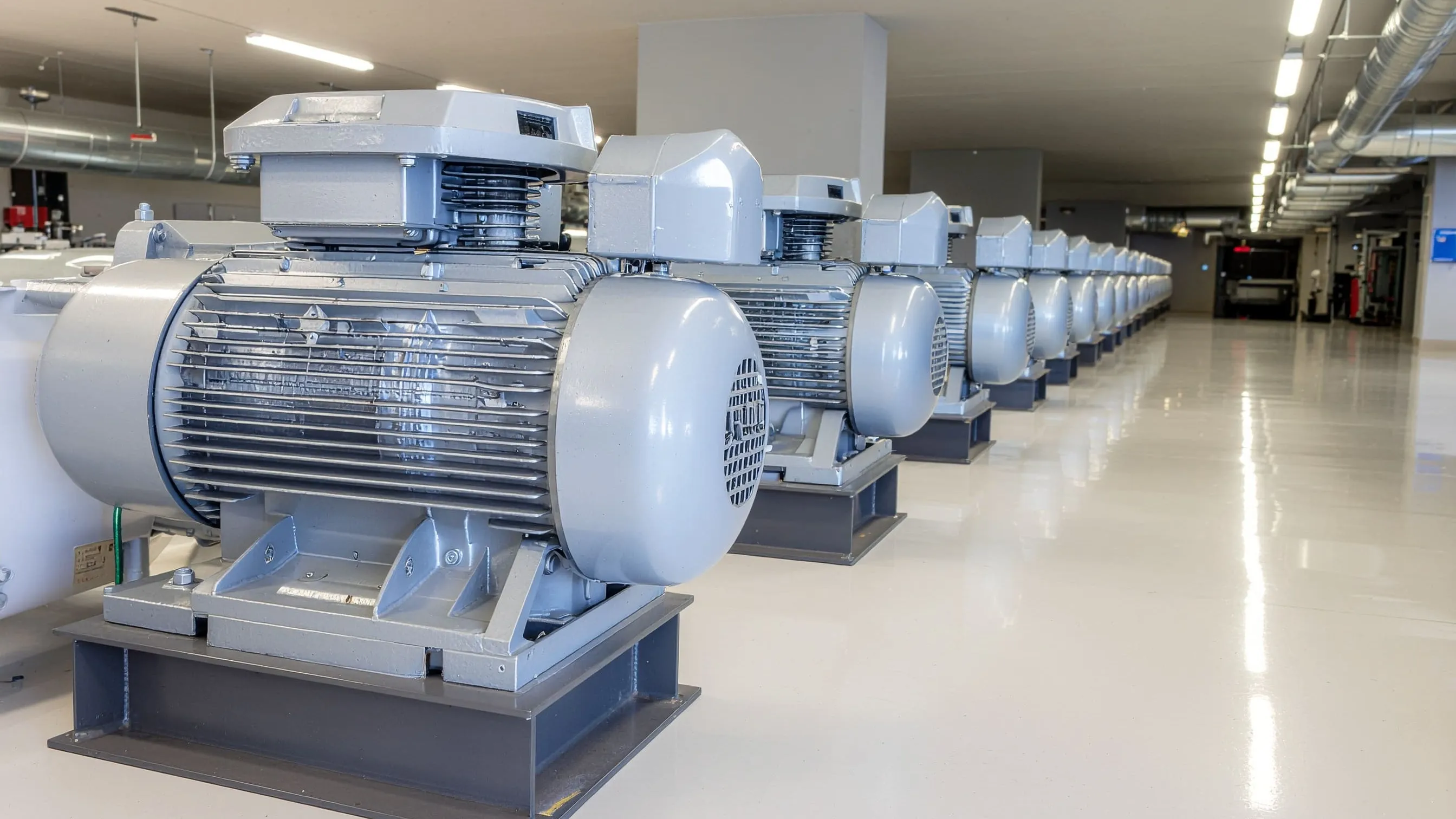
A cold water booster set comprises multiple centrifugal pumps mounted on a common baseframe, controlled by sophisticated electronics that maintain consistent water pressure regardless of demand fluctuations. Unlike single pump installations, booster sets provide redundancy - when one pump operates at duty, others remain on standby, ready to engage when demand increases or the lead pump requires maintenance.
The system monitors pressure continuously through transducers positioned in the discharge pipework. When pressure drops below the setpoint, the control panel activates pumps in sequence, matching output to real-time demand. Modern water pressure boosting systems predominantly feature variable speed drives (VSDs) that adjust motor speed infinitely, eliminating the pressure surges and energy waste associated with fixed-speed operation.
Fixed vs Variable Speed Operation
The distinction between fixed and variable speed configurations fundamentally affects both capital cost and lifecycle operating expenses. Fixed speed systems cycle pumps on and off to maintain pressure within a deadband, typically 0.5 bar either side of setpoint. This approach suits smaller installations where simplicity outweighs efficiency concerns.
Variable speed booster pumps modulate speed continuously, maintaining precise pressure whilst reducing energy consumption by 30-50% compared to fixed speed equivalents - a consideration that often justifies the higher initial investment within 3-4 years through reduced electricity costs. Understanding this trade-off sits at the core of cold water booster set explained correctly, particularly for specifiers balancing capital budgets against long-term operational expenditure.
Grundfos pioneered many of the VSD technologies now standard across the industry, establishing benchmarks for efficiency that Building Regulations Part L increasingly mandates. Explore the Grundfos booster set range for high-efficiency VSD solutions backed by decades of UK commercial installation experience.
How Cold Water Booster Sets Work
Closed-Loop Pressure Control
The operating principle centres on closed-loop pressure control. A pressure transducer in the discharge manifold sends a 4-20mA signal to the control panel, representing actual system pressure. The controller compares this against the programmed setpoint and adjusts pump speed or staging accordingly.
In variable speed configurations, the lead pump accelerates gradually when pressure drops, its speed increasing until either pressure recovers or the pump reaches maximum RPM. If demand continues rising and pressure falls further, the controller stages a second pump at fixed speed whilst the first continues modulating. This duty/assist arrangement ensures one pump always operates under VSD control, maintaining precise pressure regulation.
Pump rotation occurs automatically on timed intervals - typically weekly - distributing wear evenly across all units. The control panel tracks running hours for each pump, prioritising those with lowest accumulated time. This algorithmic approach extends service intervals and prevents premature failure of overworked units.
BMS Integration and Remote Monitoring
Integration with building management systems (BMS) allows remote monitoring of performance parameters. Wilo systems commonly feature Modbus RTU or BACnet protocols, transmitting data on flow rates, pressure, power consumption, and alarm conditions. View the Wilo product range to find BMS-ready booster sets with Modbus RTU and BACnet connectivity suited to modern commercial building specifications.
Facilities managers identify developing issues before failures occur, scheduling maintenance during planned shutdowns rather than responding to emergency callouts. This connectivity transforms water pressure boosting systems from passive mechanical assets into actively managed components of the building's infrastructure.
Key Components of a Booster Set System
Centrifugal Pumps
End-suction or inline configurations are selected depending on space constraints and hydraulic requirements. Duty pumps typically operate continuously during occupied hours, whilst standby units remain idle until demand or failure necessitates their engagement. Stainless steel construction suits potable water applications, resisting corrosion and maintaining hygiene standards required by Water Supply Regulations.
Pressure Vessels
Horizontal or vertical accumulator tanks, pre-charged with compressed air, cushion pressure fluctuations and reduce pump cycling frequency. Sizing follows the principle that larger vessels reduce starts per hour, extending motor and bearing life. Typical installations specify 50-100 litre vessels for systems serving 50-100 outlets.
Control Panels
Wall-mounted enclosures housing variable speed drives, contactors, overload protection, and microprocessor controllers form the intelligence layer of any booster set. IP54-rated enclosures suit plantroom environments where dust and moisture present ongoing challenges. Advanced panels incorporate predictive algorithms that anticipate demand patterns, pre-staging variable speed booster pumps before pressure drops significantly.
Pressure Transducers
Ceramic or stainless steel diaphragm sensors, rated to 10 or 16 bar, are positioned downstream of the discharge manifold. Accuracy within ±0.5% of full scale ensures precise control. Dual transducers provide redundancy in critical applications, the controller comparing readings and alarming on divergence exceeding tolerance.
Isolation and Non-Return Valves
Gate or butterfly valves on pump suctions and discharges allow individual unit isolation without system shutdown. Spring-loaded non-return valves prevent backflow through idle pumps, eliminating hydraulic short-circuiting that would compromise performance.
Pump valves specified for booster sets must meet BS EN 1074 standards for materials and pressure ratings. Browse the pump valves range to source correctly rated isolation and non-return valves for fully compliant booster set installations.
When Buildings Require Cold Water Booster Sets
UK mains water pressure typically ranges between 1.5 and 3.5 bar at ground level. Each metre of vertical height requires approximately 0.1 bar to overcome, meaning mains pressure alone rarely serves buildings exceeding four storeys without boosting. Building Regulations Approved Document G mandates minimum flow rates at outlets - 0.15 litres per second at taps, 0.12 l/s at WCs - which mains pressure cannot deliver to upper floors in most circumstances. Understanding building water supply regulations is therefore fundamental before specifying any boosting solution.
Commercial and High-Rise Applications
Commercial buildings with high simultaneous demand face additional challenges. Office developments with multiple floors of WCs, kitchens, and shower facilities generate flow rates that dwarf domestic equivalents. A ten-storey office might demand 5-10 l/s during morning peak periods - meeting commercial water pressure requirements in these environments demands carefully specified water pressure boosting systems that balance redundancy with energy efficiency.
Residential developments increasingly feature penthouse apartments on floors 15-25 in urban centres. Developers cannot rely on gravity from roof tanks due to Legionella risks associated with stored water. Central heating systems in these buildings often require separate boosting for filling and pressurisation, though cold water supply presents the primary challenge.
Healthcare and Hospitality Requirements
Healthcare facilities demand uninterrupted supply at consistent pressure, making cold water booster set explained to HTM 04-01 standards a critical design consideration. Hospital specifications typically require N+1 redundancy - if three pumps meet duty requirements, the installation includes four.
DAB manufactures compact booster sets specifically for healthcare applications, meeting HTM 04-01 guidance on water system design. Browse the DAB range for compact, healthcare-compliant booster sets engineered to the exacting standards that clinical environments demand.
Hotels present unique challenges due to simultaneous demand from multiple bathrooms during morning checkout periods. A 200-room hotel might experience 40-50 outlets operating concurrently between 07:00 and 09:00. Booster sets for such applications require sophisticated control algorithms that maintain pressure despite rapid demand fluctuations.
Types of Cold Water Booster Sets
Fixed Speed Systems
Two to four pumps operating at constant speed, staged on and off based on pressure switches or transducers. Pressure vessels sized generously to minimise cycling frequency. These systems suit applications where demand remains relatively constant and capital budget constraints preclude VSD investment. Running costs exceed variable speed equivalents by 35-45%, but simplicity reduces maintenance complexity for facilities with limited technical resource.
Variable Speed Systems
One or more pumps fitted with VSDs, modulating speed to match demand precisely. Lowara pioneered compact VSD booster sets that integrate drives within the control panel, reducing footprint compared to separate VSD cabinets. Discover the Lowara range of compact VSD booster sets, designed to minimise plantroom footprint without sacrificing hydraulic performance.
Energy consumption with variable speed booster pumps scales with actual demand rather than peak design flow, delivering substantial savings in buildings with variable occupancy. The efficiency gains become particularly significant in mixed-use developments where demand fluctuates considerably throughout the day.
Packaged Systems
Factory-assembled units on fabricated baseplates, complete with pumps, vessels, valves, and controls, arrive ready for connection to suction and discharge pipework. National Pumps and Boilers supplies packaged sets that arrive fully tested, reducing site installation time from days to hours. Pre-commissioning in controlled factory conditions ensures reliability that field assembly cannot match, reducing the risk of defects emerging during the critical early operational period.
Bespoke Installations
Custom-engineered solutions address challenging applications where space constraints, unusual duty points, or specific control requirements prevent specification of standard packages. Manufacturers design systems around precise project parameters when catalogue products cannot satisfy requirements. Lead times extend to 8-12 weeks for bespoke installations, but the result addresses commercial water pressure requirements that off-the-shelf equipment simply cannot meet.
Break Tank vs Direct Connection
Water Supply Regulations prohibit direct connection of booster pumps to mains supply in most circumstances due to backflow risks. Break tanks provide Type AA air gap protection, accepting mains water at atmospheric pressure before pumps draw from the tank. Direct connection requires approval from water undertakers and sophisticated backflow prevention devices meeting Fluid Category 5 requirements - a route that adds both cost and regulatory complexity to most projects.
Sizing and Specification Considerations
Accurate sizing begins with flow rate calculations following BS 8558 methodology. The standard provides loading units for each fixture type - WC cisterns, washbasins, showers, kitchen taps - which aggregate to determine simultaneous demand. A diversity factor applies, recognising that not all outlets operate concurrently. Residential buildings typically apply 60-70% diversity; commercial applications vary from 40-80% depending on occupancy patterns.
Pressure requirements derive from the highest outlet elevation plus residual pressure needed at that point. A washbasin requires minimum 1 bar residual; showers demand 1.5-2 bar for satisfactory performance. Adding static head (0.1 bar per metre elevation) and friction losses through pipework, calculated using Darcy-Weisbach or Hazen-Williams equations, determines total pump duty.
Pump selection follows from plotting the duty point on manufacturer performance curves. Engineers specify pumps operating at 60-75% of best efficiency point (BEP) under normal conditions, allowing headroom for future demand growth without pushing into the inefficient right-hand region of the curve.
Ebara publishes detailed performance data showing efficiency contours across the full operating envelope, enabling precise selection. Access the Ebara pump range, where comprehensive performance curves and efficiency contours support accurate duty point selection for any commercial or residential application.
Redundancy philosophy varies by application criticality. Commercial offices typically specify N+1 configuration - if two pumps meet peak demand, install three. Hospitals and data centres often require N+2, accepting higher capital cost to eliminate single points of failure. Residential buildings sometimes accept N configuration where temporary pressure loss during pump failure constitutes inconvenience rather than critical failure.
Installation and Compliance Requirements
Building water supply regulations govern all installations through the Water Supply (Water Fittings) Regulations 1999, mandating measures to prevent contamination, waste, misuse, and undue consumption. Booster sets must incorporate backflow prevention appropriate to the fluid category - typically Type AA air gaps via break tanks, or Type AB/BA devices for direct connection where approved.
Noise represents a frequent complaint in plantrooms adjacent to occupied spaces. Regulations limit noise levels to 35 dB(A) in bedrooms and 40 dB(A) in living spaces during night hours. Achieving compliance requires anti-vibration mounts isolating pumps from structural elements, flexible connections on pipework, and sometimes acoustic enclosures.
Armstrong manufactures low-noise pump variants specifically for noise-sensitive installations, employing oversized motors running at reduced speed to minimise acoustic output. Explore the Armstrong low-noise pump range, purpose-built for residential and mixed-use developments where acoustic compliance is a non-negotiable design requirement.
Commissioning procedures follow manufacturer protocols, typically involving verification of pump rotation direction, pressure transducer calibration, alarm function testing, and performance verification across the operating range. Control panel parameters require adjustment to match actual system characteristics - pressure setpoints, pump staging delays, rotation intervals, and alarm thresholds. Proper commissioning prevents nuisance alarms and optimises efficiency, yet remains frequently neglected in the rush to practical completion.
Maintenance and Operational Considerations
Quarterly inspections should verify pump bearing condition through vibration analysis, check pressure vessel pre-charge (typically 0.7-0.8 times setpoint pressure), confirm pump rotation occurs as programmed, and review alarm logs for recurring issues. Annual maintenance includes motor insulation resistance testing, control panel cleaning, and replacement of wearing components like mechanical seals if vibration or noise indicates deterioration.
Common failure modes include pressure vessel bladder rupture, causing rapid pump cycling, pressure transducer drift resulting in incorrect setpoint maintenance, and motor bearing failure announced by increased vibration and noise. Understanding these failure signatures enables facilities managers to intervene before minor deterioration becomes emergency breakdown.
DHW pumps face similar failure patterns to cold water booster sets, though domestic hot water applications introduce additional challenges from temperature cycling. View the DHW pumps range to find circulation pump solutions that complement cold water boosting across whole-building water systems.
Pump rotation strategies prevent single-unit overuse. Controllers typically rotate the lead pump weekly, though high-demand installations may rotate daily. This approach distributes wear evenly, ensuring all pumps accumulate similar running hours. Failure to implement rotation results in premature lead pump failure whilst standby units remain essentially new - an inefficient use of installed capacity that shortens overall system life unnecessarily.
Energy efficiency monitoring identifies degradation before it becomes critical. Baseline power consumption at known flow and pressure conditions, established during commissioning, provides a reference for ongoing comparison. A 15-20% increase in power draw at constant hydraulic conditions indicates wear - impeller erosion, bearing friction, or motor inefficiency - warranting investigation before failure occurs.
Conclusion
Cold water booster set explained to its full extent covers not just the equipment itself but the engineering methodology behind accurate specification, compliant installation, and proactive maintenance. Multi-storey developments, high-demand commercial facilities, and installations with critical supply requirements all depend on properly specified water pressure boosting systems. Understanding when buildings require pressure boosting - typically above four storeys or where simultaneous demand exceeds mains capacity - allows engineers and building owners to plan installations that satisfy building water supply regulations whilst optimising lifecycle costs through appropriate technology selection.
Variable speed booster pumps deliver superior efficiency and pressure control compared to fixed speed alternatives, justifying higher capital investment through reduced operating costs and improved performance across varying demand profiles. Proper sizing using BS 8558 methodology, compliant installation meeting the Water Supply (Water Fittings) Regulations 1999, and routine maintenance ensure reliable operation across the 15-20 year service lives typical of commercial pump installations. For technical guidance on specifying booster sets appropriate to specific building requirements, Contact Us to discuss project parameters with experienced pump specialists.