
 -
- What Is Condensate and Why Does It Need Proper Management?
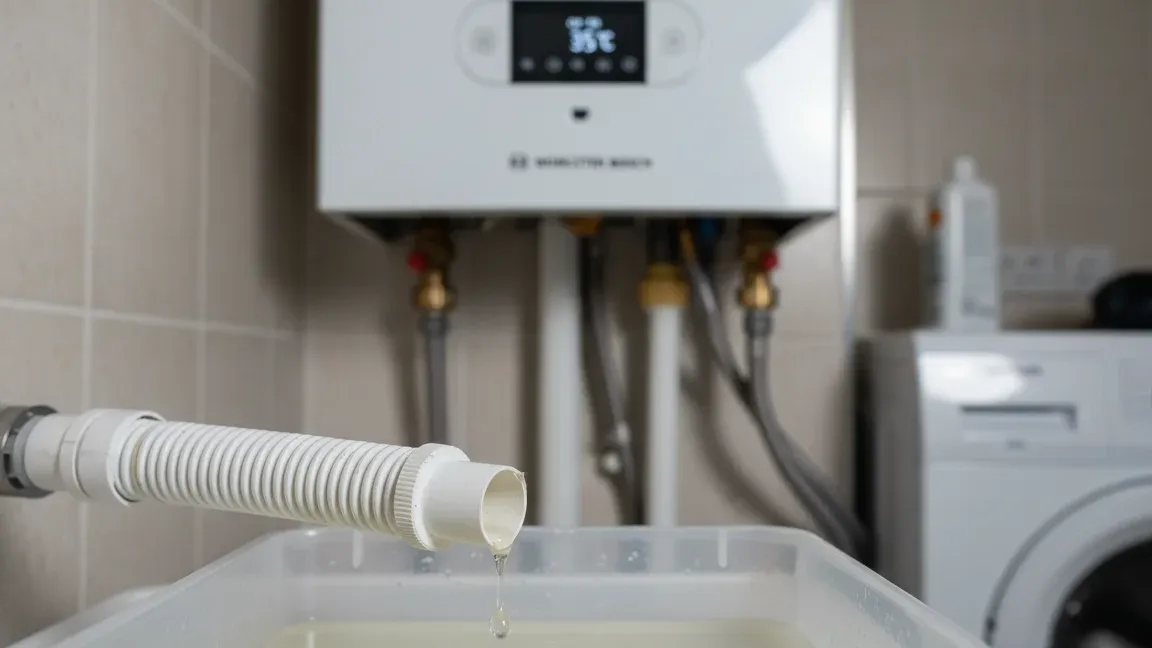
Modern condensing boilers have revolutionised heating efficiency across the UK, routinely achieving seasonal efficiency ratings above 90% by extracting heat from flue gases that older boilers simply vented to atmosphere. This efficiency gain comes with a practical consequence: acidic wastewater known as condensate requires proper management to prevent system failures, property damage, and regulatory non-compliance.
Condensate management represents a critical aspect of heating system design and maintenance, yet improper handling causes thousands of system failures, frozen pipes, and property damage incidents every winter. Understanding what condensate is, why it forms, and how to manage it properly protects heating investments whilst maintaining compliance with Building Regulations.
Understanding Condensate in Heating Systems
What Is Condensate and How Does It Form?
Condensate is the acidic wastewater produced when water vapour in flue gases cools and returns to liquid form during the combustion process. Modern condensing boilers are specifically designed to extract maximum heat from flue gases by cooling them below their dew point, causing water vapour to condense on the boiler's heat exchanger surfaces.
This condensation process represents the key difference between traditional and modern heating systems. Whilst older boilers expelled hot flue gases directly through the chimney, wasting significant energy, condensing technology recovers this latent heat by deliberately cooling exhaust gases to approximately 55°C or lower. The result is exceptional boiler efficiency ratings of 90% or higher, but also produces between 2-3 litres of condensate per hour during typical operation.
The condensate produced carries a pH level between 3.5 and 4.5, making it mildly acidic due to dissolved carbon dioxide and other combustion byproducts. This acidity level, whilst not immediately dangerous, requires proper drainage materials and disposal methods to prevent corrosion and comply with water authority regulations. The exact volume and acidity depend on fuel type, with oil-fired systems producing more acidic condensate than gas systems.
The Science Behind Condensate Production
The condensation process begins when hot combustion gases pass through the boiler's primary heat exchanger, transferring thermal energy to the heating system water. In condensing boilers, gases then pass through a secondary heat exchanger where they cool further, dropping below the dew point temperature of approximately 55°C for natural gas combustion.
As flue gases cool below this threshold, water vapour transforms from gaseous to liquid state, releasing latent heat energy in the process. This phase change delivers significant additional heat to the system - approximately 10% more thermal energy compared to non-condensing operation. The recovered heat explains why Grundfos pumps and other high-efficiency circulators work so effectively with modern condensing technology, as lower return temperatures enable more condensation and higher efficiency.
Temperature differentials between flow and return pipes directly affect condensate production rates. Systems with lower return temperatures (below 55°C) produce more condensate because they cool flue gases more effectively. This relationship means that properly sized central heating pumps and well-designed systems with adequate radiator capacity generate more condensate whilst delivering superior efficiency.
Seasonal variations significantly impact condensate volumes. During winter months when heating demand peaks and return temperatures drop, boilers produce maximum condensate. Conversely, summer operation for domestic hot water only generates less condensate due to higher return temperatures and intermittent operation. This variability requires drainage systems capable of handling peak winter flows without freezing or backing up.
Why Proper Condensate Management Matters
Protecting Your Property from Water Damage
Improper condensate management ranks among the most common causes of heating system failures and property damage during cold weather. When condensate cannot drain freely, it backs up into the boiler, triggering safety lockouts that leave properties without heating precisely when needed most. Overflow from blocked or frozen condensate pipes can damage flooring, decorative finishes, and electrical systems, with repair costs often exceeding several thousand pounds.
Long-term condensate accumulation creates ideal conditions for damp and mould growth, particularly in poorly ventilated spaces where condensate pipes terminate or leak. The acidic nature of condensate accelerates deterioration of building materials, including concrete, mortar, and certain metals. Properties with condensate discharge onto external walls or near foundations face particular risk of structural damage over time.
Insurance implications add another dimension to proper condensate handling. Many home insurance policies exclude damage resulting from inadequate maintenance or non-compliant installations. If a frozen condensate pipe causes heating failure and subsequent burst pipes, insurers may refuse claims where the condensate system did not meet Building Regulations or manufacturer specifications. This potential liability makes professional installation and regular maintenance essential rather than optional.
Maintaining System Efficiency and Longevity
The condensate removal system directly affects boiler performance and component lifespan. When drainage systems fail, condensate accumulates in the heat exchanger and combustion chamber, causing corrosion that degrades efficiency and eventually requires expensive repairs. Stainless steel and aluminium heat exchangers resist corrosion better than cast iron, but even premium materials deteriorate when constantly submerged in acidic condensate.
Manufacturer warranties typically require compliant condensate drainage systems as a condition of coverage. Installing condensate pipes below minimum diameter specifications, using inappropriate materials, or omitting required frost protection can void warranty protection worth hundreds or thousands of pounds. Gas Safe registered engineers must certify that condensate systems meet both manufacturer requirements and Building Regulations during installation and annual services.
Proper condensate management also protects associated components including DHW pumps, valves, and controls. Condensate leaks near electrical components create shock hazards and cause premature failure of circuit boards and sensors. The moisture and acidity combination accelerates corrosion of metal components including pump housings, valve bodies, and pipe fittings throughout the heating system.
Meeting Building Regulations and Compliance Standards
UK Building Regulations Part L and Part H establish specific requirements for condensate disposal from condensing boilers. These regulations mandate that condensate must discharge either to an internal waste pipe with proper air gap and trap arrangement, or to an external soakaway at least 10 metres from buildings. Direct discharge onto ground surfaces, particularly near foundations, drains, or watercourses, is explicitly prohibited.
External condensate pipes require specific installation standards to prevent freezing. Regulations specify minimum pipe diameters of 32mm for external runs, with larger sizes required for longer distances. Pipes must fall continuously at minimum gradients of 2.5 degrees (approximately 44mm per metre) to prevent standing water that could freeze. Insulation requirements depend on pipe routing, with exposed sections needing adequate protection against temperatures below 0°C.
Internal condensate drainage to waste pipes must incorporate air gaps to prevent backflow of sewage gases and contamination. The condensate pipe must terminate above the trap water seal of the waste pipe, never connecting directly to the waste system. Some water authorities require condensate neutralisation before discharge to drainage systems, particularly for commercial installations or oil-fired systems producing more acidic condensate.
Essential Components of Condensate Management Systems
Condensate Pipes and Materials
Condensate drainage systems require specific materials resistant to acidic wastewater. Approved options include plastic pipes (ABS, PVC, or polypropylene), stainless steel, and copper. Standard waste pipe materials work well for internal runs, whilst external sections need additional consideration for frost resistance and UV stability. Manufacturers typically specify compatible pipe materials in installation manuals, and deviating from these specifications can void warranties.
Minimum pipe diameters vary by application and location. Internal condensate pipes typically require 22mm minimum diameter, whilst external runs need 32mm or larger to reduce freezing risk. Longer external runs may require 40mm pipe to maintain adequate flow and prevent ice formation. Undersized pipes represent one of the most common installation errors, creating bottlenecks where condensate backs up or freezes.
Pipe gradients ensure reliable gravity drainage without standing water. The minimum fall of 2.5 degrees (44mm per metre) applies to all condensate pipes, with steeper gradients providing additional safety margin against blockages and freezing. Horizontal runs should be minimised, and any unavoidable level sections require larger diameter pipes. Proper support spacing prevents sagging that creates low points where water accumulates.
Insulation requirements depend on pipe routing and exposure. External condensate pipes need weatherproof insulation rated for outdoor use, with thickness appropriate to local climate conditions. Pipes in unheated spaces like lofts or garages also require insulation to prevent freezing. Some installations benefit from trace heating cables that actively prevent ice formation in vulnerable sections, particularly in Scotland and northern England where prolonged freezing temperatures occur regularly.
Condensate Pumps and Their Applications
Condensate pumps become necessary when gravity drainage proves impossible due to the boiler's location relative to suitable discharge points. Basement boiler installations, loft conversions, and situations where drainage pipes must rise before falling all require pumping solutions. Modern condensate pumps are compact, quiet, and reliable when properly specified and maintained.
Pump capacity must match or exceed the boiler's peak condensate production rate with adequate safety margin. Most domestic applications require pumps rated for 10-15 litres per hour minimum, whilst commercial boilers and multiple-boiler installations need proportionally larger capacities. Wilo pumps and other quality manufacturers offer condensate pump options designed specifically for heating applications.
Installation positioning affects pump reliability and maintenance access. Pumps should be located close to the boiler, typically within 1-2 metres, and positioned to allow easy reservoir inspection and cleaning. The discharge pipe from the pump should rise vertically at least 300mm before any horizontal runs to prevent backflow when the pump stops. Electrical connections require proper protection against moisture and should incorporate isolation switches for maintenance safety.
Float switches and overflow protection prevent damage if pumps fail. Quality condensate pumps include built-in float switches that activate the pump when the reservoir reaches predetermined levels and shut down the boiler if condensate rises too high. This safety feature prevents condensate from backing into the boiler or overflowing onto floors. Regular testing of float switch operation should form part of annual servicing procedures.
Condensate Traps and Siphons
Condensate traps serve multiple functions in heating systems. They create a water seal that prevents combustion gases from escaping through the condensate drain whilst allowing liquid condensate to flow freely. Most modern condensing boilers incorporate integral traps within the appliance casing, but external traps may be required for certain installations or older equipment.
Trap design affects reliability and maintenance requirements. Integral traps built into boilers typically use transparent materials allowing visual inspection of water seal levels without disassembly. External traps should be accessible for cleaning and inspection, as debris and scale can accumulate over time. The trap must maintain sufficient water depth to prevent gas leakage whilst not restricting condensate flow during peak production periods.
National Pumps and Boilers recommends trap priming to ensure proper operation after installation or extended shutdown periods. New installations require filling the trap with water before commissioning to establish the seal. After summer shutdowns, traps may dry out, requiring refilling before heating season begins. Some boilers automatically prime their traps during startup sequences, whilst others need manual priming following manufacturer procedures.
Common Condensate Problems and Solutions
Frozen Condensate Pipes
Frozen condensate pipes represent the single most common cause of heating system failures during cold weather. When temperatures drop below 0°C, water remaining in external condensate pipes can freeze, blocking drainage and triggering boiler safety lockouts. The problem affects thousands of UK properties every winter, often during the coldest periods when heating is most critical.
Prevention strategies focus on proper installation practices and adequate frost protection. Specifying 32mm minimum diameter for external pipes reduces freezing risk compared to smaller sizes, as the larger volume takes longer to freeze solid. Minimising external pipe length by routing condensate to internal drainage whenever possible eliminates the primary vulnerability. Where external runs prove unavoidable, insulation and trace heating provide additional protection.
Thawing frozen pipes requires care to avoid damage. Pouring warm water over external pipes often proves effective for minor freezing, but boiling water can crack plastic pipes or damage insulation. Heat lamps or hair dryers applied to frozen sections work more gradually and safely. Never use blowtorches or other open flames, as they can melt pipes, damage boilers, and create fire hazards. If pipes freeze repeatedly in the same location, professional modification of the drainage route may be necessary.
Long-term solutions for properties prone to frozen condensate include rerouting pipes to internal drainage, increasing pipe diameter, adding trace heating cables, or installing condensate pumps that eliminate external gravity drainage. These modifications require Gas Safe registered engineers to ensure compliance with regulations and manufacturer requirements. The investment in proper frost protection proves far less costly than repeated callouts for frozen pipes and potential damage from heating failures.
Drainage Blockages and Overflows
Condensate drainage blockages develop gradually from debris accumulation, biological growth, or mineral deposits. Algae and bacteria thrive in the warm, moist environment of condensate pipes, creating slime that restricts flow. Hard water areas experience mineral buildup that narrows pipe interiors over time. These blockages reduce drainage capacity, eventually causing overflow or boiler shutdown.
Regular cleaning prevents most blockage problems. Annual flushing with clean water removes loose debris, whilst proprietary condensate cleaners dissolve biological growth and mineral deposits. Expansion vessels and other system components benefit when condensate systems remain clean and free-flowing, as proper drainage prevents the corrosion and pressure issues that affect the wider heating system.
Overflow detection provides early warning of drainage problems. Some boilers incorporate overflow sensors that alert users to rising condensate levels before complete blockage occurs. External overflow pipes routed to visible locations allow occupants to notice water discharge indicating drainage restriction. Prompt response to overflow warnings prevents the water damage and boiler damage that result from complete drainage failure.
Pump Failures and Electrical Issues
Condensate pump failures typically result from debris accumulation, electrical faults, or mechanical wear. Float switches that fail to activate the pump allow condensate to overflow, whilst pumps that run continuously without moving water indicate impeller damage or discharge blockages. Regular maintenance including reservoir cleaning and float switch testing prevents most pump failures.
Electrical connections require periodic inspection for corrosion, loose terminals, and moisture ingress. The acidic environment around condensate systems accelerates corrosion of electrical components, particularly where condensate has splashed onto wiring or junction boxes. Lowara pumps and other quality pump manufacturers design their condensate units with corrosion-resistant materials and sealed electrical connections, but environmental factors still affect long-term reliability.
Backup systems provide additional protection for critical installations. Commercial buildings and properties where heating failure poses serious consequences may specify redundant condensate pumps or alarm systems that alert maintenance personnel to pump problems. These additional safeguards cost relatively little compared to the consequences of heating system failure during cold weather.
Best Practices for Condensate System Installation
Planning Your Condensate Drainage Route
Effective condensate management begins during system design, before installation commences. Identifying the optimal drainage route balances technical requirements against practical constraints including accessibility, frost exposure, and aesthetic considerations. Internal drainage to existing waste pipes generally provides the most reliable solution, eliminating freezing risks and simplifying maintenance.
When external drainage proves necessary, minimising exposed pipe length reduces vulnerability. Route pipes through heated spaces wherever possible, transitioning to external runs only where unavoidable. Position external sections on sheltered walls away from prevailing winds, and avoid north-facing elevations where temperatures drop lowest. These routing decisions significantly affect long-term reliability and maintenance requirements.
Access for maintenance deserves consideration during installation planning. Condensate systems require periodic inspection, cleaning, and occasional repair. Routing pipes through inaccessible voids or burying them in wall cavities complicates future maintenance and increases costs when problems occur. Accessible pipe runs with inspection points at key locations simplify ongoing maintenance whilst ensuring problems can be identified and resolved quickly.
Professional Installation and Compliance
Gas Safe registered engineers bear responsibility for ensuring condensate systems meet all applicable requirements. This responsibility encompasses material selection, pipe sizing, gradient compliance, frost protection, and connection to appropriate drainage. Non-compliant installations expose engineers to enforcement action and liability for subsequent damage or safety issues.
Documentation requirements include recording condensate arrangements on benchmark commissioning records. These records should specify pipe materials, diameters, routing, and frost protection measures. Property owners should retain this documentation for future reference and to demonstrate compliance if questions arise. Pump valves and other system components should also be documented to support future maintenance and replacement.
Annual servicing should include condensate system inspection as standard practice. Engineers should verify drainage flow, check for blockages or restrictions, inspect trap water seals, test pump operation where applicable, and confirm frost protection remains adequate. This proactive approach identifies developing problems before they cause system failures or property damage.
Maintaining Your Condensate System
Proper condensate management extends beyond initial installation to encompass ongoing maintenance and monitoring. Property owners should understand basic system components and warning signs indicating problems. Regular visual inspection of accessible condensate pipes, pumps, and discharge points identifies issues before they escalate.
Seasonal preparation protects systems during vulnerable periods. Before winter arrives, verify external pipes have adequate insulation and consider trace heating for properties in colder regions or with particularly exposed pipe runs. Clear any debris from discharge points and test pump operation to confirm readiness for increased condensate production during the heating season.
Professional assistance becomes necessary when problems exceed basic maintenance capabilities. Persistent drainage issues, recurring freezing, pump failures, or boiler lockouts related to condensate indicate underlying problems requiring expert diagnosis. Attempting repairs beyond basic cleaning and maintenance risks causing additional damage or creating safety hazards.
For expert guidance on condensate management systems, equipment selection, and maintenance strategies, Contact Us to discuss specific requirements and receive professional recommendations tailored to individual installations.