

What Mixing Valves Do (And Why They're Essential for Safety)
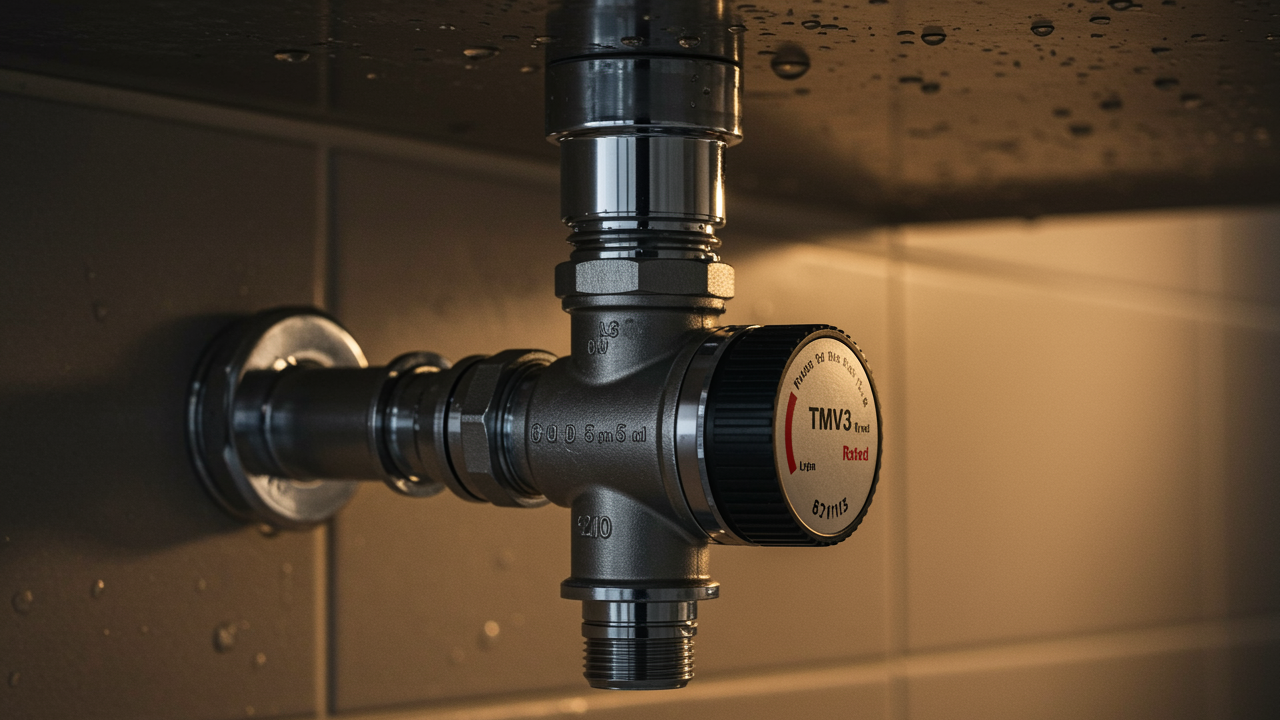
Every household and commercial building in the UK relies on hot water systems that could deliver dangerously high temperatures at the tap. Without proper controls, water heated to 60°C (the minimum temperature required to prevent Legionella bacteria growth in storage cylinders) can cause third-degree burns in just one second of contact. Mixing valves solve this fundamental safety problem by automatically blending hot and cold water to deliver safe temperatures whilst maintaining the benefits of properly heated water storage.
Understanding what these devices do and why they're essential can prevent serious injuries and ensure regulatory compliance. The technology represents one of the most important yet often overlooked components in modern plumbing systems.
Understanding Mixing Valve Technology
How Thermostatic Mixing Valves Work
Thermostatic mixing valves operate on an elegantly simple principle: they automatically adjust the ratio of hot and cold water to maintain a constant, safe output temperature regardless of fluctuations in supply pressure or temperature. At the heart of each valve sits a thermostatic element - typically a wax-filled cartridge or bimetallic disc - that expands and contracts in response to temperature changes.
When water flows through the valve, this thermostatic element continuously monitors the blended water temperature. If the mixed water becomes too hot, the element expands, mechanically adjusting internal shutters or pistons to reduce hot water flow and increase cold water flow. If the temperature drops, the element contracts, allowing more hot water through. This happens continuously and automatically, typically responding within two seconds to temperature changes.
The precision of modern mixing valves is remarkable. Quality thermostatic mixing valves maintain output temperatures within ±2°C of the set point, even when inlet pressures or temperatures vary significantly. This accuracy makes them fundamentally different from manual mixing valves, which simply blend water at a fixed ratio regardless of supply conditions.
Most thermostatic mixing valves include a critical fail-safe feature: if the cold water supply fails, the valve automatically shuts off hot water flow completely. This prevents scalding water from reaching taps, showers, or other outlets - a safety mechanism that has prevented countless injuries in both domestic and commercial settings.
Different Types of Mixing Valves
The plumbing industry uses several categories of mixing valves, each designed for specific applications. Point-of-use thermostatic mixing valves install directly before individual fixtures (such as beneath a basin or in a shower), providing localised temperature control. These work well in domestic settings where different family members may have different temperature preferences or where specific fixtures serve vulnerable users.
Centralised mixing valve systems, by contrast, install on the hot water distribution system to provide temperature-controlled water throughout a building or specific zones. Commercial buildings, hospitals, and care homes typically use centralised systems because they simplify maintenance, reduce installation costs for multiple outlets, and ensure consistent temperatures across all fixtures.
Commercial-grade mixing valves differ from domestic models in several important ways. They handle higher flow rates (often 40-100 litres per minute compared to 10-20 litres per minute for domestic valves), feature more robust construction to withstand constant use, and typically include additional features like integral strainers, isolation valves, and temperature gauges. Grundfos pumps and commercial circulators often work alongside these valve systems to maintain consistent pressure and flow throughout large buildings.
Pressure-compensating mixing valves represent a more sophisticated category. These valves maintain consistent output temperatures even when supply pressures vary significantly - a common occurrence in buildings with variable demand or where water pressure fluctuates throughout the day. The pressure-compensating mechanism ensures that changes in hot or cold water pressure don't affect the temperature delivered to users. Wilo pumps systems often incorporate pressure-compensating technology for superior performance in variable demand environments.
The Safety Case for Mixing Valves
Preventing Scalding Injuries
The statistics on scalding injuries make sobering reading. According to NHS data, hospitals treat thousands of scalding injuries each year, with children under five and adults over 65 representing the most vulnerable groups. Water at 60°C causes third-degree burns in one second, whilst water at 55°C takes 30 seconds to cause similar injury. Even seemingly moderate temperatures of 50°C can cause serious burns with extended exposure.
The speed at which burns occur leaves no margin for error. A child reaching for a tap, an elderly person with slower reaction times, or someone with mobility issues who cannot quickly move away from hot water can suffer life-changing injuries in moments. Mixing valves safety systems eliminate this risk by ensuring water never exceeds safe temperatures at the point of use, typically 43-44°C for bathing applications and 38°C for bidet use.
Healthcare facilities have particularly stringent requirements because patients often cannot control water temperature themselves or may have reduced sensation that prevents them from recognising dangerous temperatures. The consequences of scalding in these settings extend beyond physical injury to include significant legal liability for care providers.
Real-world data from facilities that have installed comprehensive thermostatic mixing valves shows dramatic reductions in scalding incidents. One NHS trust reported zero scalding injuries in the five years following a complete mixing valve installation programme, compared to an average of three serious incidents annually before installation. National Pumps and Boilers has supported countless facilities in implementing these life-saving systems across residential, commercial, and healthcare settings. Proper system design incorporating expansion vessels working alongside mixing valves ensures stable temperatures under all conditions.
Regulatory Requirements and Standards
UK building regulations mandate mixing valves in numerous settings, though many property owners remain unaware of their obligations. Building Regulations Part G requires thermostatic mixing valves on baths in new dwellings and when bathrooms undergo material alteration. The regulations recognise that whilst stored hot water must reach 60°C to prevent Legionella, this temperature poses unacceptable scalding risks at taps.
The TMV2 and TMV3 certification schemes provide independent verification that mixing valves meet rigorous performance and safety standards. TMV2 certification applies to valves for domestic use, whilst TMV3 covers valves for higher-risk applications including healthcare facilities, schools, care homes, and nurseries. Only TMV3-certified valves meet the stringent requirements for these settings.
Healthcare facilities face particularly detailed requirements. NHS estates guidance mandates TMV3 valves on all sanitary outlets accessible to patients, with specific temperature limits depending on application. Wash basins must deliver water no hotter than 43°C, baths 44°C, and bidets 38°C. These facilities must also maintain detailed records of valve installation, commissioning, and ongoing testing.
Schools and nurseries fall under similar requirements, recognising that children face elevated risks from scalding. Local authority building control departments increasingly require evidence of appropriate thermostatic mixing valves installation before issuing completion certificates for educational facilities.
Selecting the Right Mixing Valve
Key Specifications to Consider
Flow rate represents the primary specification when selecting mixing valves. The valve must handle the maximum simultaneous flow from all connected outlets without restricting flow or compromising temperature control. A domestic bathroom with a bath and basin might require 20 litres per minute, whilst a commercial shower block could demand 100 litres per minute or more. Undersized valves cause frustrating flow restrictions and may fail to maintain accurate temperature control under peak demand.
Temperature range and adjustment precision matter significantly for both safety and comfort. Quality mixing valves allow adjustment across a 35-50°C range with clear, tamper-resistant temperature indicators. The adjustment mechanism should require a tool or deliberate action to change, preventing accidental or unauthorised temperature increases that could compromise safety. Vaillant boiler systems and compatible mixing valves are designed to work seamlessly together for integrated temperature control throughout residential and commercial properties.
Supply pressure compatibility requires careful consideration. Most thermostatic mixing valves require minimum inlet pressures of 1-1.5 bar to operate correctly, with balanced pressures (similar hot and cold supply pressures) delivering optimal performance. Buildings with unbalanced pressures or low pressure may require pressure-equalising valves or pumped systems. DAB pumps and booster sets provide the consistent pressure needed for reliable mixing valve operation in challenging installations.
Valve body materials affect longevity and suitability for different water conditions. Brass bodies with chrome-plated finishes suit most applications, whilst stainless steel construction offers superior corrosion resistance in aggressive water conditions or where hygiene requirements are paramount. Internal components should use materials resistant to scale buildup, particularly in hard water areas.
Application-Specific Recommendations
Domestic bathroom installations typically use compact, point-of-use mixing valves rated for 15-25 litres per minute. These valves install beneath basins or in accessible locations near baths, allowing individual temperature control for different family members. Central heating equipment including mixing valves should be selected to match your home's specific requirements. TMV2 certification suffices for standard domestic use, though TMV3 valves provide additional peace of mind in households with young children or elderly residents.
Commercial buildings require more robust solutions. Office buildings, hotels, and leisure facilities benefit from centralised thermostatic mixing valves serving entire floors or zones. This approach reduces installation costs, simplifies maintenance, and ensures consistent temperatures across all outlets. Lowara pumps systems provide reliable circulation for large-scale commercial mixing valve installations. Commercial installations should specify TMV3 valves rated for continuous duty, with flow capacities matching peak demand calculations.
Healthcare facilities demand the highest specification mixing valves with TMV3 certification, fail-safe mechanisms, and comprehensive temperature monitoring. Many healthcare estates specify valves with integral temperature gauges and test points, facilitating the routine testing that regulations require. Armstrong equipment and other reliable heating components are commonly specified for healthcare installations. The installation must allow easy access for maintenance whilst preventing patient tampering.
Care homes occupy a middle ground between domestic and healthcare requirements. Residents' rooms may use point-of-use valves for individual control, whilst communal bathrooms benefit from centralised systems. Remeha boiler systems and compatible mixing valves provide reliable performance in care home settings. All valves must carry TMV3 certification, and the facility must maintain rigorous testing schedules to ensure ongoing compliance and resident safety.
Installation and Maintenance Best Practices
Professional Installation Requirements
Mixing valves safety depends entirely on correct installation. Even the highest-quality valve will fail to provide adequate protection if installed incorrectly, making qualified professional installation essential. Gas Safe registered engineers or appropriately qualified plumbers should handle all mixing valve installations, particularly in commercial or healthcare settings where regulatory compliance matters.
Valve positioning affects both performance and maintenance access. Thermostatic mixing valves should install in accessible locations that allow routine testing and maintenance without disrupting building operations. The valve should be positioned with adequate clearance for servicing, typically 300mm in all directions, and protected from mechanical damage. In healthcare settings, valves often install in locked service cupboards to prevent tampering whilst maintaining access for maintenance staff.
Proper orientation matters for valve performance. Most mixing valves specify installation with the thermostatic element vertical, allowing proper thermostatic response and preventing air locks that could compromise temperature control. The hot inlet should connect to the marked hot port, cold to the cold port, with mixed water exiting through the outlet port. Reversed connections can prevent proper operation and may void warranties.
Commissioning procedures verify that installed mixing valves deliver safe temperatures under all operating conditions. The commissioning process includes checking supply pressures, verifying temperature accuracy under various flow conditions, testing fail-safe mechanisms, and documenting baseline performance. This documentation becomes essential for ongoing maintenance and regulatory compliance. Pump valves in the supply system should also be checked during commissioning to ensure they don't introduce pressure imbalances that could affect mixing valve performance.
Ongoing Maintenance and Testing
Regular testing ensures mixing valves continue providing safe temperatures throughout their service life. Healthcare facilities must test TMV3 valves weekly, recording temperatures and flow rates in maintenance logs. Commercial buildings should test monthly, whilst annual testing suffices for domestic installations, though more frequent testing benefits households with vulnerable occupants.
Temperature verification follows a straightforward procedure. Run water through the outlet for at least one minute to ensure stable temperature, then measure the water temperature using a calibrated digital thermometer. The temperature should fall within the valve's specified tolerance (typically ±2°C of the set point). Test at both low and high flow rates, as some valves perform differently under varying demand.
Signs of mixing valves failure include inconsistent temperatures, reduced flow rates, unusual noises during operation, or visible leakage. Temperature fluctuations often indicate scale buildup on the thermostatic element or internal components, whilst reduced flow suggests blocked strainers or partially closed internal mechanisms. Any of these symptoms requires immediate investigation and potential valve replacement.
Descaling and cleaning requirements depend on local water conditions. Hard water areas accelerate scale buildup on thermostatic elements, potentially affecting response times and temperature accuracy. Annual descaling using appropriate cleaning solutions maintains valve performance, though severely scaled valves may require replacement. Some modern thermostatic mixing valves feature replaceable thermostatic cartridges, allowing cost-effective refurbishment without complete valve replacement.
Valve replacement becomes necessary when performance degrades beyond acceptable limits or when valves reach their design life. Most manufacturers specify 5-10 year service lives for thermostatic elements, after which replacement ensures continued reliable operation. Healthcare and commercial settings should maintain replacement schedules based on manufacturer recommendations rather than waiting for failure.
Why Mixing Valves Matter Beyond Compliance
Whilst regulatory compliance drives many mixing valves installations, the safety benefits extend far beyond meeting minimum legal requirements. These devices represent a fundamental safety barrier that protects vulnerable people from serious injury, provides peace of mind for families and care providers, and demonstrates responsible property management.
The cost of thermostatic mixing valves installation pales beside the human and financial costs of scalding injuries. A quality domestic mixing valve costs £100-200 installed, whilst commercial installations might run £500-1,000 per valve including commissioning. Compare this to NHS treatment costs for serious scalding injuries (often exceeding £50,000 when long-term care is included) and the calculation becomes straightforward.
Property owners, landlords, and facility managers carry legal duties of care that extend to preventing foreseeable injuries. Installing appropriate mixing valves safety systems demonstrates compliance with these duties, whilst failure to install adequate protection could constitute negligence if scalding injuries occur. Insurance considerations also favour proper mixing valve installation, with some insurers requiring evidence of compliant installations for commercial properties.
Modern mixing valves technology has evolved significantly, offering reliable protection that requires minimal maintenance when properly installed. The combination of automatic temperature control, fail-safe mechanisms, and proven performance makes these devices one of the most effective safety interventions available in building services engineering.
If you're planning new installations, refurbishing existing facilities, or simply want to improve safety in your property, professional advice ensures you select and install the right thermostatic mixing valves for your specific requirements. Don't compromise on safety - Contact Us to discuss your mixing valve needs and ensure your hot water system delivers both comfort and protection.