

Why Dead Legs in Hot Water Pipework Waste Energy and Cause Compliance Risks
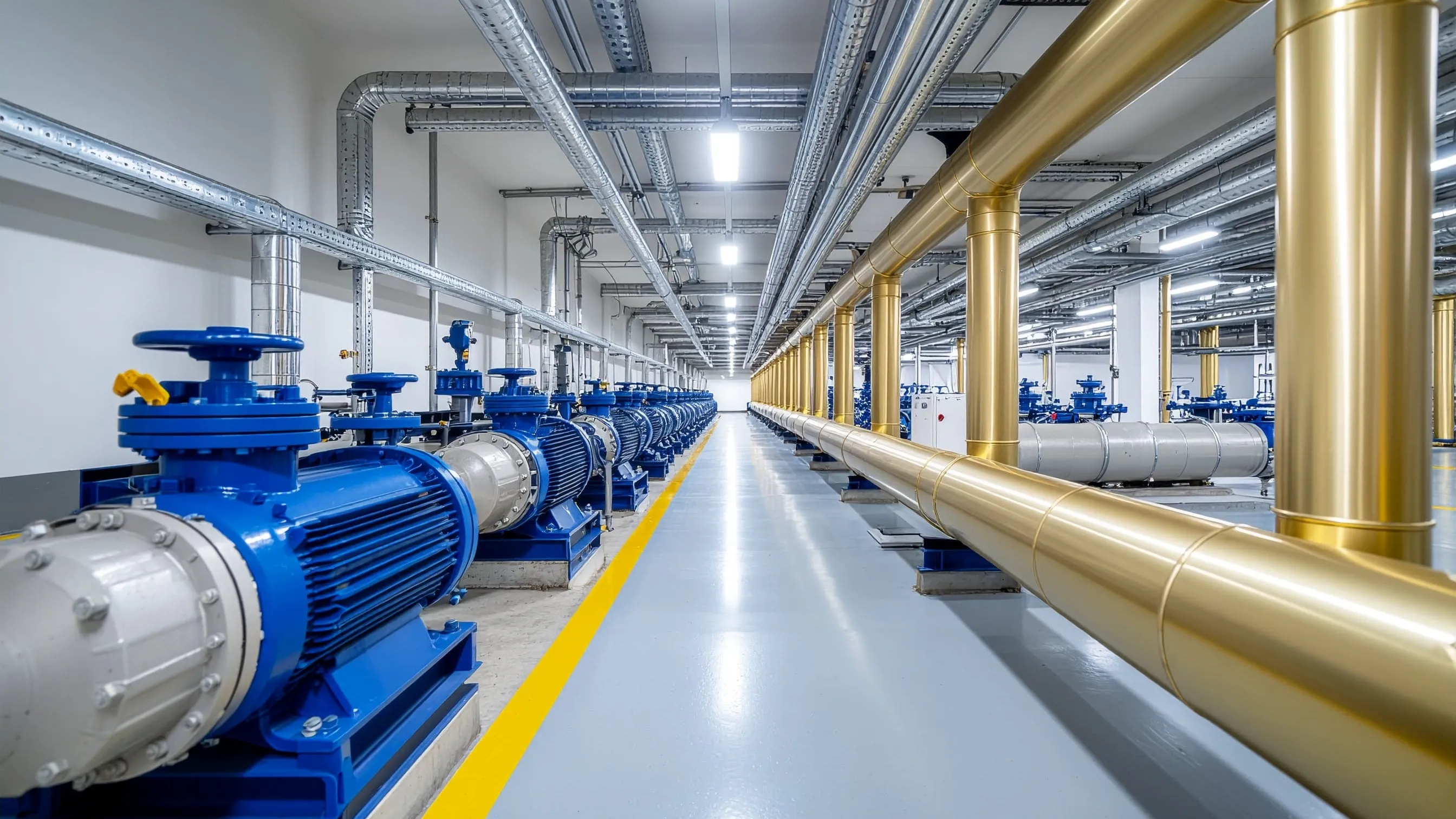
Dead legs in hot water pipework represent one of the most overlooked sources of energy waste and regulatory non-compliance in commercial and domestic heating installations. These sections of pipework trap water between the heat source and the point of use. They create multiple problems that extend far beyond simple inefficiency. Every metre of stagnant pipework wastes energy through continuous heat loss, increases bacterial risk through inadequate temperature maintenance, and potentially breaches Building Regulations Approved Document G requirements.
What Qualifies as a Dead Leg in Hot Water Pipework
According to current British Standards, a dead leg exists where pipework extends beyond the last circulating point without adequate flow or temperature maintenance. Specific length thresholds vary depending on pipe diameter and system type. However, any section exceeding two metres in domestic installations or one metre in healthcare settings typically triggers regulatory scrutiny. These measurements reflect the distance over which water temperature drops below the strict Legionella temperature threshold required to control bacteria.
The precise classification of a dead leg depends on system configuration and applicable standards. In straight pipe runs without circulation, any section where water remains static between uses constitutes a potential risk. The critical factor isn't merely the presence of stagnant water. It is the combination of length, volume, and temperature decay that occurs during periods of non-use.
Pipe diameter significantly affects this classification. A 15mm copper pipe reaching a single washbasin might comply at three metres in certain applications. A 28mm distribution pipe serving the same fixture would fail compliance at half that distance due to the larger water volume and increased surface area for heat loss. The relationship between pipe size and heat dissipation is not linear. Larger diameter pipes lose proportionally more energy per metre than smaller ones.
Commercial installations face stricter criteria than domestic properties. Healthcare facilities, hotels, and office buildings must maintain tighter control over hot water distribution due to highly vulnerable populations. Temperature monitoring points become mandatory at specific intervals. Any section failing to meet the strict Legionella temperature threshold constitutes a compliance breach, regardless of its technical length.
Energy Losses from Stagnant Hot Water Pipework
The energy penalty from dead legs in hot water pipework accumulates continuously, not just during periods of use. A three-metre section of uninsulated 22mm copper pipe maintaining 60 degrees Celsius in a 20 degrees Celsius ambient environment loses approximately 45 watts per metre. This totals 135 watts of constant heat dissipation. Over a year, this single dead leg wastes roughly 1,180 kWh. This equals £180 to £220 in gas costs depending on boiler efficiency and fuel prices.
Commercial buildings with multiple dead legs face exponentially higher losses. A typical office building might contain fifteen to twenty dead leg sections across various floors and facilities. Combined energy waste can easily exceed 15,000 kWh annually. These losses persist 24 hours daily regardless of actual hot water demand. They are particularly wasteful during evenings, weekends, and holiday periods when buildings stand empty.
Think of dead legs in hot water pipework like leaving the heating on in a room with all the windows wide open. You are constantly burning fuel to heat a space that serves absolutely no purpose, and all that energy simply escapes into the atmosphere.
Insulation reduces but does not eliminate the problem. Even well-insulated dead legs lose 15 to 20 watts per metre. Insulation effectiveness also degrades over time through moisture ingress, compression, and UV exposure where pipework runs externally. The fundamental issue remains: heating water that serves no useful purpose before cooling and requiring reheating.
Legionella Risk and Regulatory Compliance Issues
Legionella bacteria thrive in water temperatures between 20 degrees Celsius and 45 degrees Celsius. This is precisely the range that develops in poorly maintained dead legs. The HSE explicitly addresses this risk through the HSG 274 Part 2 guidance. It requires hot water systems to deliver water at 50 degrees Celsius or above within one minute at all outlets. Dead legs make this requirement virtually impossible to achieve without excessive water waste or trace heating.
Building Regulations Approved Document G mandates that hot water storage and distribution systems minimise bacterial risk through appropriate design. While Building Control monitors initial installations, the HSE and local environmental health officers increasingly scrutinise these aspects during operational compliance audits. Facilities managers must follow HSG 274 Part 2 guidance to ensure they are adequately monitoring the Legionella temperature threshold across their sites.
Healthcare facilities face the strictest requirements under HTM 04-01. This limits dead legs to one metre in patient care areas and mandates monthly temperature monitoring at sentinel outlets. Non-compliance can result in enforcement notices, operational restrictions, or prosecution under Health and Safety legislation. The Care Quality Commission specifically examines water safety management during inspections.
Common Causes of Dead Legs in Heating Systems
Poor initial design creates the majority of dead leg problems. Heating engineers sometimes route distribution pipework for installation convenience rather than optimal hydraulic performance. This results in circuitous routes with extended branches to individual outlets. Specification of oversized pipe diameters exacerbates the problem by increasing water volume and heat loss per metre.
When upgrading central plant to a modern remeha cascade, older distribution pipework is often left active but disconnected from regular use. Building modifications frequently create dead legs in previously compliant systems. When commercial spaces undergo refurbishment, fixtures often relocate but original pipework remains live. The abandoned sections become dead legs unless properly decommissioned.
Changes in building usage patterns can transform previously acceptable pipework into problematic dead legs. A hotel converting a floor to storage creates dead legs from the still-pressurised bathroom supplies. Office buildings with reduced occupancy find that infrequently used floors develop temperature compliance issues in previously adequate distribution systems.
Identifying Dead Legs During System Surveys
Effective dead leg identification requires systematic investigation combining documentation review, physical inspection, and temperature testing. Schematic drawings provide the starting point, although as-built conditions frequently deviate from original designs. Walking the system with drawings in hand reveals discrepancies like capped branches, relocated fixtures, and contradictory pipework routes.
When our technical support team visited a recently refurbished sports centre to assist with a submersible drainage pump installation, they noticed an isolated shower block taking over three minutes to run hot. The contractors had capped off a major branch without removing the live pipework, creating an enormous dead leg. Rerouting the supply instantly restored safe temperatures and cut their daily gas usage by 12%.
Temperature profiling delivers objective evidence of dead leg locations and severity. Using calibrated digital thermometers, engineers measure outlet temperatures after varying standing periods. Outlets requiring more than 60 seconds to achieve the safe Legionella temperature threshold indicate probable dead legs. Recording these measurements at different times reveals usage pattern effects on temperature maintenance.
Remedial Solutions for Existing Dead Legs
National Pumps and Boilers regularly advises contractors on how to mitigate these compliance risks effectively. Complete removal of redundant pipework represents the most effective and permanent solution. Tracing dead legs back to the nearest tee or circulation point and removing the entire section eliminates both energy waste and compliance risks. This approach requires access to concealed pipework and often involves making good decorative finishes, but it delivers guaranteed results.
Secondary return extensions bring dead legs into the circulation loop, maintaining temperature through continuous flow. Installing return pipework from the dead leg terminus back to the circulation system ensures continuous water movement. Sourcing appropriate pump and boiler supplies helps balance the additional pumping energy against the dead leg elimination benefits.
Automatic flushing systems periodically purge dead legs, replacing cooled water with fresh hot water from the distribution system. Programmable solenoid valves open at scheduled intervals, discharging dead leg contents to waste before closing. Installing an automatic flushing valve addresses bacterial risk through regular water turnover. However, each automatic flushing valve wastes both water and energy, making it suitable only where other solutions prove impractical. In strict healthcare environments, an automatic flushing valve can mitigate risk on infrequently used outlets.
Design Strategies to Prevent Dead Legs
Compact distribution layouts minimise pipe lengths between heat sources and outlets. Positioning hot water cylinders centrally within buildings rather than in remote plant rooms reduces distribution distances across all outlets. Vertical stacking of wet rooms in multi-storey buildings allows short branch connections from vertical distribution risers, virtually eliminating horizontal dead legs.
Valve placement significantly affects dead leg formation. Isolating pump service valves should locate immediately upstream of outlets rather than at distribution branches. This allows you to decommission individual fixtures without creating dead legs in the intervening pipework.
Specifying a thermostatic mixing valve TMV directly at the point of use is highly effective. Installing a thermostatic mixing valve TMV at the outlet rather than centrally reduces the length of mixed water pipework subject to temperature decay. Because a thermostatic mixing valve TMV reduces scald risk immediately at the tap, you can safely circulate 60 degrees Celsius water closer to the user without breaching safety regulations.
Pumping Solutions That Address Dead Leg Problems
Secondary circulation pumps maintain temperature throughout hot water distribution systems, preventing the stagnant conditions that create dead legs in hot water pipework. Properly sized and positioned pumps ensure continuous flow through all circulation branches. Selecting the right hot water circulation pump requires careful consideration of system volume, pipe lengths, and heat loss characteristics.
Variable speed DHW pumps offer significant advantages over fixed-speed alternatives in systems with varying demand patterns. During low-demand periods, reduced pump speed maintains minimum circulation preventing temperature decay. Timer-based pump operation suits buildings with predictable occupancy patterns. Programming pumps to operate only during occupied hours reduces energy waste.
Temperature-based pump control provides more sophisticated management than simple timers. Return temperature sensors activate pumps only when circulation temperature drops below setpoints, ensuring compliance with HSG 274 Part 2 guidance. This approach automatically adapts to varying heat loss conditions. Colder ambient temperatures trigger more frequent operation, while mild conditions allow extended pump-off periods.
Conclusion: Proactive Dead Leg Management
Dead legs in hot water pipework create compounding problems that extend far beyond simple energy waste. The combination of continuous heat loss and bacterial proliferation risks makes dead leg elimination a priority for responsible building operators. Energy losses of £150 to £200 annually per dead leg might seem modest individually, but commercial buildings face thousands of pounds in unnecessary heating costs alongside compliance breaches.
Effective dead leg management requires systematic identification through temperature profiling and flow testing, followed by appropriate remediation based on specific circumstances. Complete pipe removal delivers permanent solutions where access permits, and secondary circulation extensions provide alternatives for more complex situations. New installations should prioritise compact distribution layouts, appropriate pipe sizing, and carefully positioned circulation returns that prevent dead legs from developing initially.
The regulatory landscape continues to tighten around water safety and energy efficiency, making proactive dead leg management increasingly important. Professional assessment identifies problems before they escalate into enforcement actions or health incidents.
For operators concerned about stagnant pipework in their systems, Need Help Choosing? Contact Us to arrange a professional survey and remediation assessment.