

Why Is My Pump Making That Noise? A Diagnostic Guide
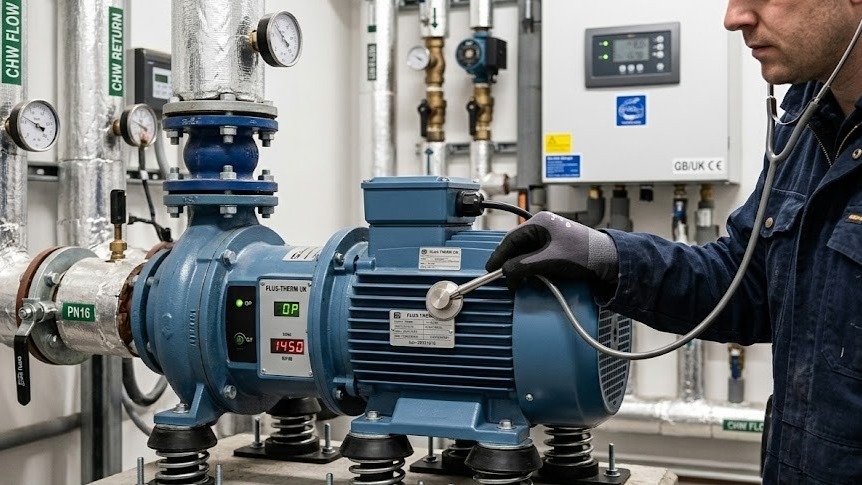
Unusual pump noise ranks among the most common service calls heating engineers receive - and for good reason. That grinding, humming, or rattling sound signals something has changed in the system, often before performance drops or failures occur. Identifying the specific noise type and its root cause prevents minor issues from escalating into costly pump replacements or system damage.
National Pumps and Boilers fields dozens of diagnostic enquiries monthly from contractors tracking down mysterious pump sounds. Most noise issues stem from predictable mechanical causes that experienced engineers can diagnose systematically. This guide breaks down the most common pump noises, their probable causes, and the diagnostic steps that pinpoint the problem quickly.
The Five Most Common Pump Noises and What They Mean
Grinding or Screeching Sounds
Grinding typically indicates bearing failure or shaft misalignment. Grundfos pumps and other quality circulators use ceramic or steel bearings that can wear after years of service, particularly if the system has run dry or experienced contamination. The grinding becomes progressively louder as bearing surfaces deteriorate.
Shaft misalignment produces similar sounds but often includes vibration transmitted through pipework. This occurs when the installation hasn't maintained proper alignment between the motor and impeller, or when thermal expansion has shifted mounting brackets over time.
Diagnostic approach: Isolate the pump, remove the front casing, and manually rotate the shaft. Rough rotation or resistance confirms bearing damage. Check mounting bolts for tightness and verify the pump sits level. Contamination in the bearing housing appears as dark residue or gritty material.
Humming Without Rotation
A humming pump that won't rotate points to electrical issues or mechanical seizure. The motor receives power but cannot overcome the resistance to turn the impeller. This commonly affects pumps that have sat idle for extended periods or systems with poor water quality.
Seized pumps result from corrosion between the shaft and bearings, scale buildup on impeller surfaces, or foreign objects jamming the impeller. Single-phase pumps may hum if one phase has failed or if the starting capacitor has degraded.
Diagnostic approach: Disconnect power and attempt manual shaft rotation using a flathead screwdriver in the shaft slot (most circulators provide this access point). If the shaft won't budge, a mechanical seizure has occurred. If rotation feels free, check the electrical supply with a multimeter and inspect capacitors for bulging or leakage. Three-phase pumps require phase balance testing.
Rattling or Chattering
Rattling suggests loose components or cavitation. Loose impeller nuts allow the impeller to move axially on the shaft, creating intermittent contact with the casing. This produces a distinct metallic rattle that varies with pump speed.
Cavitation generates a characteristic chattering sound resembling gravel flowing through the pump. This occurs when system pressure drops below the vapour pressure of water, causing bubbles to form and collapse violently against impeller surfaces. Cavitation damages pumps rapidly and reduces performance significantly.
Diagnostic approach: For loose components, shut down and inspect the impeller nut torque. Check for worn shaft threads or damaged impeller hubs. For suspected cavitation, measure system pressure at the pump inlet - it should exceed 0.5 bar minimum. Verify the pump hasn't been oversized for the system, check for closed isolation valves upstream, and inspect for air ingress points.
High-Pitched Whining
Whining typically indicates air entrainment or excessive pump speed. Air trapped in the impeller chamber creates turbulence and noise as it passes through the pump. This often accompanies reduced flow and warm pump casings.
Oversized pumps running at maximum speed can generate whining as water moves through the impeller at velocities beyond design parameters. Variable-speed pumps stuck on high settings produce this characteristic sound.
Diagnostic approach: Vent the pump using the bleed screw whilst running. If whining reduces or stops, air was the culprit - identify ingress points at joints, automatic air vents, or the expansion vessel connection. For speed-related noise, verify pump sizing calculations and check control settings. ErP-compliant pumps should auto-adjust to system demand.
Knocking or Tapping
Rhythmic knocking points to impeller damage or debris impact. Broken impeller vanes create an imbalance that produces regular knocking synchronized with shaft rotation. Foreign objects caught in the impeller chamber tap against the casing with each revolution.
Water hammer in the system can also cause knocking, though this typically originates from pipework rather than the pump itself. Quick-closing valves or inadequate expansion capacity create pressure spikes that manifest as loud knocks.
Diagnostic approach: Count knocks per minute and compare to pump RPM - matching frequencies confirms impeller-related issues. Remove the pump head and inspect the impeller for cracks, missing vanes, or trapped debris. For water hammer, check valve operation speeds and verify expansion vessel pre-charge pressure matches system requirements.
Systematic Diagnostic Procedures for Noisy Pump Diagnostics
Visual Inspection Protocol
Begin every diagnostic with eyes and hands before reaching for tools. Check pump mounting security - loose brackets transmit vibration and amplify normal operating sounds. Inspect pipework connections for movement or stress cracks that indicate misalignment.
Examine the pump casing temperature. Excessively hot casings suggest bearing failure, seized components, or the pump running dry. Normal operating temperature should allow brief hand contact without discomfort.
Look for water stains or mineral deposits around shaft seals and gasket surfaces. These indicate past or present leaks that may have introduced air or allowed water loss. Check the central heating system pressure gauge - low pressure often accompanies pump noise issues.
Electrical Testing Sequence
Voltage verification comes first. Measure supply voltage at the pump terminal box whilst running - it should match nameplate specifications within 10%. Low voltage causes motors to draw excessive current and overheat, whilst high voltage accelerates bearing wear.
For three-phase pumps, check phase balance. Voltage variation exceeding 2% between phases indicates supply problems that cause uneven motor operation and noise. Measure current draw on each phase and compare to nameplate ratings.
Single-phase pumps require capacitor testing when humming occurs. Discharge the capacitor safely, then measure capacitance with a meter. Values should fall within 10% of the marked rating. Bulging, leaking, or discoloured capacitors need immediate replacement regardless of measured values.
Mechanical Assessment Steps
Manual shaft rotation reveals bearing condition and mechanical freedom. With power isolated and the pump drained, access the shaft through the front screw slot or by removing the motor assembly. Smooth, free rotation indicates healthy bearings. Rough spots, grinding sensations, or excessive resistance point to bearing damage or contamination.
Check the shaft end-float by pulling and pushing the shaft axially. Excessive movement suggests worn thrust bearings. Zero movement may indicate seized bearings or over-tightened components.
Remove the pump head to inspect internal components. Look for scale buildup on impeller surfaces, corrosion between dissimilar metals, and wear patterns on the impeller shroud. The impeller should sit centrally in the chamber with even clearances. Contact marks or grooves indicate misalignment or bearing failure that allowed the impeller to contact the casing.
System Pressure and Flow Analysis
Pump noise troubleshooting often stems from system conditions rather than pump defects. Measure static pressure at the pump inlet with the system cold. Most sealed heating systems require 1.0-1.5 bar cold pressure. Readings below 0.5 bar risk cavitation and air ingress.
Check the differential pressure across the pump whilst running. Compare measured values to the pump curve for the installed model. Excessive differential pressure indicates closed valves or blocked pipework downstream. Insufficient differential pressure suggests oversized pipework, open bypass valves, or a worn impeller.
Flow measurement requires either ultrasonic meters or temperature differential calculations. Reduced flow accompanies many noise issues - cavitation, air locks, and partial blockages all restrict circulation whilst generating unusual sounds.
Common Causes Behind Noisy Pumps
Air in the System
Air creates more pump noise complaints than any other single cause. Even small air pockets generate turbulence, reduce heat transfer, and produce characteristic gurgling or whining sounds. Air enters through multiple routes: leaking joints on the suction side, permeation through rubber hoses, faulty automatic air vents, or inadequate system filling procedures.
Modern sealed systems should maintain positive pressure at all points, preventing air ingress. Negative pressure zones - typically at high points or immediately after the pump inlet - allow air to enter through microscopic gaps in compression fittings or degraded O-rings.
Chronic air problems require systematic investigation. Pressure test the system to 1.5x operating pressure and monitor for drops over 30 minutes. Identify high points lacking automatic air vents. Check DHW pumps for installation below cylinder outlets, creating natural air traps.
Incorrect Pump Sizing
Oversized pumps generate noise through excessive velocity and system resistance. Specifying pumps based solely on maximum theoretical demand ignores actual heat loss calculations and system design. An oversized circulator forces water through pipework at velocities exceeding 1.5 m/s, creating turbulence and noise at fittings, valves, and the pump itself.
Undersized pumps struggle to overcome system resistance, running continuously at maximum speed whilst failing to achieve design temperatures. The motor works harder, bearings wear faster, and noise increases as the components stress.
Proper sizing requires accurate heat loss calculations, pipe sizing schedules, and resistance calculations for all fittings and components. Modern variable-speed pumps compensate for minor sizing errors by adjusting output to match demand, but extreme mismatches still cause problems.
Poor Installation Practices
Installation quality directly affects pump noise troubleshooting and service life. Common mistakes include inadequate pipe support, allowing vibration transmission, incorrect pump orientation causing air traps, and failure to flush systems before pump installation.
Pumps installed without isolation valves complicate future maintenance and force system drains for simple bearing replacements. Missing strainers allow debris into the pump chamber, where it damages seals and impellers whilst generating noise.
Electrical connections using undersized cables or loose terminals cause voltage drops and overheating. Pumps mounted directly on wooden joists transmit vibration throughout the building structure, amplifying normal operating sounds into occupant complaints.
Water Quality Issues
Scale, sludge, and corrosion products accelerate pump wear whilst generating noise. Hard water areas produce calcium carbonate deposits that narrow impeller clearances and roughen bearing surfaces. Corrosion in mixed-metal systems creates iron oxide particles that act as a grinding paste in bearings.
Biological growth in systems with glycol contamination or stagnant sections introduces organic matter that blocks narrow passages and coats moving parts. Dissolved gases in inadequately treated water cause pitting corrosion on impeller surfaces.
Systems lacking proper inhibitor treatment or operating at incorrect pH levels deteriorate rapidly. Regular water testing and treatment maintain pump reliability and reduce noise-related failures. National Pumps and Boilers recommends annual water quality checks and inhibitor top-ups for all sealed heating systems.
Preventive Measures and Maintenance Schedules
Annual Service Requirements
Systematic maintenance prevents most noise-related failures. Annual inspections should include visual checks for leaks and corrosion, electrical testing of voltage and current draw, and performance verification against commissioning data. Clean pump strainers and check isolation valve operation.
Measure system pressure cold and hot, verifying expansion vessel pre-charge and overall system integrity. Test automatic air vents for proper operation and clear any blockages. Record all measurements for trend analysis - gradual changes indicate developing problems before failures occur.
Variable-speed pumps require software checks to verify that control algorithms function correctly. Update firmware if manufacturers have released improvements. Inspect cable connections for tightness and insulation condition.
System Protection Strategies
Proper system design prevents many pump problems. Install dirt separators and magnetic filters on heating systems to capture debris before it reaches the pump. Size expansion vessels correctly for system volume and operating temperature range.
Use appropriate pipe supports to isolate pump vibration from building structures. Install flexible connections where pump vibration might stress pipework joints. Ensure adequate clearance around pumps for maintenance access and ventilation.
Specify Wilo pumps or equivalent quality products with proven reliability rather than economy alternatives that fail prematurely. Quality pumps cost more initially but deliver lower lifecycle costs through reduced maintenance and longer service intervals.
Early Warning Signs
Catch problems before they cause failures by monitoring pump behaviour. Gradual increases in operating noise suggest developing bearing wear or accumulating system debris. Changes in vibration patterns indicate impeller damage or mounting looseness.
Rising electricity consumption without corresponding temperature improvements points to reduced pump efficiency from wear or blockages. Frequent need for system venting suggests air ingress points requiring attention.
Temperature differences between flow and return narrowing below design values indicate reduced circulation from pump problems or system blockages. Radiator cold spots appearing in previously balanced systems suggest pump performance degradation.
When to Repair Versus Replace
Cost-Benefit Analysis
Small circulators under £200 rarely justify bearing replacement or motor rewinding. Labour costs exceed replacement pump prices, and worn pumps often develop multiple problems simultaneously. Replace rather than repair budget models.
Commercial pumps and larger circulators warrant repair consideration. Replacement bearing sets cost £50-150 whilst complete pumps may exceed £500-1000. Professional bearing replacement takes 2-3 hours, including testing and recommissioning.
Consider pump age and service history. Pumps approaching 10-15 years have likely reached economic end-of-life, even if repairable. Modern ErP-compliant replacements offer significantly better efficiency, reducing running costs by 40-60% compared to older fixed-speed models.
Upgrade Opportunities
Noise complaints provide opportunities to upgrade to superior technology. Variable-speed pumps eliminate most noise issues through automatic flow adjustment and lower operating speeds. Smart pumps with diagnostic displays simplify future troubleshooting and reduce service call frequency.
Replacing oversized fixed-speed pumps with correctly sized variable-speed alternatives cuts energy consumption whilst improving system performance and reducing noise. The investment typically pays back within 3-5 years through electricity savings alone.
Conclusion
Pump noise rarely appears without cause - that grinding, humming, or rattling sound provides valuable diagnostic information about developing problems. Systematic investigation following the procedures outlined identifies most issues quickly, allowing targeted repairs before minor problems escalate into system failures.
Air entrainment, bearing wear, and incorrect sizing account for the majority of noisy pump diagnostics cases. Each produces characteristic sounds that experienced engineers recognize immediately. The remaining causes - cavitation, electrical faults, and debris damage - require methodical testing but follow predictable patterns.
Prevention through proper installation, regular maintenance, and appropriate system protection delivers the most reliable solution. Quality components, correct sizing, and attention to water treatment prevent most noise-related failures whilst extending pump service life significantly.
For complex diagnostic situations or when initial investigations don't identify clear causes, contact us for technical support. Experienced heating specialists can guide diagnostics remotely or recommend appropriate replacement options when repairs prove uneconomical.