

Why Monitoring Your Pump System Performance Saves Money
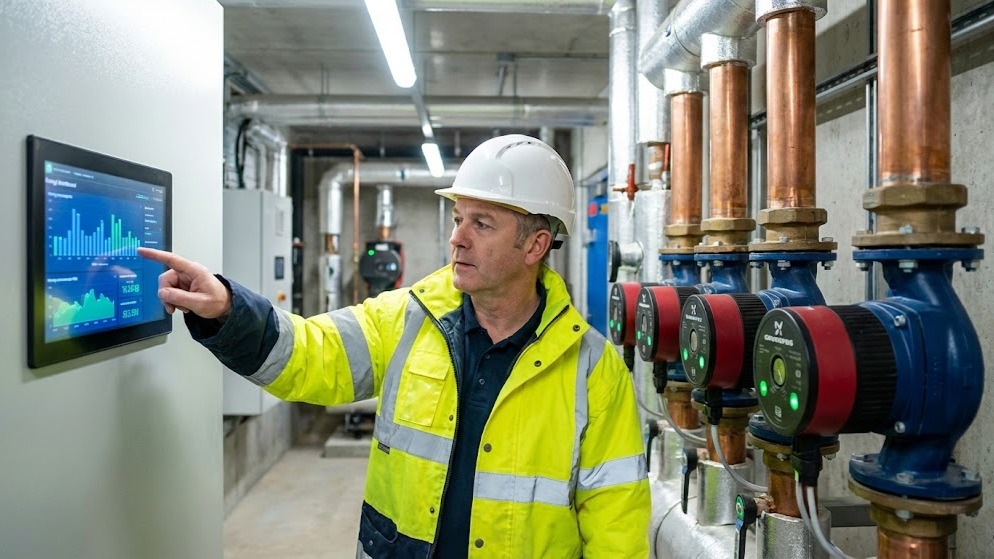
Pump systems account for nearly 20% of global electricity consumption, yet most commercial and industrial facilities operate these systems with minimal performance oversight. The financial impact is substantial: unmonitored pumps typically waste 30-50% of their energy consumption through inefficiencies that develop gradually over time. For a medium-sized commercial heating system running continuously, this translates to £3,000-£8,000 in unnecessary annual costs.
The case for systematic pump monitoring extends beyond energy waste. Equipment failures, system imbalances, and gradual performance degradation create cascading costs that affect operational budgets, maintenance schedules, and system longevity. Understanding how pump monitoring cost savings accumulate across these areas helps facility managers and heating engineers make informed decisions about implementing monitoring systems. The performance tracking benefits extend throughout entire heating infrastructures.
How Pump Performance Degrades Without Monitoring
Circulation pumps in heating systems rarely fail catastrophically without warning. Instead, they deteriorate gradually through predictable mechanisms that monitoring systems detect long before failures occur.
Bearing wear develops progressively as lubrication degrades and mechanical tolerances increase. A Grundfos pump operating with worn bearings consumes 8-15% more electricity whilst producing increased vibration and heat. Without monitoring, this condition persists for months, wasting energy whilst accelerating damage to adjacent components.
Impeller fouling accumulates from system debris, corrosion products, and mineral deposits. A partially blocked impeller reduces flow rates by 20-40% whilst the pump motor continues drawing full power. Systems compensate by running longer cycles or activating secondary pumps, multiplying energy consumption without addressing the underlying problem.
Seal deterioration creates internal recirculation that reduces pump efficiency by 10-25%. The pump appears to operate normally, but actual system flow falls below design specifications. Heating zones receive inadequate flow, occupants report comfort issues, and facility managers increase boiler temperatures to compensate, an expensive solution that masks the real problem.
These degradation patterns share a common characteristic: they are invisible during casual observation but clearly evident in performance data. A pump with 30% efficiency loss still runs quietly, shows normal operating pressure on basic gauges, and requires no immediate attention. Only systematic monitoring reveals the financial drain occurring daily. Recognising these patterns justifies monitoring investment.
Direct Energy Cost Reductions Through Monitoring
The primary pump monitoring cost savings come from identifying and correcting energy waste. Modern monitoring systems track power consumption, flow rates, and operating hours to establish performance baselines and detect deviations.
Variable speed drive optimisation represents the largest single energy saving opportunity. Most heating systems operate pumps at fixed speeds regardless of actual demand. Monitoring data reveals that typical commercial heating systems require full pump capacity only 15-20% of operating hours. By implementing speed modulation based on actual system requirements, facilities reduce pump energy consumption by 40-60%. These pump monitoring cost savings prove substantial.
A practical example: A commercial building in Manchester installed monitoring on three central heating pumps serving 12,000 square metres. Baseline monitoring revealed the pumps consumed 42,000 kWh annually at fixed speed operation. After implementing variable speed control guided by monitoring data, annual consumption dropped to 18,000 kWh, a reduction of 24,000 kWh worth approximately £4,300 at commercial electricity rates.
Parallel pump coordination prevents the common waste pattern where multiple pumps operate simultaneously when system demand requires only one. Monitoring systems detect when parallel pumps run at partial capacity and automatically sequence operation to match actual load. This coordination typically reduces combined energy consumption by 25-35% compared to uncoordinated operation.
Scheduling optimisation uses monitoring data to align pump operation precisely with building occupancy and heating demand. Many systems run continuously or follow fixed schedules that ignore actual requirements. Monitoring reveals opportunities to reduce operating hours by 15-30% through intelligent scheduling that maintains comfort whilst eliminating unnecessary runtime.
Predictive Maintenance Cost Reductions
Reactive maintenance, fixing equipment after it fails, costs 3-5 times more than planned maintenance addressing issues before failure occurs. Pump monitoring enables predictive maintenance strategies that transform maintenance economics.
Bearing condition monitoring tracks vibration signatures and temperature patterns that indicate developing bearing problems. Monitoring systems detect bearing deterioration 4-8 weeks before failure, allowing scheduled replacement during planned maintenance windows. This approach eliminates emergency callouts (£500-£1,200 per incident), prevents secondary damage to pump components, and extends equipment life by 30-40%.
Seal performance tracking identifies internal leakage before it causes system problems or external leaks. Early seal replacement costs £200-£400 including labour. Delayed replacement often results in bearing damage, impeller corrosion, and motor contamination, repairs costing £1,500-£3,000 plus system downtime.
Motor condition assessment uses power consumption patterns and thermal monitoring to detect developing motor problems. Motors showing abnormal current draw or temperature patterns receive investigation before failure occurs. Motor replacement during scheduled maintenance costs 60-70% less than emergency replacement, which typically requires after-hours labour, expedited parts delivery, and extended system downtime.
National Pumps and Boilers supplies monitoring-compatible equipment from manufacturers including Wilo and Lowara, designed specifically for integration with building management systems and standalone monitoring platforms. These monitoring capabilities make predictive maintenance practical and cost-effective.
System Balance and Performance Optimisation
Beyond individual pump efficiency, monitoring reveals system-level inefficiencies that create substantial hidden costs.
Flow imbalance detection identifies zones receiving excessive or insufficient flow. These imbalances waste energy through unnecessary circulation whilst creating comfort complaints that prompt expensive "solutions" like boiler oversizing or additional heating equipment. Monitoring-guided rebalancing typically improves system efficiency by 15-25% whilst resolving comfort issues without capital expenditure.
Pressure differential monitoring tracks system resistance changes that indicate developing problems. Increasing pressure differentials signal filter blockage, valve failures, or pipe restrictions. Addressing these issues promptly prevents pump overwork, reduces energy consumption, and extends equipment life.
Temperature differential tracking across heat exchangers and heating zones reveals performance degradation in DHW pumps and circulation systems. Declining temperature differentials indicate reduced flow, fouled heat exchangers, or control valve problems. Early detection prevents comfort complaints and identifies maintenance requirements before they escalate.
A manufacturing facility in Birmingham implemented comprehensive monitoring across eight circulation pumps serving process heating and space conditioning. Initial monitoring revealed that two zones operated with 40% excess flow whilst three zones received insufficient flow. System rebalancing guided by monitoring data reduced total pump energy consumption by 22% whilst eliminating temperature complaints that had persisted for two years. These monitoring insights demonstrate the value of comprehensive tracking.
Avoiding Oversizing and Unnecessary Equipment Additions
Many facilities respond to performance problems by installing additional pumps or upgrading to larger equipment. Monitoring data frequently reveals that existing equipment capacity exceeds actual requirements; the problem lies in system configuration or component degradation, not insufficient capacity.
Capacity verification through monitoring prevents expensive equipment upgrades that address symptoms rather than causes. Before recommending pump replacement or parallel pump addition, monitoring data establishes whether existing equipment operates at design capacity. In approximately 60% of cases where facility managers consider equipment upgrades, monitoring reveals that existing pumps operate below capacity due to correctable issues like valve problems, control failures, or system fouling.
Right-sizing decisions for equipment replacement use monitoring data rather than rule-of-thumb calculations. Actual operating data reveals peak demand patterns, duty cycles, and load profiles that inform accurate equipment selection. This approach typically results in pump selections 20-30% smaller than conventional sizing methods recommend, reducing both capital costs and lifetime operating expenses.
Implementation Costs Versus Savings Timeline
The financial case for pump monitoring depends on system size, complexity, and current operating efficiency. Understanding typical implementation costs and payback periods helps justify monitoring investments.
Basic monitoring systems for single pumps cost £800-£1,500 including sensors, data logging equipment, and installation. These systems track power consumption, runtime, and basic operating parameters. For pumps consuming 3-5 kW continuously, energy savings alone typically recover implementation costs within 12-18 months.
Comprehensive monitoring platforms for multiple pumps with advanced analytics cost £3,000-£8,000 depending on system complexity. These platforms integrate with building management systems, provide predictive maintenance alerts, and enable automated optimisation. Facilities with multiple pumps consuming 15+ kW combined typically achieve payback within 18-30 months through combined energy savings and maintenance cost reductions.
Retrofit monitoring for existing equipment proves more cost-effective than replacing functional pumps with monitoring-enabled alternatives. A Grundfos pump operating efficiently but lacking monitoring capabilities benefits more from adding monitoring sensors (£600-£1,200) than premature replacement with a new monitoring-enabled unit (£2,500-£5,000+).
Monitoring Technologies and Integration Options
Modern pump monitoring employs various technologies suited to different applications and budgets.
Standalone data loggers provide basic monitoring without integration requirements. These devices attach to individual pumps, record operating parameters, and store data for periodic download. They suit facilities without building management systems or where monitoring specific problematic pumps takes priority. Costs range from £400-£900 per pump.
Building management system integration connects pump monitoring to existing facility control platforms. This approach enables automated responses to monitoring data, centralised data storage, and correlation with other building systems. Integration costs £1,500-£3,000 per pump but provides superior functionality for facilities with existing BMS infrastructure. The performance tracking benefits justify this investment.
Wireless sensor networks enable monitoring across distributed pump installations without extensive cabling. Modern wireless monitoring systems achieve 99%+ reliability whilst reducing installation costs by 40-60% compared to wired alternatives. These systems particularly suit retrofit applications and facilities where cable routing presents challenges.
Cloud-based analytics platforms aggregate data from multiple sites, apply machine learning algorithms to identify optimisation opportunities, and provide remote access for facility managers and service contractors. Monthly subscription costs (£50-£150 per pump) replace capital expenditure whilst ensuring continuous platform updates and support. These performance tracking benefits scale across entire building portfolios.
Case Study: Multi-Site Monitoring Implementation
A property management company operating 23 commercial buildings implemented comprehensive pump monitoring across 67 circulation pumps serving heating and hot water systems. The installation occurred over six months with total costs of £78,000 including equipment, installation, and first-year platform subscriptions.
Results achieved:
- Energy consumption reduction of 156,000 kWh (31% decrease) worth £28,000 annually
- Elimination of seven emergency pump failures through predictive maintenance, avoiding £6,800 in emergency repair costs
- Identification of oversized pumps during routine replacements, reducing equipment costs by £4,200
- Resolution of chronic comfort complaints in four buildings through monitoring-guided system rebalancing, eliminating planned equipment upgrades budgeted at £18,000
Combined first-year savings totalled £57,000 against implementation costs of £78,000. Ongoing annual savings (excluding one-time equipment cost avoidance) exceeded £34,000, establishing a 2.3-year payback period. By year three, cumulative savings reached £139,000 against total costs of £93,000 (including annual platform subscriptions). These results compound over time.
Regulatory and Compliance Considerations
Building Regulations Part L increasingly emphasises energy efficiency in heating systems, with monitoring playing a recognised role in demonstrating compliance and optimising performance.
Energy Performance Certificate ratings benefit from documented monitoring and optimisation programmes. Buildings demonstrating systematic performance monitoring typically achieve ratings 5-10% higher than comparable buildings without monitoring, affecting property values and rental appeal.
ESOS compliance (Energy Savings Opportunity Scheme) requires large organisations to assess energy consumption and identify efficiency opportunities. Pump monitoring data provides the detailed consumption analysis ESOS audits require whilst documenting implemented efficiency measures.
Future-proofing investments positions facilities to meet anticipated regulatory requirements. As building energy standards tighten, monitoring infrastructure that currently provides competitive advantage may become mandatory for certain building classes.
Conclusion
Pump monitoring cost savings accumulate through multiple mechanisms that compound over time. Energy waste reduction typically delivers 25-45% consumption decreases worth thousands of pounds annually for commercial systems. Predictive maintenance eliminates 60-80% of emergency repairs whilst extending equipment life by 30-50%. System optimisation guided by monitoring data resolves performance problems without capital expenditure whilst preventing unnecessary equipment additions.
The financial case strengthens as energy costs rise and equipment ages. Facilities operating pumps installed 5-10 years ago face increasing failure risks and efficiency degradation that monitoring systems detect and quantify. Early intervention guided by monitoring data prevents the cascade of problems that transform minor issues into major expenses. The performance tracking benefits deliver measurable returns throughout system operational life.
For heating engineers and facility managers evaluating monitoring investments, the question is not whether monitoring saves money; documented case studies across thousands of installations confirm substantial returns. The relevant question is how quickly specific systems will recover implementation costs based on current operating efficiency, equipment condition, and energy consumption patterns.
National Pumps and Boilers specialises in monitoring-compatible pump systems and can provide technical guidance on implementing monitoring solutions for existing installations. Facilities seeking to quantify potential savings should contact the team for site-specific assessment and monitoring system recommendations tailored to their heating infrastructure and operational requirements.