

Why Preventative Maintenance Extends Pump and Boiler Lifespan
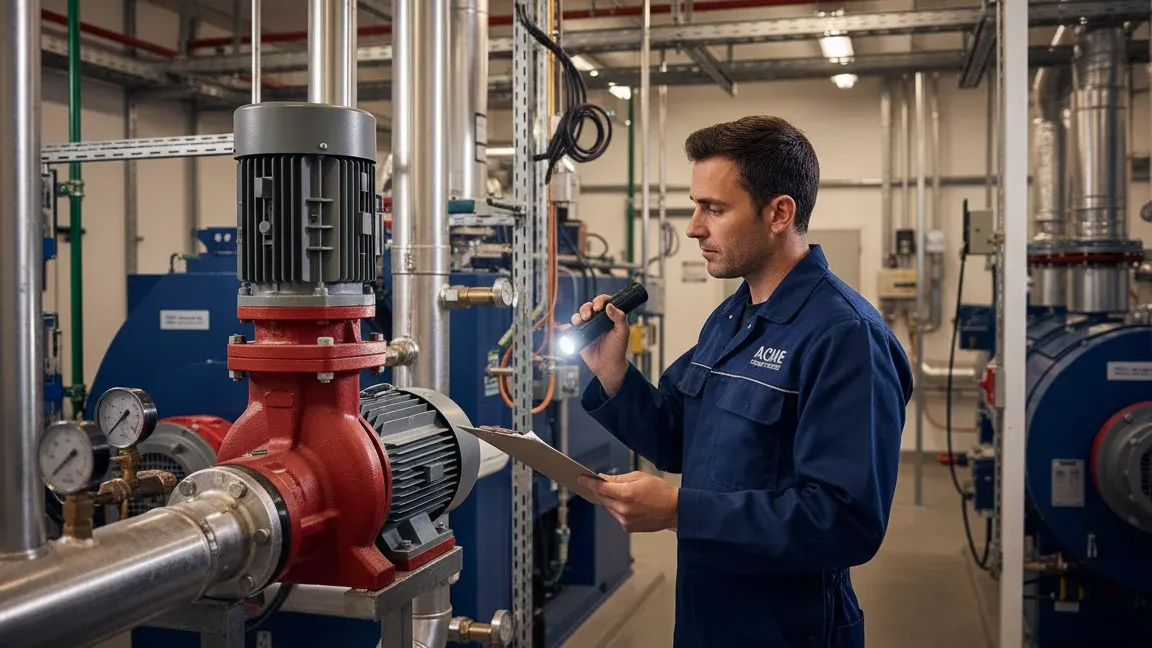
Heating system failures rarely announce themselves politely. A circulator pump that has been quietly struggling for months finally seizes on the coldest night of January. A boiler that has accumulated years of scale buildup cracks its heat exchanger mid-winter. These are not random mechanical failures - they represent predictable consequences of deferred maintenance that cost UK businesses and homeowners millions annually.
The difference between a central heating pump lasting 8 years versus 15 years is not manufacturing quality or operational luck. The determining factor is whether someone bothered to inspect the bearings, check the seals, and verify the coupling alignment before small problems became catastrophic failures.
The True Cost of Reactive Maintenance
Emergency Repairs vs Scheduled Service
Emergency heating repairs in the UK typically cost 2-3 times more than equivalent scheduled maintenance work. When a commercial building's primary circulator fails during business hours, the expense extends beyond pump replacement to include emergency callout fees, expedited parts delivery, and often overtime labour rates.
The operational impact extends beyond immediate repair expenses. When a hotel's hot water system fails, rooms become unavailable. When a manufacturing facility's process heating goes down, production stops. Industry surveys indicate that unplanned heating system downtime costs UK businesses an average of £2,400 per incident when factoring in lost productivity, emergency accommodation for affected staff, and customer compensation.
Insurance companies increasingly factor maintenance records into commercial property coverage. Properties demonstrating regular preventative maintenance schedules often qualify for reduced premiums, whilst those with poor maintenance histories face higher excess payments or coverage limitations for heating system failures.
National Pumps and Boilers tracks service data across thousands of installations annually, and the pattern remains consistent: properties without maintenance contracts experience 4-5 times more emergency callouts than those with regular servicing schedules. A £200 annual service contract prevents £800-1,200 in average emergency repair costs.
Hidden Expenses of Deferred Maintenance
A poorly maintained central heating pump does not simply risk sudden failure - it bleeds efficiency throughout its declining performance period. Scale buildup on impellers reduces flow rates by 15-30%, forcing the pump to work harder and consume more electricity whilst delivering less effective heating. Across a commercial building with multiple circulators, this efficiency degradation translates to hundreds of pounds in unnecessary annual energy costs.
Deferred maintenance creates cascading failure patterns. A corroded expansion vessel that is not replaced during routine service eventually ruptures, releasing water that damages electrical components, ruins ceiling tiles, and requires emergency plumbing intervention. What should have been a £150 vessel replacement becomes a £3,000+ remediation project.
Commercial properties face regulatory compliance risks when maintenance lapses. Gas Safe requirements mandate annual boiler inspections for commercial installations. Failure to maintain proper documentation can result in enforcement notices, operational shutdowns, and fines up to £20,000 for serious breaches. Building insurance claims for heating-related damage are routinely denied when maintenance records cannot demonstrate reasonable care.
How Preventative Maintenance Works
Core Components Requiring Regular Attention
Preventative maintenance programmes target specific failure points before they cause system breakdowns. Pump bearings deteriorate gradually through normal operation, but regular inspection identifies wear patterns 6-12 months before bearing failure. Replacing bearings during scheduled maintenance costs £120-180 in parts and labour. Waiting for bearing failure adds motor damage, shaft scoring, and potential seal destruction - escalating costs to £600-900 for complete pump refurbishment.
Boiler heat exchangers accumulate combustion deposits and waterside scale that reduce thermal efficiency and create localised hot spots. Annual cleaning and descaling maintains design efficiency and prevents the thermal stress that causes heat exchanger cracking. A cracked heat exchanger typically requires complete boiler replacement at £3,000-8,000, whilst annual cleaning costs £150-250.
Expansion vessels lose pre-charge pressure over time, reducing their ability to accommodate system expansion and causing pressure fluctuations that stress components. Annual pressure testing identifies vessels requiring recharging (£60-80) before they fail completely and require emergency replacement (£200-400 including callout).
System water quality directly impacts equipment lifespan. Corrosion inhibitor concentrations decline through normal operation, allowing internal corrosion that creates circulation blockages and damages pump seals. Annual water testing (£40-60) and inhibitor dosing (£30-50) prevents corrosion damage that would otherwise require system power flushing (£400-800) or component replacement.
Manufacturer-Recommended Service Intervals
Grundfos circulators specify annual inspection for residential installations and 6-month intervals for commercial applications operating continuously. These schedules reflect accelerated life testing showing optimal maintenance intervention points that maximise component lifespan whilst minimising service costs.
Residential boilers require annual Gas Safe registered servicing to maintain warranty coverage and ensure safe operation. This service includes combustion analysis, safety device testing, and component inspection that identifies developing problems before they cause failures. Skipping annual service voids most manufacturer warranties, leaving owners liable for repair costs that would otherwise be covered.
Commercial installations with critical heating requirements benefit from quarterly inspections that monitor performance trends and catch developing issues early. Large facilities often implement monthly visual inspections by in-house staff supplemented by quarterly technical service from specialist contractors.
Measurable Lifespan Extensions
Data from Commercial Installations
Analysis of commercial heating installations across the UK demonstrates clear equipment lifespan differences based on maintenance practices. Commercial circulators with comprehensive maintenance programmes achieve average operational lifespans of 18-22 years, compared to 10-12 years for equivalent pumps without regular servicing - a 60-80% lifespan extension.
Studies tracking commercial boiler installations found that units with annual professional servicing maintained 90%+ of their original efficiency after 15 years of operation. Comparable boilers without regular maintenance showed 70-75% efficiency after the same period, requiring 25-30% more fuel to deliver equivalent heating output.
Energy consumption data from maintained versus unmaintained systems reveals significant differences. A properly maintained heating system consumes 15-25% less energy than an identical neglected system, translating to substantial cost savings that typically exceed maintenance programme costs within 2-3 years.
Mean time between failures (MTBF) statistics show dramatic differences. Maintained commercial heating systems average 3-4 years between component failures requiring repair. Unmaintained systems average 12-18 months between failures, creating ongoing operational disruptions and unpredictable maintenance budgets.
Residential System Performance
Residential central heating pumps typically last 8-10 years without regular maintenance. With annual servicing, identical pumps routinely achieve 15-18 year lifespans. The service cost over that extended period (£150-200 annually) totals £2,250-3,600, whilst pump replacement costs £300-500 plus installation. The maintenance investment pays for itself through extended equipment lifespan alone, before considering improved efficiency and reduced breakdown risk.
Boiler efficiency naturally declines through normal operation, but maintenance significantly slows this efficiency degradation. A new condensing boiler operates at 92-94% efficiency. After 10 years without maintenance, efficiency typically drops to 75-80%. With annual servicing, the same boiler maintains 88-90% efficiency after 10 years, saving 10-15% on annual heating costs.
Seasonal maintenance timing significantly impacts winter reliability. Systems serviced in September-October before heating season demonstrate 70% fewer mid-winter breakdowns than systems last serviced the previous winter.
Critical Maintenance Tasks That Prevent Failure
Pump-Specific Procedures
Bearing lubrication and condition assessment forms the foundation of pump maintenance. Technicians check for noise, vibration, and temperature anomalies indicating bearing wear. Early component replacement during scheduled maintenance prevents the shaft damage and seal failure that occurs when bearings completely fail during operation.
Seal inspection identifies weeping or minor leaks before they become major failures. Modern mechanical seals last 5-8 years with proper maintenance but fail within 2-3 years when systems run dry, overheat, or operate with contaminated water. Seal replacement during scheduled service costs £80-120. Emergency seal replacement after catastrophic failure often includes motor damage repair, increasing costs to £300-500.
Impeller cleaning removes scale deposits that reduce pumping efficiency and create imbalanced rotation causing bearing stress. Wilo pumps and other quality manufacturers recommend annual impeller inspection and cleaning to maintain design flow rates.
Motor winding testing using insulation resistance measurements identifies electrical deterioration before winding failure. This testing catches developing problems 6-12 months before motor failure, allowing planned replacement rather than emergency intervention.
Boiler Maintenance Essentials
Combustion analysis measures oxygen levels, carbon monoxide production, and flue gas temperature to verify optimal burner performance. Proper combustion maximises efficiency, minimises emissions, and prevents dangerous carbon monoxide production. Annual analysis with burner adjustment maintains safe, efficient operation throughout the boiler's lifespan.
Heat exchanger inspection identifies scale accumulation, corrosion, and thermal stress damage. Descaling removes mineral deposits that insulate heat transfer surfaces, forcing the boiler to fire longer to achieve target temperatures. Regular descaling maintains efficiency and prevents the localised overheating that causes heat exchanger failure.
Safety device testing verifies that overheat protection, pressure relief valves, and flame failure detection function correctly. These systems rarely activate during normal operation but must work reliably when needed. Annual testing confirms protection systems will prevent dangerous conditions if primary controls fail.
Building an Effective Maintenance Programme
Assessment and Planning
Comprehensive maintenance programmes begin with complete system audits identifying all equipment requiring scheduled service. This inventory includes primary heating plant, circulation pumps, expansion vessels, pressurisation units, control systems, and safety devices.
Risk assessment prioritises maintenance activities based on failure consequences. Critical systems serving essential operations receive more frequent attention than redundant backup equipment. Single-point failures that would cause complete system shutdown receive priority over components with backup capacity.
Budget allocation should reflect the true cost comparison between preventative maintenance and reactive repair. Properties allocating 1-2% of heating system replacement value annually for maintenance typically avoid 80-90% of emergency repair costs whilst extending equipment lifespan 40-60%.
Lowara and other quality pump manufacturers provide detailed maintenance schedules in their documentation. Following these specifications ensures equipment operates within design parameters and maintains warranty coverage.
Documentation and Tracking
Service logs document all maintenance activities, test results, and component replacements. This documentation proves essential for warranty claims, where manufacturers routinely deny coverage for equipment lacking proper maintenance records. Insurance claims for heating-related damage similarly require maintenance documentation demonstrating reasonable care.
Digital maintenance management systems improve scheduling reliability and create searchable historical records. These systems generate automatic service reminders, track component replacement history, and identify performance trends that inform maintenance strategy adjustments.
Performance metrics including energy consumption, runtime hours, and efficiency measurements reveal developing problems before they cause failures. Gradual efficiency decline or increasing runtime to achieve target temperatures indicates maintenance needs before component failure occurs.
When to Replace vs Maintain
Decision Criteria
Equipment age significantly impacts the maintenance versus replacement decision. Pumps and boilers approaching 20 years old face increasing parts availability challenges and declining energy efficiency compared to modern alternatives. At this point, replacement often provides better long-term value than continued maintenance investment.
Energy efficiency comparisons between old maintained equipment and modern alternatives reveal significant differences. A well-maintained 15-year-old boiler operating at 88% efficiency consumes 15-20% more fuel than a new condensing boiler at 94% efficiency. Over the boiler's remaining lifespan, fuel savings from replacement often exceed the capital cost difference.
Parts availability for discontinued models creates maintenance challenges. When manufacturers cease production, replacement parts become scarce and expensive. Equipment requiring frequent repairs with increasingly difficult parts sourcing signals replacement timing.
Upgrade Opportunities
Variable speed pump retrofits reduce energy consumption 30-50% compared to fixed-speed alternatives. DHW pumps and heating circulators with integrated variable speed drives adjust output to match actual demand, eliminating the energy waste of oversized fixed-speed pumps.
Smart controls integration enables predictive maintenance and system optimisation. Modern controllers monitor performance continuously, identifying degradation patterns and alerting maintenance teams before failures occur. This technology transforms maintenance from calendar-based schedules to condition-based intervention.
For guidance on implementing effective preventative maintenance programmes or evaluating equipment replacement decisions, Contact Us to discuss specific system requirements with experienced heating specialists.