

Why Strainers Are Essential for Protecting Commercial Pumps from Damage
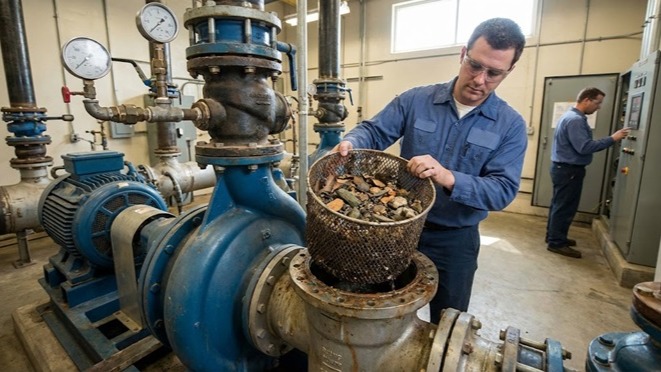
Commercial pumps represent significant capital investments in heating, plumbing, and industrial systems. A single pump failure can halt operations, trigger costly emergency repairs, and compromise system integrity across entire facilities. Yet one of the most preventable causes of pump damage, debris contamination, remains responsible for approximately 30% of premature pump failures in commercial applications.
Strainers provide the first line of defence against particulate matter that threatens pump performance and longevity. Effective strainer protection pumps strategies remove solid contaminants before they reach critical pump components, protecting impellers, seals, and bearings from abrasive wear and blockages. For heating engineers, facilities managers, and contractors specifying commercial pump installations, understanding strainer selection and application is essential for system reliability.
National Pumps and Boilers supplies a comprehensive range of commercial pumps and protective equipment designed to meet the demanding requirements of UK heating and plumbing installations. Proper debris filtration pump systems represent one of the most cost-effective investments in pump system longevity.
How Debris Damages Commercial Pumps
Particulate contamination enters pump systems from multiple sources throughout installation, commissioning, and operation. New pipework contains mill scale, welding slag, pipe thread remnants, and metal shavings. Existing systems accumulate rust particles, mineral deposits, biofilm fragments, and degraded gasket material. Even treated water systems contain suspended solids that gradually accumulate within pump chambers.
When unfiltered debris reaches pump internals, the consequences manifest across several failure modes. Abrasive particles erode impeller vanes, reducing hydraulic efficiency and flow capacity. Sand, rust, and metal fragments act like grinding paste between close-tolerance components, accelerating wear on pump shafts and bearings. Hard particles lodge between mechanical seal faces, compromising the seal interface and causing leakage. Larger debris blocks impeller passages, creating hydraulic imbalance that generates vibration and premature bearing failure.
The financial impact extends beyond pump replacement costs. A failed Grundfos pump in a commercial heating system can disrupt building operations, require emergency callouts, and necessitate system drainage for component replacement. Preventive strainer installation costs a fraction of a single emergency pump replacement. Implementing proper strainer protection pumps measures prevents these costly failures.
Types of Strainers for Commercial Pump Protection
Y-Pattern Strainers
Y-pattern strainers feature a cylindrical screening element positioned at an angle to the main flow path, creating a "Y" configuration. This design suits horizontal pipework installations where space permits the angled body extension. The mesh screen captures debris in a collection chamber that requires periodic cleaning based on system contamination levels.
Y-strainers excel in applications with moderate debris loads where pressure drop must remain minimal. The angled design maintains relatively straight flow paths, reducing turbulence and hydraulic losses compared to basket-style alternatives. Available in brass, cast iron, and stainless steel construction, Y-strainers accommodate system pressures from 16 bar to 40 bar depending on specification.
For commercial heating applications protecting DHW pumps, Y-strainers with 40-60 mesh screens (250-420 micron filtration) provide adequate protection whilst maintaining acceptable pressure drop. Finer mesh specifications increase filtration effectiveness but require more frequent maintenance to prevent excessive pressure loss across the strainer element.
Basket Strainers
Basket strainers incorporate a removable cylindrical basket within a larger body chamber, offering significantly greater debris-holding capacity than Y-pattern alternatives. The basket design suits applications with higher contamination levels or where extended service intervals are required. Commercial boiler systems, cooling water circuits, and industrial process applications commonly specify basket strainers for heavy-duty protection.
The primary advantage lies in maintenance convenience. The removable basket allows thorough cleaning without complete strainer disassembly, reducing service time and system downtime. Larger basket surface area accommodates more debris before pressure drop increases to levels requiring cleaning. Some designs incorporate differential pressure gauges that indicate when basket cleaning becomes necessary based on actual contamination rather than arbitrary time intervals.
Basket strainers introduce higher initial pressure drop than Y-patterns due to flow direction changes within the body chamber. This characteristic requires consideration during system design to ensure adequate pump head capacity accounts for strainer losses across all operating conditions.
Duplex Strainers
Duplex strainers feature two parallel strainer chambers with diverter valves that allow switching between baskets without interrupting system flow. This configuration enables online strainer maintenance in continuous-operation applications where system shutdown is impractical or prohibited. Commercial buildings with 24/7 heating requirements, critical process systems, and facilities lacking redundant pump capacity benefit from duplex strainer installations.
The operational principle involves diverting flow to one chamber whilst the parallel chamber undergoes basket cleaning. Differential pressure gauges on each chamber indicate which basket requires service. The diverter valve redirects flow, isolating the contaminated basket for removal, cleaning, and reinstallation without affecting system operation.
Duplex strainers command premium pricing compared to simplex alternatives but eliminate the operational disruption and potential revenue loss associated with system shutdown for strainer maintenance. The investment calculation must weigh equipment cost against downtime consequences specific to each application.
Strainer Sizing and Specification
Proper strainer selection requires matching the device to both system parameters and pump protection requirements. Undersized strainers create excessive pressure drop that reduces pump performance and increases energy consumption. Oversized strainers represent unnecessary capital expenditure without proportional benefit.
Flow Capacity Considerations
Strainer sizing begins with accurate flow rate determination. The strainer must accommodate maximum system flow without generating pressure drop that compromises pump performance. Manufacturers publish flow capacity tables specifying maximum flow rates for each strainer size at acceptable pressure drop levels, typically 0.2 to 0.5 bar clean pressure drop.
For variable-flow systems incorporating Wilo pumps with modulating controls, strainer sizing should accommodate design maximum flow rather than average operating conditions. Undersizing based on typical flow creates unacceptable pressure losses during peak demand periods when system capacity is most critical.
A general sizing guideline specifies strainer line size matching pipe diameter for systems with clean fluids and minimal debris. Applications with higher contamination levels benefit from oversizing the strainer one pipe size larger to increase screen area and debris-holding capacity whilst reducing pressure drop and cleaning frequency.
Mesh Selection and Filtration Rating
Strainer mesh specification balances protection effectiveness against pressure drop and maintenance frequency. Finer mesh provides superior particle removal but clogs faster and generates higher pressure losses. Coarser mesh allows smaller particles to pass but requires less frequent cleaning and maintains lower pressure drop.
Standard mesh specifications range from 20 mesh (840 microns) to 100 mesh (149 microns) for commercial pump applications. Heating system protection typically employs 40-60 mesh (250-420 microns) screens that capture impeller-damaging particles whilst avoiding excessive maintenance requirements. Critical applications or pumps with tight internal clearances may specify 80-100 mesh (177-149 microns) for enhanced protection despite increased maintenance demands.
Temporary startup strainers often incorporate coarser 20-30 mesh screens designed to capture large debris during initial system commissioning when contamination levels peak. After initial flushing and system stabilisation, permanent strainers with finer mesh replace temporary units for long-term operation. This debris filtration pump approach ensures comprehensive protection throughout system lifecycle.
Installation Best Practices for Pump Protection
Strategic strainer positioning maximises protection effectiveness whilst facilitating maintenance access and minimising system disruption. The strainer must install upstream of the pump with sufficient straight pipe length to ensure fully developed flow enters the strainer body. Turbulent or swirling flow patterns reduce strainer effectiveness and increase pressure drop.
Location and Orientation
Install strainers in horizontal pipe runs with the screen element positioned below the centreline for Y-patterns or basket chambers oriented for convenient access. This configuration allows debris to settle naturally into the collection chamber whilst gravity assists basket removal during maintenance. Vertical installations are permissible but complicate debris accumulation and basket servicing.
Provide adequate clearance below and around the strainer body for basket or screen element removal. Basket strainers require vertical clearance equal to basket length plus working space. Confined installations that prevent basket withdrawal without pipe modifications defeat the maintenance advantages that justify basket strainer selection.
Position isolation valves immediately upstream and downstream of the strainer to enable device isolation for maintenance without complete system drainage. This configuration proves particularly valuable in large-volume systems where draining for strainer service represents significant water waste and refill time.
Strainer Maintenance Requirements
Regular strainer maintenance preserves pump protection effectiveness and prevents pressure drop accumulation that degrades system performance. Maintenance frequency depends on system contamination levels, strainer size, and mesh specification. New systems require frequent initial cleaning as installation debris clears. Established systems settle into predictable maintenance intervals based on operational experience.
Pressure Drop Monitoring
Differential pressure gauges installed across the strainer provide objective maintenance indicators. Clean strainer pressure drop typically ranges from 0.2 to 0.5 bar depending on flow rate and mesh specification. When differential pressure reaches 1.0 bar or doubles the clean reading, basket cleaning becomes necessary to prevent pump performance degradation.
Systems lacking pressure gauges require time-based maintenance schedules. Monthly inspection during the first year establishes baseline contamination patterns. Once debris accumulation rates are understood, maintenance intervals extend to quarterly or semi-annual frequencies for stable systems with low contamination levels.
Cleaning Procedures
Strainer cleaning begins with system isolation using upstream and downstream valves. Pressure relief through the drain valve prevents sudden basket ejection when the cover is removed. Extract the basket or screen element, removing accumulated debris through mechanical brushing or water jetting. Inspect the mesh for damage, tears, or corrosion that compromises filtration effectiveness.
Damaged screens require immediate replacement to restore protection capability. Operating with compromised strainer elements allows debris passage that defeats the entire protection strategy. Spare baskets or screens should remain available for immediate replacement, allowing thorough off-line cleaning of removed elements without extending system downtime.
After basket reinstallation and cover tightening, slowly open isolation valves whilst monitoring for leaks around the cover seal. Gasket replacement may be necessary if repeated servicing has compressed the seal material beyond effective sealing capability. Record maintenance dates and observations to track contamination trends and optimise future service intervals. Proper maintenance extends equipment service life significantly.
Strainer Protection for Specific Pump Applications
Different commercial pump applications present varying debris challenges that influence strainer selection and specification. Understanding application-specific requirements ensures appropriate protection strategies.
Central Heating Circulators
Central heating systems contain black iron pipework that generates rust particles, plus mineral deposits from hard water areas and biofilm fragments from untreated systems. Y-strainers with 40-50 mesh screens installed on pump suction lines provide adequate protection for most installations. Compact brass Y-strainers suit domestic and light commercial systems, whilst larger cast iron units serve commercial buildings with higher flow rates.
Magnetic strainers offer enhanced protection by capturing ferrous particles through magnetic fields rather than mechanical screening. These devices suit retrofit applications where existing systems contain accumulated iron oxide contamination. The magnetic element requires periodic cleaning but does not generate pressure drop increase as debris accumulates.
Booster Set Protection
Booster sets and pressure-boosting systems pumping mains water face contamination from public supply networks. Water company infrastructure contains sediment, rust from aging mains, and occasional debris from maintenance activities. DAB pumps in booster applications require strainer protection to prevent impeller damage and seal failure from sand and particulate matter.
Basket strainers with 60-80 mesh screens provide appropriate filtration for booster applications. The increased debris-holding capacity accommodates contamination spikes during mains supply disruptions without immediate pressure drop accumulation. Duplex configurations suit critical applications where water supply interruption is unacceptable during strainer maintenance.
Commercial Boiler Feed
Commercial boiler systems demand stringent water quality to prevent scale formation, corrosion, and tube deposits. Strainers protect boiler feed pumps whilst pre-filters upstream of water treatment equipment prevent media contamination. Fine mesh strainers (80-100 mesh) capture particles that could damage pump seals or lodge in boiler tubes, complementing chemical treatment programmes and magnetic filtration.
Cost-Benefit Analysis of Strainer Protection
Strainer installation represents a modest capital investment with substantial return through extended pump life and reduced maintenance costs. A quality Y-strainer for a 50mm commercial heating system costs £80-150 depending on specification. Basket strainers range from £200-600 for equivalent sizes. Compare these figures against commercial circulator pump replacement costs of £400-1,200 plus labour, system drainage, and operational disruption.
Industry data indicates properly protected pumps achieve 12-15 year service lives compared to 5-8 years for unprotected installations in equivalent applications. The cost differential strongly favours strainer investment, particularly in commercial buildings where pump failure triggers emergency callouts and potential business interruption. Comprehensive protection strategies deliver measurable returns.
Energy consumption provides additional economic justification. Clean strainers maintain design system pressure drop, allowing pumps to operate at intended efficiency points. Clogged or absent strainers increase system resistance, forcing pumps to work harder and consume more electricity whilst delivering reduced flow. The energy penalty from inadequate strainer maintenance can exceed the device's initial cost within 2-3 years of operation.
Conclusion
Strainer protection represents essential insurance against preventable pump damage in commercial heating, plumbing, and industrial applications. The modest investment in properly specified and maintained strainers delivers substantial returns through extended pump service life, reduced emergency repairs, and maintained system efficiency. Y-pattern strainers suit most commercial installations with moderate debris loads, whilst basket and duplex configurations serve high-contamination applications or critical systems requiring online maintenance capability.
Effective pump protection requires matching strainer type, size, and mesh specification to specific application requirements. Installation quality and regular maintenance determine whether strainer protection delivers its full potential or becomes a neglected component that fails to prevent the damage it was installed to address. Pressure drop monitoring provides objective maintenance indicators that optimise cleaning intervals without unnecessary service frequency.
For heating engineers and facilities managers specifying commercial pump installations, strainer protection should be considered mandatory rather than optional. The consequences of inadequate protection, including premature pump failure, emergency repairs, and system downtime, far exceed the cost and effort of proper strainer selection and maintenance. National Pumps and Boilers offers technical guidance on strainer specification and pump protection strategies tailored to specific application requirements. For expert advice on protecting commercial pump installations, contact the team for comprehensive technical support.