

Why Too Many Pipe Bends and Valves Reduce Pump Performance
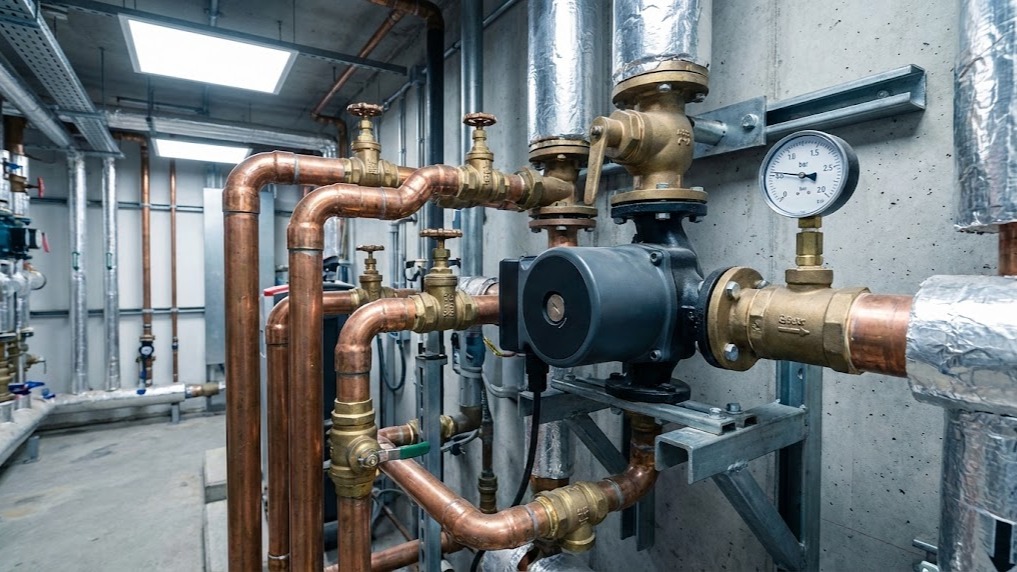
Pump performance rarely matches the manufacturer's data sheet in real-world installations. A Grundfos UPS2 rated for 4.5 metres of head at 2,000 litres per hour might deliver barely 3 metres in practice. The difference isn't pump failure - it's excessive pipe bends and system resistance stealing performance before the water even reaches its destination.
Every 90-degree elbow, gate valve, and sharp turn creates friction that the pump must overcome. These frictional losses accumulate through the pipework, forcing the pump to work harder whilst delivering less flow. A heating system with eight unnecessary bends might lose 30% of its effective pumping capacity compared to a well-designed layout with four. Understanding how excessive pipe bends pump performance separates functional heating systems from ones that never quite deliver the heat output they should.
How Pipe Bends Create Frictional Resistance
Water flowing through straight pipe maintains relatively laminar movement. Molecules travel in parallel layers with minimal turbulence. A 90-degree elbow disrupts this pattern completely. Water molecules collide with the bend's inner wall, creating turbulence that persists for several pipe diameters downstream. This turbulence converts kinetic energy into heat - energy that should be moving water around the system.
The sharper the bend, the greater the energy loss. A 90-degree short-radius elbow creates roughly 60% more resistance than a long-radius bend. A heating engineer installing six short-radius elbows instead of long-radius alternatives adds the equivalent resistance of approximately 12 metres of straight pipe to the system. The pump must generate additional head pressure to overcome this resistance, which shifts its operating point down the performance curve.
Bend Radius and Pipe Bend Pump Losses
Bend radius matters significantly. A 22mm copper elbow with a centre-line radius of 35mm (1.5 times pipe diameter) creates approximately 0.4 metres of equivalent pipe length resistance. The same bend with a 50mm radius (2.3 times pipe diameter) creates only 0.25 metres equivalent length. Across a system with twelve bends, choosing appropriate radius fittings saves nearly 2 metres of head loss - often the difference between adequate circulation and poor performance.
Multiple bends in close succession compound the problem. When turbulence from one bend hasn't settled before water hits the next bend, resistance increases beyond the simple sum of individual bends. Three 90-degree elbows within 500mm of each other create roughly 15% more resistance than the same three bends spaced 2 metres apart. This clustering effect particularly affects systems with complex manifold arrangements or tight plantroom installations.
The Hidden Cost of System Valves
Gate valves, ball valves, and check valves all restrict flow, but their impact varies dramatically. A fully open gate valve creates minimal resistance - roughly equivalent to 0.1 metres of straight pipe. A globe valve in the same position creates resistance equivalent to 10-15 metres of pipe. Specifying the wrong valve type costs pump performance that no amount of oversizing can fully recover.
Check valves present particular challenges. These spring-loaded components prevent reverse flow but create substantial forward resistance. A 22mm spring check valve typically requires 0.15-0.3 bar pressure differential to open fully. In a low-head domestic heating system operating at 3-4 metres total head, this single valve consumes 10-15% of available pump pressure. Systems with multiple check valves - common in multi-zone installations - can lose 30% of effective head pressure to valve resistance alone.
Variable Resistance From TRVs
Partially closed valves destroy system performance. A ball valve closed to 50% of full bore doesn't reduce flow by 50% - it creates exponentially higher resistance that can reduce flow by 70-80%. Heating systems balanced using service valves rather than proper balancing valves often show this pattern. The pump works at maximum capacity whilst delivering inadequate flow because someone throttled a valve to reduce noise or adjust zone temperatures.
Thermostatic radiator valves (TRVs) add variable resistance that changes with demand. When TRVs close in response to room temperature, system resistance increases and flow reduces through open circuits. A central heating pump sized for maximum flow with all TRVs open will over-pump when valves close, creating noise and wasting energy. This dynamic resistance requires careful pump selection - often favouring variable-speed models that adjust output to match demand.
Calculating System Resistance and Equivalent Length
Heating engineers quantify frictional losses using equivalent length - the length of straight pipe that creates the same resistance as a fitting. British Standard pipe sizing charts provide these values for common components. A 22mm 90-degree elbow equals approximately 0.8 metres of straight pipe. A 22mm tee junction with flow through the branch equals 1.5 metres. A gate valve adds 0.2 metres whilst a globe valve adds 12 metres.
System resistance calculations follow a straightforward process. Measure actual pipe lengths for each diameter. Count every bend, valve, and fitting. Convert each component to equivalent length using standard tables. Sum the total equivalent length for each pipe diameter. Apply friction loss rates from pipe sizing charts to determine total head loss. This calculation reveals whether the specified pump can overcome system resistance whilst delivering the required flow rates.
Typical System Calculation Example
A typical domestic heating system might comprise: 40 metres of 22mm pipe, 12 x 90-degree elbows (9.6m equivalent), 8 x tee junctions (12m equivalent), 4 x gate valves (0.8m equivalent), 2 x check valves (4m equivalent), plus radiator valve resistance (6m equivalent). Total equivalent length: 72.4 metres. At 1,500 litres per hour flow through a 22mm pipe, the friction loss equals approximately 35mm head per metre - total system resistance of 2.5 metres head before accounting for boiler and radiator resistance.
Grundfos circulators and other manufacturers provide system resistance calculators that automate these calculations. Input pipe lengths, fitting quantities, and required flow rates, and the software calculates total head loss. These tools prevent the guesswork that leads to undersized pumps struggling to circulate adequately or oversized pumps wasting energy and creating noise.
Commercial systems require more sophisticated analysis. Large-bore pipework, complex manifold arrangements, and multiple pump configurations make hand calculations impractical. Mechanical services engineers use hydraulic modelling software that simulates flow through every pipe section, calculating pressure drops and identifying problematic areas before installation. This front-end engineering prevents expensive retrofits when systems fail to perform.
Why Pump Curves Show the Real Impact
Pump performance curves plot flow rate against head pressure. As the head increases, the flow decreases along a curved line. Every additional metre of system resistance shifts the operating point left on this curve - less flow for the same pump. Understanding this relationship explains why adding three extra bends might reduce radiator heat output by 15% even though the pump still runs.
A Wilo circulator rated for 5 metres head at 2,000 litres per hour might deliver only 1,400 litres per hour at 6 metres head. If poor pipework design adds 1 metre of unnecessary resistance, system flow drops by 30%. Heat output falls proportionally because radiators receive less hot water per hour. Room temperatures drop, occupants increase boiler temperature, and running costs rise - all because someone installed short-radius elbows instead of long-radius bends.
Understanding Pump Curve Intersection
The pump curve intersection with system resistance determines actual performance. Plot system resistance as a curve that rises with flow rate (resistance increases exponentially as flow increases). Where this system curve intersects the pump curve shows actual operating conditions. Add resistance by installing extra valves, and the system curve shifts upward. The intersection point moves left - less flow, higher head, reduced performance.
Variable-speed pumps adjust their curve to match demand. When TRVs close and resistance increases, the pump reduces speed to maintain constant differential pressure rather than over-pumping against high resistance. This adaptation saves energy and prevents noise, but only if the system design allows adequate flow at reduced speeds. Understanding pipe bend pump losses helps prevent excessive resistance that pushes demand beyond even the maximum pump speed capacity.
Cavitation Risks
Cavitation occurs when the pump inlet pressure drops too low, causing water to vaporise. Excessive resistance on the suction side - often from sharp bends near the pump inlet or undersized suction pipe - creates the pressure drop that triggers cavitation. The resulting bubble collapse damages pump impellers and creates a characteristic rattling noise. Proper suction pipe design with gradual bends and adequate diameter prevents this destructive phenomenon.
Practical Design Strategies to Minimise Resistance
Effective system design starts with pipe routing that minimises bends. Running pipe parallel to the building structure reduces direction changes. A heating circuit that follows walls and drops vertically through floor penetrations needs fewer bends than one that cuts diagonally across spaces. Spending time on thoughtful routing during design saves metres of equivalent length.
Selecting Appropriate Bend Radius
Long-radius bends reduce resistance significantly. Where space permits, specify elbows with a centre-line radius of at least twice the pipe diameter. Pre-formed copper bends or pressed fittings with swept internals outperform traditional compression elbows. The material cost difference is minimal, but the performance gain justifies the upgrade in any system where pump capacity is constrained.
Valve Selection Impact
Valve selection directly impacts system resistance. Use gate valves or ball valves for isolation - never globe valves unless specifically required for throttling. Specify swing check valves rather than spring-loaded types where reverse flow prevention is needed. Consider eliminating check valves entirely in systems where gravity circulation isn't a concern. Each removed check valve recovers 0.2-0.4 metres of head for useful circulation.
Pump valves designed for heating systems incorporate features that minimise resistance. Full-bore ball valves maintain pipe diameter through the valve body. Y-pattern strainers create less resistance than inline basket strainers. Commissioning sets with integral flow measurement allow balancing without additional valve resistance. These components cost more initially but pay back through improved system performance and reduced pump operating costs.
Proper Pipe Sizing
Proper pipe sizing prevents velocity-related losses. An undersized pipe creates high flow velocity that increases friction exponentially. A heating circuit carrying 2,000 litres per hour through 15mm pipe experiences four times the friction loss of the same flow through 22mm pipe. The pump must work significantly harder, and the additional resistance often exceeds the cost of larger pipe. British Standard recommendations for maximum flow velocity (typically 1-1.5 metres per second for heating systems) prevent this problem.
Real-World Performance Problems From Poor Pipework
A commercial office heating system installed in the UK demonstrated these principles clearly. The mechanical contractor routed 50mm flow and return mains through a congested ceiling void, creating 22 bends where 12 would have sufficed. Each bend used short-radius pressed fittings to save space. The system included eight spring check valves to prevent gravity circulation through unused zones.
Commercial Case Study
Calculated equivalent length totalled 340 metres compared to 180 metres for the actual pipe run - nearly doubling system resistance. The specified Lowara pump delivered adequate flow during commissioning with all zones open, but when five zones closed during part-load operation, resistance increased and flow through active zones dropped by 35%. Perimeter offices never reached comfortable temperatures on cold days.
Remedial work removed four unnecessary check valves and replaced eight short-radius bends with long-radius alternatives where accessible. These changes recovered 18 metres of equivalent length, reducing system resistance by approximately 15%. Flow through active zones increased to design values, and room temperatures stabilised. The modifications cost £2,400 but eliminated complaints and avoided a costly pump upgrade.
Domestic Installation Example
Domestic installations show similar patterns. A system boiler installation in a four-bedroom house used 15mm pipe throughout to save material costs. The installer routed pipe through the shortest path, creating 18 bends in 32 metres of pipe run. Heat output to upstairs radiators fell 25% below calculations. The homeowner complained of cold bedrooms and high gas bills as the boiler ran continuously trying to satisfy the thermostat.
Replacing the main flow and return with a 22mm pipe and reducing bends to 10 through better routing cut system resistance by 40%. Radiator heat output increased to design levels, room temperatures rose, and boiler cycling improved. Gas consumption dropped by 18% over the following heating season. The re-pipe cost £850, but delivered comfort and efficiency that the original installation never achieved.
Sizing Pumps for Real System Resistance
Accurate pump selection requires honest system resistance calculations. Adding 20% safety margin to the calculated head loss accounts for minor fittings and future modifications. Selecting a pump that operates in the middle third of its performance curve ensures adequate capacity without excessive over-sizing. A pump running at the far right of its curve (high flow, low head) wastes energy. One running at the far left (low flow, high head) indicates excessive system resistance or wrong pump selection.
Variable-Speed Pump Benefits
Variable-speed pumps suit most modern heating systems. These units adjust output to match demand, maintaining efficient operation across varying load conditions. When system resistance increases as zone valves close, the pump reduces speed rather than over-pumping. Energy consumption drops by 30-50% compared to fixed-speed pumps in typical applications. The higher initial cost recovers within 2-3 years through reduced electricity consumption.
System Balancing Requirements
Dual-head pumps provide built-in flexibility. These units offer two or three speed settings selected via a switch. Installation at medium speed allows upward adjustment if system resistance proves higher than calculated, or downward adjustment if the system over-performs. This adaptability prevents callbacks and ensures optimal performance across varying installation conditions.
System balancing accounts for resistance variations between circuits. Properly designed systems use balancing valves that allow precise flow adjustment without creating excessive resistance. Setting these valves ensures each circuit receives design flow despite differences in pipe length and fitting quantities. Balancing transforms uneven heating into consistent comfort, maximising the value of proper pump selection and pipework design.
Maintaining System Performance Over Time
System resistance increases over time as debris accumulates and components degrade. Magnetite sludge in steel radiator systems creates additional resistance that gradually reduces flow. A heating system that performed adequately when new might deliver 20% less flow after five years without maintenance. Regular system flushing and magnetic filtration prevent this degradation.
Valve Maintenance
Valve maintenance preserves performance. Gate valves that aren't exercised periodically can seize partially closed, creating unexpected resistance. Check valves accumulate debris on seats, preventing full opening and increasing forward resistance. Annual valve operation during system servicing identifies problems before they impact performance. Replacing failed check valves that remain partially closed can recover significant flow capacity.
Pump Wear Considerations
Pump wear affects performance gradually. Impeller erosion, bearing wear, and seal degradation reduce pump output over 10-15 years. A pump that originally delivered design flow might provide only 70% capacity near the end of its life. Monitoring system performance through temperature measurements and flow rates identifies declining pump capacity before comfort suffers. Proactive pump replacement maintains system efficiency and prevents emergency failures during peak heating season.
System Modifications
System modifications often add resistance without corresponding pump upgrades. Adding two radiators to an existing circuit increases the flow requirement and adds pipe, bends, and valves. The original pump might lack capacity for the expanded system, resulting in poor performance throughout. Calculating total system resistance after modifications and verifying pump capacity prevents these problems. Sometimes a larger pump or additional circuit proves necessary to maintain performance.
Conclusion
Understanding how excessive pipe bends affect pump performance through accumulated frictional resistance helps heating engineers design systems that deliver reliable performance. Every unnecessary 90-degree elbow, each poorly selected valve, and all clustered fittings steal head pressure that should be circulating water through radiators and heat emitters. The difference between adequate heating and chronic underperformance often lies in pipework design decisions made during installation.
Thoughtful pipe routing, appropriate bend radius selection, and careful valve specification minimise system resistance. Calculating equivalent length during design reveals total head loss and ensures proper pump sizing. Understanding pump performance curves shows how added resistance shifts operating points toward reduced flow and diminished heat output. Minimising pipe bend pump losses applies equally to domestic heating systems and complex commercial installations.
Heating engineers who master system resistance calculations and design for minimal friction deliver installations that perform reliably for decades. Those who ignore these fundamentals create systems that never quite work properly, regardless of pump size or boiler capacity. The physics of fluid flow doesn't compromise - water follows the path of least resistance, and excessive bends create resistance that no amount of wishful thinking can overcome.
National Pumps and Boilers supplies variable-speed and multi-speed pumps from leading manufacturers, providing options for every system requirement with technical specifications that detail performance across varying resistance conditions.
For technical guidance on pump selection for specific system requirements, or to discuss how pipework design affects performance in your installation, contact us for expert support.