

WRAS Approved Booster Pumps: What UK Buyers Need to Understand
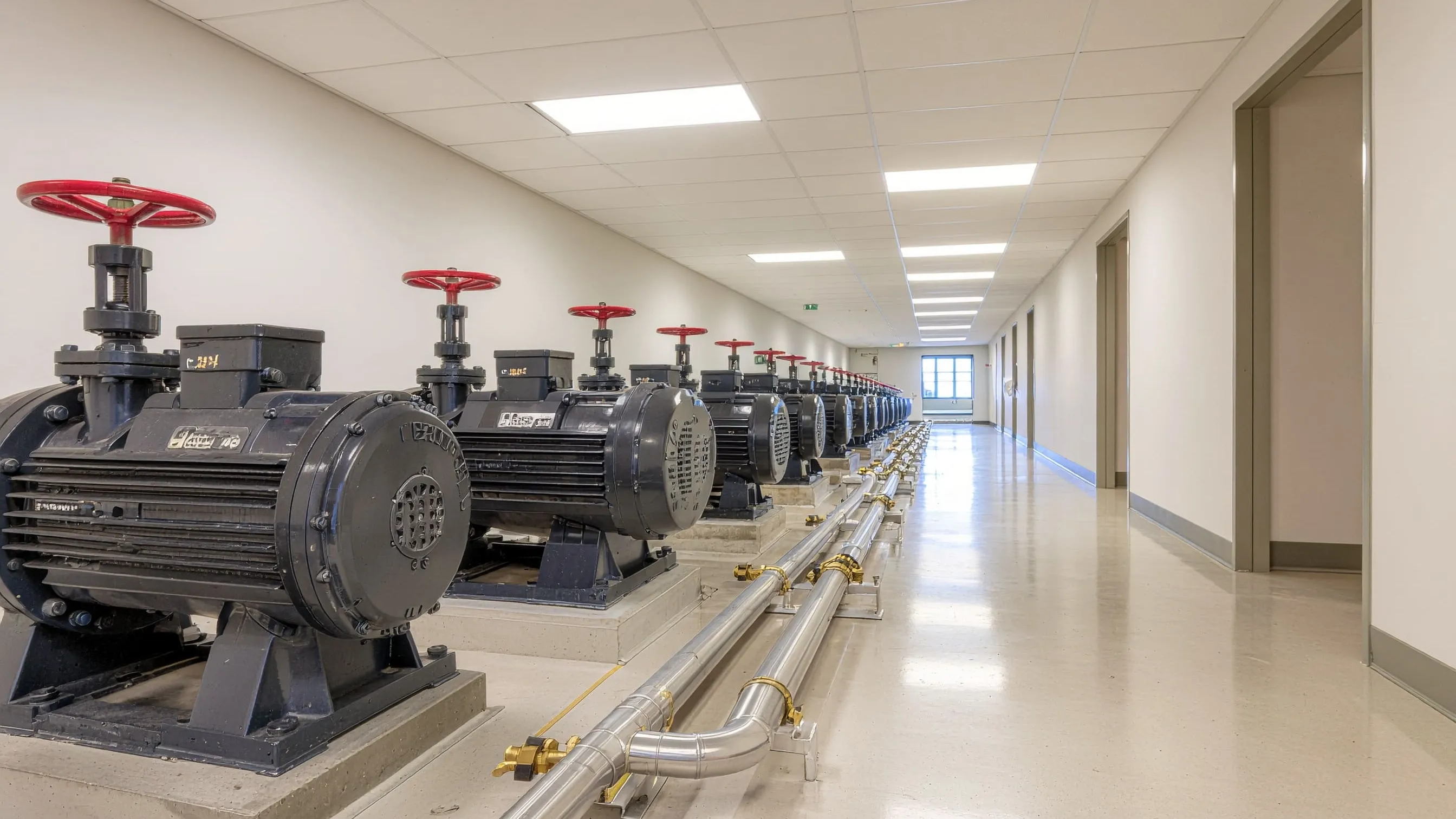
Installing a water booster pump without proper WRAS approval exposes building owners to legal action, insurance complications, and potential prosecution by water suppliers. Despite this, confusion persists about what WRAS approval actually means and why it remains non-negotiable for UK installations. The Water Supply (Water Fittings) Regulations 1999 place absolute responsibility on property owners and installers to prevent contamination of public water supplies, making WRAS approved booster pump UK compliance a legal requirement rather than a recommended industry standard.
Many specifiers assume that purchasing a pump from a reputable manufacturer automatically guarantees full regulatory compliance. This misunderstanding leads to costly retrofitting work when water suppliers reject installations during inspection. WRAS approval applies to complete systems, not just individual components, requiring careful attention to how pumps integrate with backflow prevention devices, pressure vessels, and control systems. Understanding the distinction between component-level product approval and whole-system compliance is what separates installations that pass inspection from those that require expensive remediation.
What WRAS Approval Actually Means
The Water Regulations Advisory Scheme operates as the UK's recognised authority for assessing compliance with water fittings regulations. Products listed on the WRAS approval directory have undergone rigorous testing to verify they meet British Standards and present no unacceptable contamination risks. However, WRAS approval extends well beyond simple product certification for individual components.
Water suppliers hold statutory powers to inspect any installation connected to the public supply network. Where non-compliant fittings are discovered, suppliers can require immediate disconnection, issue formal enforcement notices, and initiate prosecution. Fines reach £1,000 for initial offences with daily penalties for continued non-compliance. Building insurers frequently exclude claims arising from non-compliant water systems, leaving property owners exposed to substantial and uninsured liability for any resulting damage or contamination.
The regulations distinguish between five fluid categories based on contamination risk level. Booster pumps serving potable water systems must prevent any possibility of backflow or cross-connection with non-potable supplies. Category 5 fluids - representing the highest contamination risk including those containing pathogens or toxic substances - require the most stringent protection, typically physical air gaps or specific backflow prevention devices approved for that risk category.
Why WRAS Approval Matters for Booster Pumps
Booster pumps create specific contamination risks that differentiate them from passive water fittings in a standard installation. When pumps pressurise water systems above mains supply pressure, they can potentially force contaminated building water backwards through pipework if backflow prevention fails or is absent. This risk intensifies in buildings with mixed water uses - commercial kitchens, laboratories, healthcare facilities, or industrial premises - where cross-connection opportunities between potable and non-potable systems multiply.
Grundfos manufactures several booster pump ranges with full WRAS approval, incorporating integrated backflow prevention suitable for different installation configurations and fluid risk categories. These systems address the specific technical requirements of UK water regulations whilst delivering the pressure and flow performance that modern commercial and residential buildings require.
The legal framework places responsibility jointly on installers and building owners. Many heating engineers hold limited detailed understanding of WRAS compliance requirements, which can lead to installations that fail water supplier inspection despite using quality components from reputable manufacturers. Water suppliers are enforcing compliance with increasing consistency, particularly in commercial and multi-occupancy residential buildings where contamination risks affect multiple end users simultaneously.
Key WRAS Requirements for Booster Pump Systems
Backflow prevention forms the cornerstone of WRAS compliance for any pressurisation system connected to or drawing from the public supply. The Water Supply (Water Fittings) Regulations specify five fluid categories, each requiring protection measures proportionate to the contamination risk. Booster pumps serving drinking water in straightforward domestic or commercial applications typically encounter Category 1 or 2 fluids, though mixed-use buildings with heating system connections or industrial processes may require Category 5 protection.
Type BA backflow preventers - incorporating both check valves and vacuum breakers - suit many inline booster pump applications. These devices prevent both back-pressure and back-siphonage, the two distinct mechanisms through which contaminated water can enter the supply system. Installation must follow manufacturer specifications precisely, with specific orientation requirements, minimum clearances around test ports, and accessible testing points for annual verification.
Break tank systems offer an alternative approach using a physical air gap between the public supply and the boosted distribution system. The Water Supply (Water Fittings) Regulations specify minimum air gap dimensions - typically 20mm or twice the inlet diameter, whichever is greater. Break tanks effectively create two entirely separate hydraulic systems, eliminating any direct connection between the public mains and potential contamination sources within the building.
Pressure vessels within booster sets require their own compliance verification independent of the pump and backflow prevention elements. The Pressure Equipment (Safety) Regulations 2016 mandate CE marking for vessels exceeding specified volume and pressure thresholds. DAB supplies packaged booster sets with fully compliant pressure vessels, factory-matched control systems, and integrated backflow protection assembled into single skid-mounted units - simplifying compliance verification by providing a complete pre-assessed package rather than a collection of individually approved components requiring coordination.
Common WRAS-Approved Booster Pump Configurations
Break tank systems remain the preferred approach for WRAS compliance in larger commercial boosting installations. The public supply feeds a cold water storage tank at atmospheric pressure, with the booster pump drawing from this tank to pressurise the building distribution system. The physical air gap between the incoming mains supply and the stored water provides absolute backflow protection that no mechanical device can match in terms of reliability under all foreseeable fault conditions.
This configuration suits buildings where plant room space permits tank installation and where the additional storage volume provides operational benefits during supply interruptions or mains pressure fluctuation events. However, break tank systems introduce additional maintenance requirements - annual internal cleaning, inspection for contamination or sediment, and verification that lids, screens, and overflow arrangements maintain their protective function throughout the year.
Inline booster systems connect directly to the public mains supply, using approved backflow prevention devices rather than physical air gaps to provide the required protection. These compact installations suit retrofit applications and buildings with limited plant room space where break tank installation is not practical. Wilo manufactures several inline booster ranges engineered for UK regulatory compliance, with integrated Type BA backflow preventers and pressure-sustaining controls that simplify the approval notification process with water suppliers.
Packaged pump sets integrate multiple pumps, pressure vessels, control panels, and protection devices into factory-assembled units with all components correctly configured against each other. These systems arrive on site with WRAS-approved components in a pre-tested arrangement, reducing installation time and compliance risk. Armstrong packaged booster systems include full compliance documentation from the factory, covering component approval references and system test records that support the water supplier notification submission - a practical advantage on time-critical commercial projects.
Selecting the Right WRAS-Approved Booster Pump
Flow rate calculations for WRAS approved booster pump UK installations must account for realistic simultaneous demand from multiple outlets rather than simple addition of all connected fixture loads. Building Regulations Approved Document G provides loading unit values for different fixture types, enabling designers to calculate peak simultaneous demand. A 20-storey residential building might contain 200 apartments with theoretical maximum simultaneous flow of 30 l/s, but realistic peak demand rarely exceeds 30-40% of this theoretical maximum when diversity factors are properly applied.
Pressure requirements depend on building height and the most remote and highest outlet in the distribution system. The Water Supply (Water Fittings) Regulations specify minimum flow rates for different fitting types - 0.15 litres per second for WC cisterns, 0.3 litres per second for washbasins. These minimum flows must be delivered at adequate pressure, typically 1.0 bar minimum at the outlet. A building with outlets 30 metres above the pump requires approximately 3.0 bar to overcome static head alone, before accounting for pipe friction and fitting losses.
National Pumps and Boilers supplies WRAS-compliant booster systems across the full range of commercial and residential applications, from small apartment blocks requiring single-pump installations to major mixed-use developments needing sophisticated multi-pump configurations with variable speed control - with specification support to confirm compliance requirements for each specific installation configuration.
Variable speed drives significantly improve booster pump efficiency in WRAS-compliant installations by adjusting motor speed to match demand rather than running at constant full speed with pressure relief wasting energy. DHW pumps serving commercial hot water systems in the same building operate under equivalent WRAS compliance obligations, making coordinated specification of both cold and hot water boosting systems from a compliance-aware supplier a worthwhile efficiency for complex building services projects.
Central heating system pipework in commercial buildings must be kept physically separated from potable water distribution - any cross-connection between heating circuits and cold water supply creates immediate Category 5 fluid risk that removes the possibility of lower-category backflow prevention being accepted by the water supplier.
Installation and Commissioning Requirements
Water suppliers require notification before any booster pump installation, typically via a formal Water Regulations notification form submitted with system drawings showing the proposed configuration, backflow prevention device specifications and positions, and mains connection details. Suppliers review submissions to verify technical compliance, and may request design modifications before granting approval to proceed.
The notification process varies between water companies, with some operating online submission portals whilst others still require paper-based forms. Processing times range from 10 to 30 working days, making early notification critical for project programming. Installations proceeding without prior approval risk disconnection orders and enforcement action regardless of whether the installed system is technically compliant - the absence of the required notification process is itself a regulatory breach.
Commissioning must verify that installed systems precisely match the approved drawings and that all protection devices function correctly under test conditions. Backflow preventers require functional testing confirming that both check valves and vacuum breakers operate independently as designed. Pressure vessels need inspection confirming correct pre-charge pressure relative to the system's cut-in pressure setting. All control system parameters - pressure setpoints, pump sequencing, and alarm thresholds - require verification against the design specification.
Lowara provides detailed commissioning protocols with booster set documentation, specifying test procedures and acceptance criteria that satisfy water supplier inspection requirements. Following manufacturer commissioning protocols ensures systems operate as intended and provides the test records that form part of the compliance documentation package required for ongoing WRAS compliance.
Maintenance and Ongoing Compliance
WRAS approval at initial installation does not guarantee continued compliance without a structured maintenance programme. Backflow prevention devices require annual professional testing using calibrated equipment to verify correct operation under test flow conditions. Check valves can accumulate scale or debris that prevents proper seating, compromising backflow protection without producing any immediately obvious symptoms. Establishing maintenance contracts with competent contractors ensures annual testing occurs without reliance on internal facilities management resource.
Break tank systems need annual internal inspection and cleaning to prevent bacterial growth and sediment accumulation. Tank lids must remain secure and properly sealed at all times, with access openings protected against environmental contamination. Overflow and warning pipes require annual verification that they terminate correctly with appropriate air gaps and insect-proof screens intact.
Pump valves throughout the booster installation - including isolation valves, non-return valves, and any pressure-sustaining valves - require periodic operation during maintenance visits to prevent seizure from disuse and to verify correct function at each service interval.
Ebara pump systems include corrosion-resistant valve and pipework components suited to installations where water chemistry or environmental conditions accelerate deterioration in standard materials - a specification consideration for coastal, industrial, or high-chloride water supply areas where standard cast iron or mild steel components would require more frequent replacement.
Record Keeping and Documentation Requirements
Water suppliers can request documentation demonstrating ongoing WRAS compliance at any time. Building owners must retain records showing the initial water supplier approval, commissioning certificates confirming system test results, and a complete maintenance history including all annual backflow prevention device test certificates. These records carry particular importance during property transactions, where solicitors increasingly request water system compliance documentation as part of standard due diligence.
Commissioning certificates should document all system parameters at handover - pump performance against design flow and pressure curves, pressure vessel pre-charge pressure, control system settings, and backflow device test results. Annual maintenance visit records must show dates, all tests performed, any defects identified, and confirmation of rectification. This documentation trail demonstrates ongoing compliance and provides the primary defence against enforcement action from water suppliers.
Building log books should incorporate water system compliance records alongside gas safety and electrical safety certification. Many building managers maintain comprehensive records for gas and electrical compliance whilst overlooking water system documentation. Water regulations carry equivalent legal weight and require equivalent documentation rigour.
Conclusion
WRAS compliance for booster pumps is a legal obligation carrying meaningful enforcement consequences - not an optional quality standard for cautious specifiers. Understanding the distinction between individual component approval and whole-system compliance prevents the costly retrofitting work and potential legal action that non-compliant installations attract. Break tank configurations provide the highest level of backflow protection for WRAS approved booster pump UK applications, whilst inline systems with appropriate Type BA backflow preventers suit space-constrained installations where physical air gaps are impractical.
Correct system selection requires accurate simultaneous demand calculations, consideration of duty/standby redundancy requirements, and integration of appropriately rated backflow prevention for the fluid risk category present. Water supplier notification before installation, thorough commissioning verification, and annual backflow prevention device testing maintain compliance across the full operational lifespan of the installation.
For guidance on selecting and installing WRAS-approved booster systems that satisfy UK regulatory requirements whilst delivering reliable hydraulic performance, Contact Us to discuss specific project requirements and compliance obligations with experienced pump specialists.